
How to build an Affiliate Marketing Business
We may earn money or products from the companies mentioned in this post.
Updated on the 07 December 2024

Discover the essential steps to build a thriving affiliate business that generates consistent income.
This guide breaks down everything you need to know, from choosing the right niche and products to promoting them effectively and scaling your efforts.
Whether you’re just starting or looking to take your affiliate marketing to the next level, this article provides actionable tips and strategies to help you succeed.
How to Build a Successful Affiliate Marketing Business
Affiliate marketing is a standard online moneymaking method.
When someone buys through your link, you get a commission.
This article covers all aspects of affiliate marketing company success.
We will discuss choosing the best affiliate program, developing conversion-focused content, optimizing your website, and more.
This article should provide all the information you need to establish an affiliate marketing business.
I have three websites and am always on the lookout for helpful information for my visitors.
I want you to also live your dream of owning a lucrative online business.
How To Build An Affiliate Marketing Business
Affiliate marketing generates monthly revenue for thousands of makers, business owners, and online publications.
Do widely appreciated sites such as the New York Times, Forbes and NerdWallet.
Statista predicts that U.S. companies will spend $8.2 billion on affiliate marketing this year.
That’s up 76% in the last 6 years alone.
Posting affiliate links won’t get you a piece of the billion-dollar pie.
Most beginners fail to see the financial results promised by blogs and videos online.
Follow these tips to become a better, faster affiliate marketer.
How to Build an Affiliate Marketing Business

Building an affiliate marketing business requires a strategic approach, starting with the basics and scaling up as you grow.
The first step is to focus on niche-hunting, identifying a specific area that aligns with your interests and audience demand.
Once your niche is clear, the next step is to choose a system by selecting affiliate programs and platforms that best suit your business goals.
High-quality content is the cornerstone of your strategy—whether it’s blog posts, product reviews, or tutorials, your content should solve problems and engage your audience.
Driving traffic to your site is essential, so leverage SEO, social media, email marketing, and even paid ads to attract visitors.
To ensure long-term success, track affiliate performance using tools to monitor clicks, conversions, and revenue.
By analyzing this data, you can refine your strategy, boosting sales and optimizing your efforts.
Mastering the basics—like building a user-friendly website, integrating affiliate links, and establishing trust—is critical before diving into advanced techniques.
With a clear niche, valuable content, traffic-driving strategies, and performance tracking, you can build a profitable affiliate marketing business that scales over time.
What are associate advertising and marketing?
In affiliate marketing, brands collaborate with content creators and publishers, compensating them for driving leads and sales.
This process is simple yet powerful: your website, blog, or social media post includes an affiliate link that connects your audience to the advertiser’s website.
When a client clicks on your affiliate link and makes a purchase or completes a specific action, you earn a commission.
The beauty of affiliate marketing lies in its flexibility and scalability.
To learn how to build an affiliate marketing business, start by creating valuable content that aligns with your niche and genuinely helps your audience.
By integrating affiliate links into product reviews, tutorials, or recommendations, you seamlessly connect your audience with solutions while generating income.
A crucial part of this process is building trust and delivering quality content that encourages clicks and conversions.
Combine these efforts with traffic-driving strategies like SEO, email marketing, and social media promotions to maximize the effectiveness of your affiliate links.
With consistency and a clear strategy, you can grow a profitable affiliate marketing business that benefits both your audience and the brands you promote.
The client acquires

An affiliate network connects the acquisition to you and concerns a payment.
Compensations show up in your associate control panel.
You get paid (!) by the affiliate network.
There is no solitary account for a successful associate online marketer.
Associate marketing is low risk because you’re not responsible for product distribution.
The major method associated with advertising and marketing is via affiliate web links.
To pay you, a customer must use your affiliate link.
There’s the way you make your commissions.
Two Main Ways to Earn Affiliate Income

CPA (Price Per Activity)
You earn a commission whenever someone from your audience completes a specific action, which could include making a purchase, signing up for a free trial, or filling out a contact form.
These actions are often defined by the affiliate program and directly contribute to your earnings, making it crucial to align your promotions with your audience’s interests and needs.
CPC (Cost Per Click)
Even if they don’t complete a task, advertisers pay for quality clicks.
Some affiliate programmes pay for conversions and lead.
We’ll cover exactly how to pick great associate programs later in this guide.
While you’re here, learn a few more affiliate marketing Tips.
These will certainly also aid you select affiliate programs with a high earning capacity:
Cookies
When a customer clicks an affiliate link, a small piece of data known as a “cookie” is stored on their device.
These cookies serve a vital purpose in affiliate marketing.
They enable businesses and affiliate networks to track the customer’s actions, ensuring that you, as the affiliate, receive credit for the referral.
Cookies act as a digital marker, helping businesses recognize that you directed the customer to their website.
This tracking is essential, especially when purchases or actions don’t occur immediately.
Cookies in affiliate programs can stay active for varying periods, enabling you to earn commissions if customers complete desired actions within that timeframe.
For affiliates, cookies ensure transparency and fair compensation, while for businesses, they provide accurate data on the effectiveness of their affiliate partnerships.
It’s a win-win system that builds trust between all parties involved in the affiliate marketing ecosystem.
To maximize your earnings, focus on working with programs that offer generous cookie durations, as this increases the chances of securing commissions for your referrals.
Cookie period

Cookies in affiliate marketing come with expiration dates, which define how long an affiliate is credited for a customer’s actions after they click the affiliate link.
This cookie period can vary significantly depending on the program.
Some cookies expire as quickly as 15 days, others within a month, while certain programs may offer cookies that last for up to a year.
For affiliate marketers, the cookie duration is crucial. It determines how long they can earn a commission from a referred customer’s purchase or action.
This is particularly important because customers rarely make decisions instantly—they may browse, compare prices, or return later to finalize their purchase.
A longer cookie period increases the likelihood that affiliates are credited for their efforts, even if the customer takes their time.
Affiliate programs with longer cookies are appealing for products with extended sales cycles, such as high-value electronics or subscriptions.
Conversely, shorter cookie durations may benefit businesses selling impulse-buy products but can be limiting for affiliates.
When choosing affiliate programs, marketers should carefully evaluate cookie policies, as longer durations often translate into better earning potential.
Understanding cookie expiration policies helps affiliates tailor promotions to target audience behavior, boosting conversions and commissions.
Connect networks

Brands often establish their affiliate programs on third-party platforms known as affiliate networks.
These systems act as a bridge, connecting brands with a wide range of online affiliate marketers, creating a streamlined process for collaboration and growth.
Affiliate networks provide brands with tools to manage their programs effectively.
These include tracking affiliate performance, managing payouts, and analyzing campaign metrics.
For marketers, these platforms offer a marketplace where they can discover multiple affiliate programs in one place, often categorized by industry, niche, or product type.
The convenience of affiliate networks lies in their ability to centralize the process.
Instead of brands having to individually find and vet affiliates, these platforms handle recruitment, ensuring affiliates meet certain standards.
Similarly, affiliates benefit by accessing a variety of programs, simplifying their search for partnerships that align with their audience.
Well-known affiliate networks, such as ShareASale, CJ Affiliate, and Rakuten, offer user-friendly dashboards that support both brands and affiliates in optimizing their efforts.
From tracking clicks and conversions to handling payments, these networks make it easier for all parties involved to focus on driving results.
By leveraging affiliate networks, brands can scale their reach, and marketers can expand their income streams, creating a mutually beneficial ecosystem.
Is associate advertising worth it?

For many entrepreneurs and marketers, affiliate advertising proves to be a valuable and rewarding venture.
As an affiliate marketing professional, your earning potential can be significant, potentially even limitless.
By promoting products or services that resonate with your audience, you earn commissions for each sale or action generated through your referral links.
But it’s crucial to understand that success takes time to achieve.
Building a profitable affiliate business requires dedication, strategic planning, and consistent effort.
You’ll need to invest time in understanding your niche, creating quality content, and fostering trust with your audience.
Staying updated with industry trends and adapting to changes are also crucial components of sustained success.
In essence, if you’re willing to put in the work and remain patient, affiliate advertising can be a worthwhile endeavor that offers both financial rewards and personal satisfaction.
As well as the number of people who can claim that?

Your earnings depend on your niche, web content, and revenue streams.
That doesn’t imply that many affiliate marketing professionals end up being internet millionaires.
Associate Online Marketers make $3,000 to $6,000 per month ($36K to $72K annually), per PayScale.
The top 1% of earners make 10s of thousands per month.
Permanent affiliate marketers with committed groups and years of experience.
But you don’t have to go full throttle to create a sustainable business.
Affiliate marketing can supplement your 9-5 income from day one.
And with enough perseverance and also devotion– replace it totally.
7 Actions to begin with associate marketing

Affiliate marketing’s earning potential is closely tied to the niche you choose.
The right niche determines the audience you’ll serve, the products you’ll promote, and ultimately, your success.
To make an informed decision, ask yourself: What target market do you want to reach, and what products or services would genuinely meet their needs?
A clear understanding of your audience ensures your content resonates and builds trust.
Before diving in, research your niche thoroughly. Look for opportunities where demand is strong, competition is manageable, and the potential for commissions aligns with your goals.
Consider factors like product variety, average commission rates, and recurring income opportunities.
A well-chosen niche not only makes your business more profitable but also allows you to create content that feels authentic and engaging.
When learning how to build an affiliate marketing business, selecting the right niche is one of the foundational steps.
It’s not just about what’s popular; it’s about finding a balance between your interests and the needs of your audience.
With the right niche, you’ll position yourself as a trusted authority, driving traffic, conversions, and long-term earnings.
Below are the actions you need to get right initially
Step 1. Choose a particular niche based on the research study.
Fidget spinners are an example of a trend that disappeared quickly.
Doing niche research will help your affiliate business earn more.
You’ll also analyze competition, find affiliate programs, and create a marketing and content plan.
Review of the Niche Research Process

Free niche research tools can be invaluable for uncovering profitable and engaging niche ideas.
Simplify trend analysis to find niche opportunities with tools like these:
- Google Trends
This tool allows you to explore search trends over time, helping you gauge the popularity of a niche or topic.
Simply enter a keyword, and Google Trends will show you its search volume, geographic interest, and whether it’s growing or declining.
Use this information to identify niches that are gaining traction. - AnswerThePublic
AnswerThePublic is a keyword tool that reveals what people are searching for related to a particular topic.
It generates questions, comparisons, and ideas based on your input, giving you insight into your audience’s concerns and interests.
This can help you refine your niche and create content that directly addresses common queries. - Ubersuggest
Ubersuggest is a comprehensive SEO tool that provides keyword ideas, search volume, and competition levels.
It also offers niche-specific content ideas and insights into what your competitors are ranking for.
With its free features, you can start exploring profitable keywords and topics within your niche.
Each of these tools is user-friendly and provides valuable data to kickstart your niche research.
By leveraging these resources, you can confidently identify a niche that is both profitable and aligned with your expertise, setting the stage for affiliate marketing success.
Google Trends
Trending subjects and also searches, arranged by location.
Respond to Socrates — Discover which inquiries individuals’ kind right into Google.
Taking off Topics
A Google Trends alternative that provides curated results can streamline your niche research, offering valuable insights at a glance.
While Google Trends is excellent for analyzing whether a niche is sustainable or just a fleeting trend, it’s important to complement this tool with actionable ideas.
For example, starting a blog about web hosting is a smart move as it’s a highly lucrative affiliate niche.
With high commission rates and ongoing demand for hosting services, it’s a niche that consistently attracts audiences.
However, for beginners, the challenge lies in creating enough high-quality content to compete with established players.
Additionally, starting a blog may require some upfront investment for domain registration, hosting, and SEO tools, which might be a hurdle for those with limited budgets.
To conquer challenges, create content targeting niche pain points like “best hosting for beginners” or “choosing the right web host.”
Use free or affordable tools to research keywords and gradually grow your content library.
Remember, consistency and targeted efforts can help you establish authority in this competitive yet rewarding space.
Particular niche Research Study

5 Steps to Finding Profitable Associate Niches
Step 2. Pick the right system.
Pick the Right System**
Choosing the right platform to host and create your affiliate content is a critical step in building a successful affiliate marketing business.
Once you’ve identified your niche, it’s time to decide where your content will live and how you’ll deliver value to your audience.
Your choice will depend on your niche, target audience, and content strategy.
- Websites and Blogs
For most niches, creating a dedicated website or blog is the best long-term option.
A website gives you full control over your content, branding, and monetization strategies.
Platforms like WordPress make it easy to set up a professional site, and with the right SEO techniques, your content can rank on search engines, driving organic traffic to your affiliate links. - YouTube Channels
If your niche thrives on visual content like tech reviews, tutorials, or fitness tips YouTube is an excellent platform. - As the second-largest search engine, it offers massive potential to reach a global audience.
By including affiliate links in your video descriptions, you can seamlessly promote products to viewers. - Social Media Platforms
For niches that cater to quick tips, trendy products, or visually appealing content, social platforms like Instagram, Pinterest, or TikTok are ideal.
These platforms are great for engaging directly with your audience and driving traffic to your affiliate links or website. - Email Newsletters
Creating an email list is a great strategy to market affiliate products and cultivate your following.
You own your email list, making it a reliable system to communicate offers and updates, even if social media algorithms change. - Combination Approach
Often, the best strategy is a combination of platforms.
For example, you can use social media to drive traffic to your website and YouTube channel, where you host more in-depth content and links.
Email newsletters can further nurture relationships and encourage conversions.
Ultimately, the platform(s) you choose should align with your niche and how your target audience consumes content.
A strong system provides the foundation for creating and promoting affiliate content that resonates with your audience and maximizes your earning potential.
Two Primary Options for Associates Starting Out

When you’re just starting with affiliate marketing, you typically have two main options to explore:
joining affiliate networks or partnering directly with companies through their affiliate programs.
Both approaches offer unique benefits and challenges, so your choice will depend on your goals, niche, and level of experience.
- Joining Affiliate Networks
Affiliate networks like ShareASale, CJ Affiliate, or Rakuten serve as marketplaces that connect affiliates with a wide range of brands and products.
They simplify the process by providing centralized tracking, payments, and a variety of programs to choose from.
For beginners, networks are an excellent starting point as they offer a straightforward way to access multiple opportunities without negotiating directly with companies.
However, network commissions can sometimes be lower due to intermediary fees, and competition may be higher. - Partnering Directly with Companies
Many brands run their own affiliate programs, allowing you to work with them directly.
These programs often offer higher commissions, more flexibility, and direct support.
Partnering with companies is particularly beneficial if you have a specific niche focus or a strong personal connection to the brand.
The downside is that managing multiple direct partnerships can be time-consuming, and the application process may be more selective.
Both paths can lead to success, and many affiliates use a combination of both to diversify their income streams.
For beginners, starting with a network can be less intimidating, while direct partnerships become a great option as you gain experience and build relationships within your niche.
Affiliate Networks

These platforms act as a marketplace for affiliates, connecting them with a wide range of companies and products to promote.
ShareASale, CJ Affiliate, and Amazon Associates offer vast product selections across niches, suiting your audience’s interests.
Affiliate networks simplify the process by handling payments, tracking, and reporting.
They are an excellent starting point for beginners because they offer diverse opportunities and centralized management.
Direct Affiliate Programs
Many companies run their own affiliate programs, which allow you to partner with them directly.
This option often provides higher commission rates and more personalized support since there’s no middleman involved.
Direct affiliate programs are particularly beneficial if you already have a strong relationship with a specific brand or are focused on promoting niche products.
However, managing multiple direct partnerships can be time-intensive as you’ll need to track earnings and communications with each company individually.
Which Path Should You Choose?
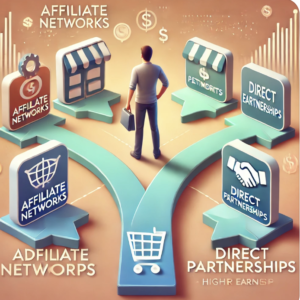
If you’re new to affiliate marketing, starting with an affiliate network might be the best option.
It gives you access to a wide variety of products, user-friendly dashboards, and streamlined processes.
As you gain experience and identify the products your audience responds to, you can branch out into direct affiliate partnerships to maximize your earnings.
Ultimately, both paths can lead to success. It depends on your level of expertise, the effort you’re willing to put in, and how well the products align with your audience’s needs.
Many affiliates find that a combination of both options works best, offering flexibility and the potential to grow their income streams over time.
Disadvantages of Starting with Only YouTube
Creating video content can be time-consuming compared to writing blog posts or articles.
It involves scripting, filming, editing, and sometimes even reshooting, which limits how much content you can produce when you’re starting out.
This can slow your growth, as consistent content output is crucial for building an audience.
Additionally, outsourcing video production is more challenging than outsourcing written content.
While you can easily hire freelance writers to create articles, finding skilled video editors, scriptwriters, or on-camera talent can be both costly and time-intensive.
If you’re the face of your channel, there’s an added commitment—you’ll need to appear in every video, which can be exhausting and time-restrictive.
Relying on personal effort can hinder scaling; consider delegating tasks or adopting a broader content strategy.
Harder to grow your email listing
YouTube doesn’t have an integrated way to collect email customers.
Yet email is one of the most effective channels for affiliate marketing.
YouTube networks tend to make much less affiliate money.
Getting affiliate links from a video is harder than a well-optimized post.
Eventually, it’s fantastic to have both a website and YouTube.
Embedding video clips on an affiliate site is an excellent way to improve conversion.
If you’re a beginner, start affiliate marketing with a blog.
WHEN IS YOUTUBE A BETTER OPTION?
YouTube is often a smarter choice when diving into an ultra-competitive niche.
For example, niches like credit card reviews or email marketing strategies are notoriously saturated in written content but less crowded in video format.
Creating videos involves multiple steps such as scripting, filming, editing, and production, making it a less competitive field than blogs or static websites.
Leveraging YouTube allows you to showcase your personality and expertise, which helps in building trust and differentiating yourself from others.
Your individuality becomes a powerful tool to connect with viewers on a personal level.
Whether it’s through unique storytelling, in-depth tutorials, or creative visuals, your ability to stand out will directly influence your success.
Additionally, YouTube’s visual and interactive format provides an opportunity to engage with your audience in ways other platforms can’t.
Features like comments, live streams, and direct video responses foster a sense of community while encouraging more conversions.
By understanding your niche and audience, you can craft content that resonates, builds trust, and drives action, even in competitive markets.
Step 3. Choose rewarding associate programs
Enrolling in affiliate programs is simple.
Yet spreading yourself too thin is among the leading affiliate marketing blunders novices make.
You want a few affiliate programmes with high payouts, conversions, and trust.
Below are 3 crucial methods to pick an excellent affiliate program:
Initially, assess earning potential.
Affiliate programs differ significantly in terms of payment range.
Some programs offer a couple of cents per conversion.
Others pay hundreds per lead

Lower-paying programs are easier to join and promote, making them attractive.
For the same profit, they need more sales.
Photography and deluxe affiliate programmes (expensive watches, high-end style) (costly cam tools).
Check the affiliate program’s cookie duration.
I’ll explain how the buyer’s journey relates to affiliate marketing shortly.
Some competition is good. If others are succeeding in the niche, you can too.
Google your desired search terms to find competitors.
Check which affiliate programs your competitors are promoting most greatly on those web pages.
Learn what terms they offer and exactly how to sign up with the program.
This is a good way to evaluate competitor affiliate programmes.
BE CAUTIOUS An ABSENCE OF COMPETITION
No competition often indicates a bad niche.
You can make money if others are.
You’re building your own brand and image while advertising other companies products.
Choose your allies carefully.
Dealing with businesses that don’t align with your brand damages your brand long-term.
Also, make sure your advertising brand converts.
This means checking their sales pages, mobile friendliness, and online reviews.
Consider what you’d want as a buyer.
Now that you’ve chosen affiliate programmes in your niche, create web content.
Optimize affiliate content
If you don’t have compelling, high-quality material, nothing else matters in affiliate marketing.
The foundation of success lies in creating content that resonates with your audience and motivates them to take action.
Among the most effective types of affiliate content are product reviews, which are known for their ability to drive conversions.
Why are reviews so powerful? Because 97% of consumers read reviews before making a purchase.
Reviews provide the social proof people need to feel confident in their buying decisions.
For affiliate marketers, this means creating honest, detailed, and value-driven reviews that highlight a product’s features, benefits, and potential drawbacks.
Transparency builds trust, which is crucial for long-term success.
In addition to traditional reviews, consider creating comparison articles or video reviews to stand out.
For example, a blog post comparing “Top 5 Email Marketing Tools” or a YouTube video showcasing the pros and cons of the latest fitness gadgets can appeal to different audience preferences.
Pair these reviews with affiliate links and strong calls to action to maximize engagement and earnings.
Transformable content doesn’t just sell—it educates, entertains, and builds relationships.
By delivering valuable content tailored to your audience’s needs, you can become a trusted authority in your niche and achieve consistent results in affiliate marketing.
Overviews

Creating style- or category-based overviews is a smart way to guide your audience toward products that suit their specific needs or preferences.
These summaries not only help your readers make informed decisions but also position you as a trusted source of information in your niche.
For instance, you could create lists like “Top 10 Eco-Friendly Gadgets” or “Best Budget-Friendly Fitness Gear.”
These guides cater to specific interests, making it easier for readers to find what they’re looking for while increasing the chances of generating affiliate sales.
Diversifying your content through such overviews also helps spread your income across various products or categories, reducing reliance on any single item.
This approach improves your earning potential by appealing to a broader audience and meeting different needs within your niche.
Overviews can be updated periodically, keeping your content fresh and relevant, which is beneficial for SEO and audience retention.
Comparing
Comparable items are placed side-by-side to highlight the pros and cons, making it easier for audiences to evaluate their options.
This format is particularly effective in affiliate marketing, as it allows potential customers to make informed decisions without having to scour multiple sources for information.
By providing clear contrasts, you help your audience navigate the often-overwhelming sea of choices, building trust and authority in the process.
For example, a comparison table showcasing features like price, functionality, and user reviews of popular tech gadgets or software tools simplifies the decision-making process.
Visual aids, such as side-by-side images or color-coded ratings, can further enhance the clarity and appeal of your content.
Tailor content like “Best Laptops for Students” or “Top Email Marketing Tools for Small Businesses” to boost engagement and conversions.
By presenting both the strengths and weaknesses of each item, you establish credibility, as audiences appreciate transparency.
This method not only serves your audience but also boosts your affiliate marketing efforts, as it encourages clicks on your affiliate links.
The more helpful and user-focused your comparisons, the more likely you are to gain loyal followers and generate consistent revenue.
Bibliography

Pages featuring favorite tools and resources are an excellent way to showcase affiliate products while providing value to your audience.
These pages act as a go-to reference for solutions that you personally recommend, helping your audience navigate their challenges with trusted resources.
They not only generate affiliate clicks but also position you as a credible and helpful authority in your niche.
The key to success lies in curating tools and resources that are genuinely relevant to your audience’s needs.
For instance, if your niche is digital marketing, your resource page could include affiliate links to SEO tools, email marketing platforms, and graphic design software.
Be transparent about why you recommend each tool—personal experiences, key features, and specific benefits will make your recommendations more persuasive.
While problem-solving content on its own may not always lead directly to conversions, it builds trust and keeps your audience coming back for more.
Over time, this trust translates into higher click-through rates and conversions, as your audience begins to see you as a reliable source of guidance.
Including affiliate links in these pages becomes a natural extension of your value proposition.
To improve resource pages, categorize content, add tool descriptions, and use compelling calls to action such as “Try for free” or “Get best deal.”
This balance of helpful content and monetization ensures you’re providing value while growing your affiliate income.
Tutorials

Tutorials are powerful tools for affiliate marketers because they offer step-by-step demonstrations of how a product works, making the benefits tangible for potential customers.
This approach bridges the gap between curiosity and purchase by addressing a key question: “How will this product help me solve my problem?”
When customers view a product demonstration, such as a video or guide, they grasp its functionality, user-friendliness, and practical uses clearly.
This level of detail builds confidence and trust, which are essential for driving conversions.
A tutorial demonstrating graphic design tools for social media posts not only showcases capabilities but also offers immediate value to the audience.
Incorporating affiliate links alongside these tutorials creates a seamless path for customers to purchase the product right after seeing it in action.
Moreover, tutorials allow you to address common questions or concerns upfront, reducing hesitation and increasing the likelihood of a sale.
By showcasing the product’s unique features and practical benefits, you position yourself as an expert, further enhancing your credibility.
To maximize the effectiveness of tutorials, focus on clear, concise explanations, and use visuals such as screenshots, screen recordings, or live demonstrations.
Enhance with engaging commentary and use powerful calls-to-action like “Start your free trial” or “Buy now with a discount.”
This combination of education and persuasion makes tutorials a cornerstone of successful affiliate marketing strategies.
eBooks

Not all topics make great blog posts or emails.
Here are digital books.
They let you dive into a topic.
Use the digital book as a bonus to build your email list.
Include an affiliate disclosure to let readers know you may get paid for sales.
After choosing a web content format, optimise the page for conversion.
New associates’ conversion 101.
Here are some important methods that don’t require plugins.
A product review with a button over the browser is ideal.
Early content switches make it easy to click on affiliate deals.
Use them for quotes or data that influence your site visitor’s customer journey.
Testimonials and setup instructions prove this product works well.
Charts and graphs

Aesthetic information summaries are as crucial as well-written content in capturing your audience’s attention and enhancing their understanding.
Visual elements like charts, graphs, and infographics not only break up text but also make complex data easier to digest.
This balance of visuals and text can significantly improve engagement and retention, particularly in affiliate marketing, where clear communication of value is key.
Graphs and infographics are especially useful for presenting key metrics, comparisons, or trends.
A bar graph comparing pricing tiers or a pie chart showing feature coverage can convey information more efficiently than paragraphs could.
Bar graphs comparing pricing tiers or pie charts showing feature coverage can efficiently convey information that might otherwise require lengthy explanations.
When creating visual summaries, focus on clarity and relevance.
Choose clean, professional designs with color schemes that align with your brand, and make sure the visuals directly support the accompanying content.
Highlight the most important takeaways with labels, captions, or callouts to ensure the audience grasps the key message at a glance.
Striking visuals enhance content shareability, especially on Pinterest, Instagram, and LinkedIn, boosting engagement.
Use this opportunity to include your branding or a link to your website, encouraging viewers to explore further.
Integrating well-crafted visual summaries into your affiliate content not only enhances the user experience but also reinforces your authority.
Pair these visuals with actionable insights, and you’ll create a compelling, professional package that stands out in a crowded marketplace.
Pictures
People often buy on emotion.

Images that reinforce a feeling in your content convert readers.
If you can include photos of the results, that’s even better.
Photos of products being used, or their results help highlight benefits.
You can include them, but make sure to have many attractive message links and buttons.
Promote your affiliate website
You want to reach buyers or collect emails to educate readers.
Here are some free affiliate marketing traffic sources.
Similar to:
- TikTok
These are great free affiliate marketing web traffic sources.
To work, they require time and effort.
Successful affiliates also buy SEO traffic.
By targeting buyer intent keywords, you can reach Google users about to buy.
This strategy makes affiliate clicks and commissions easier than selling to uninterested parties.
Affiliate marketing via email is another free website traffic source.
Emails deliver customized messages directly to prospects’ inboxes.
This helps them learn about a product and makes a purchase decision.
Email jobs are great for curating products, sharing time-sensitive offers, and promoting top recommendations.
Develop an affiliate marketing funnel.
An affiliate marketing channel guides buyers from the start to repeat business.
They’re ready to buy if they joined weeks or months ago.
The customer journey has 4 stages

Understanding
At this stage, the prospect becomes aware of a problem or need they want to address.
It’s the moment of realization when they notice something isn’t quite right or could be improved in their life, business, or daily routine.
For instance, they might recognize that their current solution isn’t working well, they’re missing out on opportunities, or they have a pain point that needs fixing.
This understanding sparks their journey toward finding answers, making it a critical phase where educational content can help guide them toward potential solutions.
Your role as a marketer is to ensure your content connects with this realization, offering insights that make the prospect feel understood and supported.
Consideration
In the consideration stage, the prospect moves beyond simply recognizing their problem and starts actively exploring potential solutions.
They’re evaluating their options, researching products or services, and comparing benefits to determine what might work best for them.
At this point, the prospect is highly receptive to detailed information that helps them weigh their choices.
They might look at reviews, guides, comparison charts, or expert opinions to narrow down their options.
This is your opportunity to provide value through content like case studies, in-depth product descriptions, or tutorials that showcase how your solution effectively addresses their specific pain points.
Your goal here is to position yourself as a credible and trustworthy source of information.
By aligning your content with their needs and offering clear, actionable insights, you can build confidence and move the prospect closer to making a decision in your favor.
Conversion: Turning Prospects into Customers
Conversion is the pivotal moment when a prospect transitions from considering your product or service to making a purchase and becoming a customer.
It’s the ultimate goal of your marketing and sales efforts and a key indicator of your strategy’s effectiveness.
This process isn’t just about the transaction; it’s about trust.
The prospect has weighed their options, evaluated the value you provide, and decided that your offering meets their needs better than the competition.
Key Elements of a Successful Conversion:
- A Clear Value Proposition:
The prospect must clearly understand what they gain by choosing your product or service. Your messaging should answer their core question: “What’s in it for me?” - Compelling Call-to-Actions (CTAs):
Whether it’s a “Buy Now” button, a limited-time discount, or a demo request, your CTA should create urgency and make the next step simple and obvious. - Trust Signals:
Testimonials, reviews, case studies, or guarantees reassure the prospect that they’re making a safe and beneficial choice. - Smooth User Experience:
A seamless checkout process, easy navigation, and multiple payment options can significantly reduce barriers to purchase. - Follow-Up Support:
Conversion doesn’t end at the sale. Prompt follow-ups, on boarding, or thank-you messages build goodwill and set the stage for long-term loyalty.
By understanding the journey that leads to conversion and refining each step, you can turn more prospects into satisfied customers—and, ideally, loyal advocates of your brand.
Loyalty

A satisfied customer will buy again.
Here’s how to create a simple funnel to convert cold traffic into customers.
Single web content can send customers to the affiliate site, especially for low-ticket deals.
Email affiliate marketing generates leads.
Using free deal opt-ins, convert website visitors into email lists.
This can be a downloadable PDF guide, email training course, or resource collection.
Email can be overwhelming. It’s a wise early investment.
See our blog post on affiliate email marketing for details.
Email Associates
Emails to boost affiliate sales.
Send leads to landing pages
Once a customer joins your email list, you can guide their buyer’s journey.
Customer reviews, tutorials, and guides can boost your buying confidence.
When ready, visit your affiliate landing page.
The marketing funnel reveals where to make changes.
A channel shows when someone leaves a trip.
When you know that, change it to help the next person. Stage
4. Email you’re listing regularly to boost repeat sales
Customers who have made it through the funnel are still good prospects.
Your email list lets you guide new buyers through the funnel for different products.
Building a High-Converting Affiliate Marketing Funnel
5. Track and increase affiliate income

Maximizing Success with Affiliate Marketing
Affiliate marketing can be a lucrative way to generate income, but it’s not just about adding affiliate links to your content—it requires strategy, systems, and consistent effort to see real results.
Tips for Effective Affiliate Marketing:
1. Proper Tracking Is Essential
Affiliate marketing success depends on understanding what works and what doesn’t. Implement robust tracking systems to monitor clicks, conversions, and revenue.
This visibility allows you to:
- Identify high-performing content.
- Adjust strategies for under performing links or campaigns.
- Optimize your efforts to focus on what drives the most results.
Tools like Google Analytics, affiliate dashboards, or third-party tracking platforms can give you the insights needed to make data-driven decisions.
2. Visibility = Higher Earnings with Less Content
Affiliate marketing isn’t about quantity; it’s about quality and visibility.
By increasing the reach of your content, you can generate more income without constantly churning out new material.
Here’s how:
- Focus on SEO: Optimize your affiliate content to rank higher on search engines, driving organic traffic.
- Promote Strategically: Share your content on social media, email newsletters, and other channels where your target audience spends time.
- Leverage Evergreen Content: Create content that stays relevant over time, ensuring continuous traffic and revenue potential.
The better your visibility, the higher your chances of earning commissions from your existing content.
3. Build a Scalable System Early
Setting up a strong foundation for your affiliate marketing website will save you time and effort as your business grows.
A scalable system ensures that your site can handle more traffic, content, and campaigns without requiring constant manual intervention.
Here’s what to focus on:
- Choose the Right Platform: Use a reliable CMS (like WordPress) and ensure your site is optimized for speed and mobile users.
- Organize Your Affiliate Links: Use tools like Pretty Links or Thirsty Affiliates to manage, cloak, and track your links effectively.
- Streamline Content Creation: Develop templates for reviews, tutorials, or comparison posts to make creating new content faster and more consistent.
- Email Marketing Integration: Start building an email list early to nurture your audience and drive traffic back to your affiliate content.
By putting these scalable systems in place, you’ll be better equipped to grow your affiliate income with less stress and effort.
Affiliate marketing is a long-term game. By tracking performance, boosting visibility, and laying the groundwork for scalability, you can create a sustainable income stream that grows over time.
Start tracking affiliates
Associate monitoring has two types.
Telemetry (connecting your sales and telling you which items people bought through your links).
Self-tracking (figuring out which web pages, associate links, text, and visual components are converting).
Second, use SubID monitoring.
Affiliate marketing primarily uses affiliate links.
Affiliate marketers care about cookie length because customers may return weeks later.
Affiliates
Brands set up affiliate programs on Affiliate Networks.
You’ll evaluate the competition, research affiliate programmes, and create a marketing and content plan.
Analyze

Using emails to increase affiliate revenue
SubIDs are data you attach to your affiliate link to track conversions.
SubID is a query parameter for affiliate web links.
How SubIDs matched affiliate links:
Google-savvy
SubIDs work like analytics. criterion UTM campaign.
For more on SubIDs, see our overview for employees.
You’ll be glad you set it up properly.
You can also automate this with an affiliate marketing tool like Affiliate.
Begin Testing
Testing is a crucial step in optimizing your affiliate marketing strategy.
At this stage, focus on identifying the most effective platforms and content types for driving conversions.
Consider targeting high-traffic, new-traffic, and high-intent traffic sources to refine your approach.
High-traffic sources, like popular blogs or social media channels, can help you generate broad awareness.
These channels may have a lower RPM (profits per thousand visitors) initially but are valuable for building a strong foundation.
New-traffic sources, such as emerging platforms or untapped niches, are great for experimenting with innovative strategies.
Although they might not guarantee immediate results, testing in these areas can uncover opportunities with long-term potential.
High-intent traffic—users actively looking for solutions—should be prioritized for content such as reviews, comparisons, and detailed guides.
These users are more likely to convert, offering a higher ROI despite potentially lower overall visitor numbers.
Analyze the performance of each type of traffic to adjust your content, keywords, and promotional efforts.
Continuously testing and optimizing will allow you to maximize profitability and ensure your resources are focused on the most effective strategies.
Here Are Some Tests for Affiliate Content
To optimize your affiliate content and boost conversions, consider running these strategic tests:
- Comparative Tables
Create side-by-side comparison tables to highlight the key features, benefits, and prices of similar products.
This helps your audience make informed decisions at a glance, increasing trust and encouraging clicks.
Experiment with table layouts, designs, and the information included to see what resonates most with your audience. - Changing CTA Messages
Test different call-to-action (CTA) messages to find what drives the most engagement.
For example, compare CTAs like “Learn More,” “Check Current Price,” or “Get the Best Deal” to determine which phrasing motivates users to click.
Consider adjusting the placement, color, and size of your CTAs as well. - Linking to Related Items
Enhance your content by linking to complementary products or services.
For instance, if you’re promoting a fitness tracker, include links to workout gear or nutrition guides.
Cross-linking increases user engagement and boosts the likelihood of additional conversions. - Eliminating Non-Converting Links
Review your analytics to identify links that aren’t generating clicks or sales.
Removing these under performing links declutters your content and focuses attention on high-performing products.
This also improves the user experience and keeps your content streamlined. - A/B Testing Content Formats
Experiment with different content formats, such as blog posts, videos, or infographics, to identify what your audience prefers.
For example, compare the performance of a product review article against a tutorial video that incorporates affiliate links. - Experimenting with Headlines
Test different headlines to see which drives more traffic.
A compelling, keyword-rich headline can significantly impact your click-through rate (CTR). - Optimizing Link Placement
Experiment with link placement within your content.
Try positioning links at the beginning, middle, or end of the article to see where they gain the most attention and clicks. - Testing Visual Elements
Add or adjust images, buttons, or other visual aids near your affiliate links to make them more noticeable and appealing.
A well-placed product image or button can draw attention and increase clicks.
By running these tests and analyzing the results, you can refine your affiliate content to maximize its effectiveness, improve user engagement, and boost your overall earnings.
Tips for Link Text Analysis and Strategy Optimization
Plagiarism can harm your credibility and SEO rankings, so ensure your content is original while optimizing your affiliate strategies.
Here’s how you can refine your link text analysis and improve performance:
- Link Text Analysis
Carefully analyze the anchor text of your affiliate links. Use descriptive and compelling phrases that provide context and entice readers to click.
Avoid generic terms like “click here” and instead opt for specific, action-oriented language like “Compare the Best Deals” or “Explore Top Features.” - Special SubIDs for Tracking
SubIDs allow you to track which strategies or campaigns drive the most engagement.
Assign unique SubIDs to different link placements, content formats, or CTAs to see what converts best.
For example, compare SubIDs for links in product reviews versus those in email campaigns. - Testing New Features
When testing new features, monitor their impact on clicks, sales, and audience engagement.
For instance, if you add a “limited-time offer” badge to your affiliate links, track whether it boosts urgency and conversions. Testing should be continuous and data-driven. - Simplify with Automation Tools
While spreadsheets like Excel are a great starting point for tracking performance, automation tools can save time and reduce errors.
Google Analytics and affiliate program dashboards offer automated click, conversion, and earnings tracking, removing the need for manual data entry. - Stay Original
Avoid copying content, even unintentionally.
Use plagiarism-checking tools like Grammarly or Copyscape to verify that your content is unique.
Ensure that your analysis, recommendations, and examples are genuinely your own. - Strategic Mastery
Focus on mastering these two strategies: link text optimization and SubID tracking.
These techniques will not only refine your approach but also give you an edge over many affiliate marketers, including experienced ones.
By continuously improving your methods, you’ll build a more reliable and profitable affiliate business.
Remember, originality and strategic testing are the keys to long-term success in affiliate marketing. Stay proactive, ethical, and adaptable as you refine your strategies.
Affiliate mistakes
Common Affiliate Marketing Mistakes and How to Avoid Them**
Affiliate marketing can be a highly profitable venture, but its not without its pitfalls. A lot of novices and even seasoned marketers make blunders that can prevent them from succeeding.
Recognizing and avoiding these common errors can help you build a more effective and sustainable affiliate marketing business.
1. Choosing the Wrong Niche
- Mistake: Picking a niche solely because its popular or profitable without considering personal interest or audience demand.
- Solution: Choose a niche that balances your passion, expertise, and market demand. Research keywords, trends, and competition before committing.
2. Promoting Too Many Products
- Mistake: Bombarding your audience with countless affiliate products, leading to confusion and loss of trust.
- Solution: Focus on a curated selection of high-quality, relevant products that genuinely solve your audience’s problems. Quality over quantity builds trust and credibility.
3. Neglecting Content Quality
- Mistake: Publishing poorly written or unhelpful content that fails to engage or provide value.
- Solution: Invest time in creating detailed, well-researched, and actionable content. Tutorials, product reviews, and comparisons that address your audiences needs will build trust and drive conversions.
4. Ignoring SEO
- Mistake: Failing to optimize content for search engines, resulting in low visibility and traffic.
- Solution: Research keywords, use them naturally in your content, and focus on on-page SEO elements like meta tags, headings, and internal links to increase organic traffic.
5. Misleading or Overhyping Products
- Mistake: Making exaggerated claims or misleading statements about products to drive clicks and sales.
- Solution: Be honest about product features, pros, and cons. Transparency builds long-term trust and avoids damaging your reputation.
6. Not Tracking Performance
- Mistake: Skipping analytics and tracking, leading to a lack of understanding about whats working and whats not.
- Solution: Use tracking tools like Google Analytics or affiliate dashboards to monitor clicks, conversions, and revenue. Regularly analyze the data to refine your strategies.
7. Over dependence on a Single Platform
- Mistake: Relying solely on one traffic source, such as social media or a single affiliate network.
- Solution: Diversify your traffic sources and affiliate programs. Incorporate SEO, email marketing, and multiple platforms like YouTube, Pinterest, or Instagram to reduce risks.
8. Ignoring Mobile Optimization
- Mistake: Having a website or content that isn’t mobile-friendly, alienating a significant portion of users.
- Solution: Make sure your website is mobile-friendly and optimized. Test your affiliate links and content on different screen sizes for a seamless user experience.
9. Not Engaging with the Audience
- Mistake: Focusing solely on promoting products without building relationships or addressing audience feedback.
- Solution: Interact with your audience through comments, social media, or email. Listen to their concerns and provide personalized solutions.
10. Giving Up Too Early
- Mistake: Expecting instant results and abandoning efforts when success doesn’t come quickly.
- Solution: Understand that affiliate marketing requires patience and consistent effort. Focus on long-term growth and keep refining your strategies based on data and feedback.
By avoiding these common mistakes and adopting a thoughtful, strategic approach, you can build a thriving affiliate marketing business that stands the test of time.
Overlong intro

You have seconds to capture your audience’s attention when writing or making videos.
Keep your introductions brief and explain what they’ll gain by following you.
Targeting the purchasing cycle’s flaw.
Your audience won’t convert if they miss the deal.
However hard you sell.
Your website content should educate your audience on where they are in the buying cycle.
Not clear-cut. Consumers want a clear referral, so item summaries and contrasts convert well.
Share your thoughts to help them decide
Not suggesting alternative associate items.
Customers are doubtful.
Promoting a product as a cure-all raises red flags.
Make honest assessments and weigh options.
Profiting from affiliate links for competing products is even better.
Not measuring associates
Successful affiliate marketers treat their marketing as a business.
Tracking enables revenue optimization based on data, not gut instinct, or assumptions.
90% of new affiliate marketers lose viewers before they click.
2025 Affiliate Marketing Tips

Relevant, accurate, and private associate advertising must meet new legal and technological requirements.
Starting is hard, but don’t waste your efforts.
Brands want partners, not associates.
Affiliate marketing hasn’t always had the best reputation, but authors and brands still benefit.
This change comes from rebranding associate marketing as “collaboration marketing.”
As and nesses are emphasizing quality partnerships over quantity.
Before, influencers and content creators promoted brands.
More selectivity is used to choose and promote candidates.
Brands will hire creators who have genuine connections with their audiences.
Brands want manufacturers who can represent them with credibility and stability.
You can show brands this with click-through email lists or active social media comments.
This helps negotiate higher commissions.
Diversification is Vital

In affiliate marketing, relying on a single income source is a risky game.
Just like investing, putting all your eggs in one basket can lead to significant setbacks if that stream dries up.
Sustainable affiliate success hinges on diversifying your income streams and affiliate programs.
- Multiple Income Streams
By promoting a variety of products or services, you can reduce the impact of fluctuations in sales for any single item.
For instance, if you’re an affiliate for fitness products, diversify by including workout equipment, nutritional supplements, and fitness courses in your portfolio.
This ensures that even if one product category experiences a slump, others may compensate for it. - Diversifying Affiliate Programs
Partnering with multiple affiliate programs reduces dependency on a single platform or brand.
Different programs have varied commission structures, niches, and payout timelines, giving you more flexibility.
This strategy protects your income if one program changes its terms, lowers commission rates, or shuts down unexpectedly. - Expand into Different Niches
Consider branching out into related niches that complement your main focus.
For example, if your primary niche is tech gadgets, expand into areas like software subscriptions or online courses.
This not only broadens your audience but also taps into additional revenue opportunities. - Build Resilience Against Setbacks
Affiliate programs that operate independently, with little direct support for affiliates, offer limited recourse when issues arise.
Diversifying ensures that if one program faces challenges, such as delayed payments or policy changes, your income from other programs can help buffer the impact. - Experiment with Platforms
Don’t limit yourself to a single content channel. Explore opportunities across blogs, YouTube, social media platforms, and email marketing.
Different platforms attract unique audiences, and spreading your efforts helps capture a wider market. - Leverage Recurring Revenue Models
Include programs that offer recurring commissions, such as subscription services or SaaS products.
These programs provide consistent income over time, helping stabilize your earnings while you explore additional opportunities. - Monitor and Adjust Regularly
Diversification isn’t a one-time effort. Regularly evaluate the performance of your programs and income streams.
If a particular product or program stops delivering results, be prepared to pivot and replace it with a more promising option.
By diversifying your affiliate streams and programs, you create a safety net that ensures stability and adaptability in a constantly evolving market.
This approach not only mitigates risks but also positions you for long-term growth and profitability.
3. Multi-Channel Strategy: The Ultimate Moat

Relying on a single platform may bring short-term gains, but a multi-channel strategy is the key to sustained growth and resilience.
By combining your email lists, websites, and blogs with platforms like Instagram, YouTube, and Pinterest, you gain stability and wider reach.
- The Power of Integration
Owned platforms, like your website and email list, are assets you control.
These channels provide consistency and security, ensuring you aren’t at the mercy of algorithm changes or platform policies.
On the other hand, rented platforms, such as social media networks, help you reach new audiences and drive traffic back to your owned channels.
Together, these systems create a balanced ecosystem that maximizes your visibility and engagement. - Social Media as a Gateway
Instagram and Pinterest captivate and extend your reach, while YouTube, as the second-largest search engine, offers distinct discoverability chances.
Social media-friendly content—like videos, reels, and pins—not only connects with your audience but also drives them to explore more on your website or blog. - Building Trust and Loyalty
An email list or blog subscriber base is invaluable for fostering trust and encouraging repeat business.
Unlike social media followers, these are loyal connections that belong solely to you.
Redirect social traffic to your website, capturing emails to maintain a direct communication channel independent of algorithms or platform changes. - Future-Proof Your Business
While rented platforms are excellent for building an audience, relying solely on them can be risky.
Algorithms can change, accounts can get flagged, and trends can shift overnight.
To safeguard your business, focus on converting social media followers into subscribers, customers, and regular visitors to your owned channels.
These assets will serve as the foundation of your affiliate marketing strategy, ensuring long-term stability. - Multi-Channel Strategies in Action
- Use Instagram or Pinterest to create visually engaging content that drives clicks to your blog.
- Leverage YouTube tutorials to establish authority in your niche and include affiliate links in the description.
- Optimize your website for SEO to capture organic traffic and include clear calls to action for joining your email list.
- Run email campaigns to nurture your subscribers with exclusive content, product recommendations, and updates.
- Boost Profits and Engagement
A multi-channel approach not only increases your market reach but also enhances your ability to build meaningful relationships with your audience.
It encourages repeat visits, fosters loyalty, and ultimately drives higher conversion rates.
This strategy ensures you’re not putting all your eggs in one basket while maximizing the strengths of each platform.
By combining owned and rented channels, you create a robust affiliate marketing strategy that adapts to changing trends and protects your business from unexpected disruptions.
A well-rounded multi-channel strategy is your moat—a safeguard against the uncertainties of the digital world.
Pros
Clear and Motivational Tone: The text is encouraging and provides an optimistic view of affiliate marketing, making it appealing to readers who are considering starting their journey.
Logical Flow: The transition from challenges to solutions (recommending a course) is seamless, making the content easy to follow and persuasive.
Call-to-Action (CTA): Recommending an affiliate marketing course provides a clear next step for readers, making the content actionable.
Engages the Reader: The conversational tone makes the text relatable and approachable, which can help readers feel understood and motivated.
Positive Wrap-Up: Ending with a note of inspiration encourages readers to feel confident and optimistic about pursuing affiliate marketing.
Cons
Lack of Specificity: The course recommendation is vague (“like this one”) and doesn’t provide details about what makes the course beneficial or unique.
Overly Broad Statements: Phrases like “the possibilities are limitless” are inspiring but lack concrete examples or evidence, which could make them feel generic.
Assumes Reader Interest: The text presumes readers are already interested in affiliate marketing without addressing potential objections or concerns.
Missing Real-World Examples: Including success stories or examples would make the benefits of affiliate marketing more tangible and convincing.
Limited Depth: While motivational, the text doesn’t delve into specific strategies or tips, which might leave readers wanting more practical advice.
FAQ
Q. What problem does affiliate marketing solve?
A. Affiliate marketing networks enable firms access a wide audience for less.
You may avoid micromanagement and operate confidently, even with millions of visitors.
Q. What can I do to increase my affiliate marketing abilities?
Answer
- Make sure your material is good.
- Keeping tabs on your progress is essential.
- In-depth familiarity of one’s wares is essential.
- Make an effort to pique your visitors’ interest in what you have to offer.
- You should zero in on a specific market.
- Give them what they need, rather than trying to sell them anything.
- Use good judgement when selecting goods.
- Maintain a constant cycle of experimentation and enhancement.
Q. What makes an affiliate program successful?
Answer
- As the foundation of any programme, you must have a good product.
- Create an optimised product landing page to drive conversions.
- Get Active, Engaged Affiliates to Promote Your Product.
- Keep Things Running Smoothly with an Effective Program Management Tool.
Q. What is Wealthy Affiliate?
Answer
Wealthy Affiliate teaches beginners affiliate marketing.
Free members get:
Elite WordPress Wealthy Affiliate websites + free hosting
Beginner-friendly affiliate marketing training.
Unlimited WA member lessons and training.
Super Affiliate Jay Neil leads advanced digital marketing webinars on all themes.
Community is WA’s most significant advantage.
It has over a million users, and you’ll meet millionaires and novice affiliates like you.
Wealthy Affiliate is an adventure.
Q. Is Wealthy Affiliate Legit?
So:
Is their company legit? Yes, 14 years in!
And:
Q. Do they teach reliable internet moneymaking methods?
Yes. Affiliate marketing is the most honest and beginner-friendly strategy.
Warning:
Legitimacy does not guarantee success. Wealthy Affiliate never cheats.
But you must do it.
You can get a Free Domain Name and Hosting/WordPress with Wealthy Affiliate.
There is a chance of earning a Commission.
Basic Training is Included
No Credit Card is needed to have a look – so 0.00 Dollars for You.
Summary
Finally, affiliate marketing is a fantastic way to earn money while building a flexible and rewarding career.
It’s not just a side hustle—it’s an excellent gateway into the exciting world of digital marketing, offering endless opportunities for growth and success.
That said, navigating the affiliate marketing landscape on your own can be challenging.
With so many moving parts, from choosing the right niche to mastering promotion strategies, it’s easy to feel overwhelmed.
That’s why investing in a quality affiliate marketing course, like this one, can make all the difference.
A course equips you with the knowledge, tools, and confidence to succeed without the trial-and-error frustration.
I hope this guide on How to Build an Affiliate Marketing Business has provided you with the insights and inspiration you need to start your journey.
Remember, with the right strategies and determination, the possibilities are limitless!
I would much appreciate it if you could kindly leave your comments and questions below.
Thank You For Stopping By Once More
Thanks for reading my article
Till The Next Time
Elke
Author
I think with youtube it can be really hard in the beginning especially if you had never done videos before. Also many people are shy of the camera and this is another prohibiting factor. The only solution is to just start. Don’t expect it to be perfect from the start but slowly you improve. And then a time comes that youtube can be a really successful way for any successful marketing business.
Thank you for your comment, Stratos,
Yes, it can be challenging to speak into a camera initially, but practice makes perfect it’s like that with everything. The more we do it, the better we get. I did some youtube videos and used Canva; they have an option for voiceovers if you don’t feel comfortable being in front of a camera yourself. You can also use one of their videos and do a voice-over.
Elke
This is a well-detailed article on how to start a successful affiliate marketing business. Affiliate marketing is a great platform to earn endlessly when done properly. It is not easy but like every other business, you build and grow gradually. Some challenges beginners face are no steady traffic and rejection from brands. But determination is the key.
Thank you for your comment, Bethel,
Yes, one has to put in the work like it is with every business but in the long run, you will reap the benefits. To be a success we need to put the customer first once they know us and trust us then the money will come.
Elke
Hi Elke,
One great review again of an affiliate marketing business.
Though the key question a beginner affiliate marketer would have us “What’s in it for me?” Off course the projected spends do give a screen board that things are big here and proper effort is sure to make you earn in this field.
affiliate marketing does have its rewards and I am happy to see a figure between $3000-5000 for most of the affiliate marketers. Though the experts in the field have made millions- dedicated effort over the years added to their own intelligence in finding new ways of catering to the market.
Great article. Loved it.
Rohit
Thank you for your comment, Rohit,
I am glad that you liked my article, I have to say Affiliate Marketing is here to stay with so many people wanting to work from home.
I got into Affiliate Marketing by chance and never look back that I did. There are endless possibilities and you can earn 6 figures if you stick with it. By saying that you do have to put in the work to be a success.
Elke
Very detailed explained, there are lots of information in your post.
Me myself have a affiliate website, when I realized I can not make videos and network marketing.
Actually I found out about affiliate marketing when I failed in MLM.
Affiliate marketing is a very lucrative business model, but need lots of work.
Website is the main source for visitors for email marketing, secondary visitors from social networks and you tube, actually being youtuber is separate business need lots of time and very hard to outsource if you are the one who is making videos.
But in case of website it very easy to outsource, unless if you don’t have the financial resource.
I made my first dollar online from affiliatete marketing.
It is a great post, I enjoyed reading it.
Thank you for your comment, Moses,
I am glad you like my post yes, it is a lot of work but Affiliate Marketing is the Future of Online Business. Especially now that everyone is looking to work from home. I get into Affiliate Marketing by chance and never look back that I did.
Elke