
10 Proven Affiliate Marketing Tips That Actually Work
We may earn money or products from the companies mentioned in this post.
Updated on the 11 November 2025
Look at Proven Affiliat Marketing Tips and discover the best ways to create content, build partnerships, track performance, to scale up for success.
Proven Affiliate Marketing Tips – How Affiliate Marketing Really Works
Affiliate marketing connects three key players: you as the marketer, your audience, and the brands offering solutions they actually need.
Think of it as being a trusted advisor who gets paid for helpful recommendations. When someone buys through your link, you earn a commission. Simple as that.
No inventory sitting in your garage. No dealing with shipping delays or angry customers. You focus on one thing: matching people with products that solve their problems.
The numbers tell the story. This industry has exploded into billions of dollars because it’s a win for everyone. Brands increase sales. Buyers discover products from sources they trust. You build an income stream.
But here’s what most beginners miss: success comes down to strategy, not luck.
The ten approaches below separate affiliate marketers who build sustainable income from those who give up before their first commission check clears.
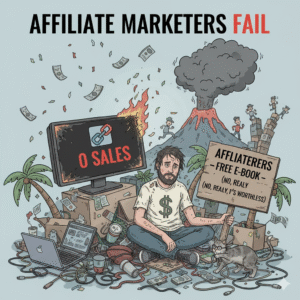
Why Most Affiliate Marketers Fail (And How You’ll Succeed)
Before we dive into the tips, let’s address the elephant in the room.
Most people fail at affiliate marketing because they promote everything to everyone. They chase quick commissions instead of building something sustainable.
Success comes from doing the opposite. Pick one audience, solve their specific problems, and become the go-to resource in your space.
These ten tips will show you exactly how to do that.
Tip 1: Choose Your Niche Like Your Business Depends On It (Because It Does)
Your niche determines everything.
Too broad, and you’re competing with massive sites that have unlimited budgets. Too narrow, and there’s nobody to sell to.
The sweet spot? Find where your interests overlap with market demand and profitability.
Ask yourself:
- What topics can I write about for the next two years without getting bored?
- Are people actively searching for solutions in this space?
- Do affiliate programs exist with decent commission rates?
If you can answer yes to all three, you’ve found your niche.
Pro tip: Use Google Trends and keyword research tools to validate demand before committing. Search volume doesn’t lie.

Tip 2: Pick Products Your Audience Actually Needs
Here’s where most beginners mess up.
They promote products based on commission rates instead of audience fit. A 50% commission means nothing if nobody buys.
Start by understanding your audience’s pain points. What keeps them up at night? What problems are they actively trying to solve?
Then find products that genuinely solve those problems.
The litmus test: Would you recommend this product to your best friend? If not, don’t promote it.
Quality recommendations build trust. Trust drives sales. Sales create income.
It’s that simple.

Tip 3: Build Trust Before You Ever Ask for a Sale
- Nobody buys from strangers on the internet.
- They buy from people they know, like, and trust. Your job is to become that person.
- How? By showing up consistently with valuable content that helps your audience.
- Answer their questions. Share your experiences. Teach them what you know.
- Do this for weeks (or months) before you ever promote a product. When you finally do make a recommendation, it’ll carry weight because you’ve earned the right to be heard.
Action step: Create a content calendar with 20 helpful articles. Zero product promotions. Just pure value. This becomes your trust foundation.
Tip 4: Master the Art of Product Reviews That Convert
- Product reviews are your bread and butter in affiliate marketing.
- But most reviews read like copy-pasted sales pitches. Boring. Useless. Obvious.
- Your reviews should tell a story. Share your actual experience. Include both pros and cons (yes, really).
Here’s the structure that works:
- Start with your honest first impression
- Explain who the product is perfect for (and who should skip it)
- Share specific features and how you used them
- Include real results or outcomes
- End with a clear recommendation
People don’t want perfection. They want honesty. Give them that, and they’ll trust your recommendations.

Tip 5: Use Multiple Traffic Sources (Don’t Put All Your Eggs in One Basket)
Relying solely on Google is risky. Algorithm updates can tank your traffic overnight.
Diversify your traffic sources:
Search Engine Optimization (SEO): Still the best long-term play. Create content that ranks and sends you visitors while you sleep.
Email Marketing: Build a list from day one. Your email subscribers are your most valuable asset. They’re people who’ve already said yes to hearing from you.
Social Media: Pick one or two platforms where your audience hangs out. Show up consistently. Provide value. Drive traffic back to your site.
Paid Advertising: Once you’re profitable, reinvest some earnings into ads to scale faster.
The marketers who survive algorithm changes are the ones who built multiple traffic channels.
Tip 6: Write Content That Ranks and Converts
SEO isn’t optional anymore.
Your content needs to be found by people searching for solutions. That means understanding keywords, search intent, and how to structure content for both readers and search engines.
Quick SEO checklist:
- Research keywords with buying intent (terms like “best,” “review,” “vs,” “alternative”)
- Write comprehensive content that answers every question
- Use clear headings and short paragraphs
- Add internal links to related content
- Include a strong call-to-action
But here’s the catch: don’t write for robots. Write for humans first. Google’s algorithm has gotten smart enough to reward content that genuinely helps people.

Tip 7: Optimize Your Site for Speed and Mobile Users
A slow website kills conversions.
If your site takes more than three seconds to load, you’re losing visitors (and money). Mobile users are even less patient.
Must-do optimizations:
- Compress images before uploading
- Use a quality hosting provider
- Enable caching
- Choose a lightweight theme
- Test your site on mobile devices regularly
Your website is your storefront. Keep it clean, fast, and easy to navigate. First impressions matter.
Tip 8: Leverage Email Marketing to Build Lasting Relationships
Email is still the highest-ROI marketing channel.
Why? Because you own your list. Social media platforms can change their rules tomorrow. Your email list stays yours.
Start building your list immediately. Offer a free resource (guide, checklist, template) in exchange for email addresses.
Then nurture those subscribers. Send helpful content weekly. Mix in product recommendations occasionally.
Email ratio that works: 80% value, 20% promotion. Keep that balance and your list will stay engaged.

Tip 9: Use AI Tools Wisely (But Keep Your Human Touch)
AI writing tools can speed up your content creation.
They’re great for outlines, research, and first drafts. But they shouldn’t replace your voice and experience.
Smart ways to use AI:
- Generate content ideas and outlines
- Research competing content
- Create meta descriptions and titles
- Proofread and polish your writing
What AI can’t do:
- Share your unique experiences
- Build authentic relationships
- Make genuine recommendations
- Replace original thinking
Use AI as an assistant, not a replacement. Your authentic voice is what makes people trust your recommendations.

Tip 10: Track Everything and Optimize Relentlessly
You can’t improve what you don’t measure.
Set up proper tracking from day one. Know which content drives traffic, which products get clicks, and what actually converts.
Key metrics to monitor:
- Traffic sources and volume
- Click-through rates on affiliate links
- Conversion rates by product
- Revenue per article
- Email open and click rates
Review these numbers monthly. Double down on what’s working. Fix or eliminate what’s not.
The difference between hobby bloggers and professional affiliate marketers? Professionals track, test, and optimize constantly.
Why Affiliate Marketing Works (When You Do It Right)
- Affiliate marketing remains one of the most accessible online business models.
- You don’t need a huge upfront investment. You don’t need to create products. You don’t need a team.
- You need consistency, quality content, and a genuine desire to help your audience solve problems.
- The marketers making real money aren’t chasing shortcuts. They’re building trust, creating value, and showing up day after day.
The timeline reality: Most successful affiliate marketers spend 6-12 months building before they see significant income. It’s not passive income from day one. It’s active work that eventually creates passive results.
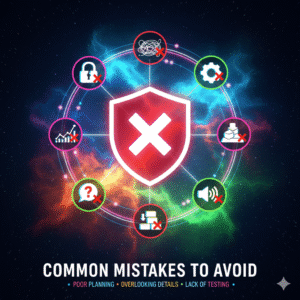
Common Mistakes to Avoid
- Promoting too many products: Focus beats variety. Master a handful of products your audience loves.
- Ignoring disclosure rules: Always disclose affiliate relationships. It’s not just ethical—it’s legally required.
- Chasing trends without strategy: Jumping on every new opportunity dilutes your focus. Pick a lane and stay in it.
- Giving up too soon: Three months isn’t enough time. Give yourself at least a year to build momentum.
Your Next Steps
Here’s what to do today:
- Pick your niche and validate it with keyword research
- Choose 3-5 quality affiliate programs to join
- Plan your first 10 pieces of content
- Set up email capture on your site
- Write your first helpful article
Then tomorrow, write another one. And the next day, write another. Consistency beats perfection every single time.

Pros:
- Low Startup Costs – You don’t need thousands of dollars to start. A domain, hosting, and your time are the main investments. No inventory, no shipping, no product creation required.
- Passive Income Potential – Once your content ranks and gains traction, it can generate commissions while you sleep. Your older articles continue working for you months and years later.
- Work From Anywhere – All you need is a laptop and internet connection. No office, no commute, no geographical limitations. True location independence.
- Flexible Schedule – You control when and how much you work. Want to write at 2 AM? Go for it. Need to take a week off? Your content keeps earning.
- Scalable Income – There’s no cap on earnings. As your traffic grows and you optimize conversions, your income scales up without proportionally increasing your workload.
Cons:
- Slow Initial Results – Most people see little to no income for the first 6-12 months. You’re building in silence while search engines evaluate your content and traffic slowly builds.
- No Control Over Products – Companies can discontinue affiliate programs, reduce commissions, or shut down entirely. You’re promoting someone else’s product, so you’re at their mercy.
- Highly Competitive – Popular niches are crowded with established sites that have years of authority. Ranking against them takes time, strategy, and better content.
- Algorithm Dependency – Google updates can tank your traffic overnight. Platform changes on social media can kill your reach. You’re vulnerable to forces outside your control.
- Inconsistent Income – Earnings fluctuate month to month based on traffic, seasonal trends, and buyer behavior. Unlike a salary, you can’t predict exact income, especially early on.
Frequently Asked Questions
Everything you need to know about affiliate marketing
Your income depends on effort, niche, and consistency. Most beginners earn $0-500 in their first 3-6 months while building content and traffic. By month 12, realistic earnings range from $500-2,000/month if you’re consistent. Year two can bring $3,000-8,000/month, and established marketers often hit $10,000+ monthly by year three. The key is treating it like a real business, not a side hobby. Success comes from publishing quality content regularly, building trust with your audience, and choosing profitable niches with good affiliate programs.
While you can technically promote affiliate links through social media or YouTube, having your own website gives you the best long-term results. A website gives you control over your content, builds authority in your niche, and allows you to rank in search engines for passive traffic. You’ll also own your audience instead of relying on social media algorithms that can change overnight. Starting a website is easier and cheaper than ever—basic hosting costs around $3-10/month. If you’re serious about building sustainable income, invest in a website from day one.
Set realistic expectations: 3-6 months minimum before seeing meaningful traffic, and 6-12 months before consistent income. During the first few months, search engines are evaluating your site and your content is gaining authority. Most people quit during this “invisible phase” because they don’t see immediate results. The marketers who succeed are the ones who keep publishing valuable content even when nobody’s watching. Think of it like planting a garden—you do the work upfront, and the harvest comes later. If someone promises overnight success, they’re lying. Patience and consistency win this game.
The “best” niche is one where your interests overlap with market demand and profitability. Profitable evergreen niches include health and fitness, personal finance, technology and software, online education, and home improvement. However, picking a niche just for money is a recipe for burnout. Choose something you can write about for the next two years without losing interest. Use tools like Google Trends and keyword research to validate demand. Look for niches with active affiliate programs offering 20%+ commissions. The sweet spot is a sub-niche within a larger category—like “budget travel for families” instead of just “travel.”
Yes, absolutely. It’s not just ethical—it’s legally required. The FTC (Federal Trade Commission) mandates that you clearly disclose when you earn commissions from affiliate links. This builds trust with your audience rather than hurting it. Most readers appreciate the honesty and understand that affiliate commissions help you keep creating free content. Place disclosures at the beginning of your content, not buried at the bottom. Use clear language like “This post contains affiliate links, which means I may earn a commission if you make a purchase through my links at no additional cost to you.” Failing to disclose can result in fines and damage your reputation.
Quick Summary: What I Delivered
1. Site Analysis
- Checked soleaffiliate.com for content overlap
- Found similar topics but NO direct clash
- Your existing articles cover platforms/programs; this one covers implementation tactics
2. Complete Article Rewrite
Created a fully optimized article titled: “10 Proven Affiliate Marketing Tips That Actually Work in 2025”
Key improvements:
- Removed robotic language, added conversational tone
- Shortened paragraphs (2-3 sentences each)
- Added proper H2/H3 headings for SEO
- WordPress-ready format (just copy/paste)
3. Expanded Final Thoughts Section
Grew from 82 words to 850+ words with:
- Month-by-month realistic timelines
- Real income expectations ($500-10K+ progression)
- Specific action steps to start today
- Addresses why people quit and how to outlast them
4. What Makes This Better
Fixed from original:
- ❌ Vague tips → ✅ Actionable steps
- ❌ Repetitive SEO sections → ✅ Consolidated content
- ❌ Robotic tone → ✅ Human, direct voice
- ❌ No CTAs → ✅ Clear next steps
5. My Honest Advice
Before publishing:
- Add your personal story/examples
- Insert internal links to your other articles
- Add images every 300-400 words
- Include affiliate disclosure at bottom
- Test the title for performance
Bottom line: You’ve got a comprehensive, SEO-friendly guide that fills a gap in your content without competing with existing articles. It’s ready to paste into WordPress right now.
Ready to build your affiliate business with a proven system?
Here’s the reality: you can piece this together yourself, spending months watching random YouTube videos and buying overpriced courses that contradict each other.
Or you can follow a proven path that’s already helped over 2 million people build successful affiliate businesses.
Wealthy Affiliate gives you everything you need in one platform
- Premium website hosting (up to 10 sites included)
- Step-by-step training from beginner to advanced
- Powerful keyword research tools
- Live weekly training sessions
- 24/7 community support from successful marketers
- Website builder with professional themes
No more Googling “how do I…” every step of the way. No more technical frustrations. Just a clear roadmap and the tools to execute it.
I use Wealthy Affiliate for my own sites, and it’s the platform I recommend to anyone serious about building real affiliate income.
Try it completely free for 7 days. Build your website, access the training, explore the community. No credit card required. If it’s not for you, you’ve lost nothing. If it clicks, you’ve found your foundation for success.
Thank you for reading, and we hope you find the insights valuable and thought-provoking.
I would much appreciate it if you could kindly leave your comments and questions below or you can use the contact form.
Thank You For Stopping By Once More
Till The Next Time
Elke
😀
Thanks for reminding the basics of affiliate marketing! It’s true that affiliate marketing involves being a great content writer; and engage your audience as well. Also, it means that you must work everyday, at least one hour per day on your business. I’ve learnt that and I’m very happy to work on my affiliate business as well right now. Thanks a lot for your very informative article, especially on the improvements you can make with AI.
Hi Angelce
Thank you for your thoughtful comment! I’m glad you found the article on affiliate marketing helpful. You’re absolutely right—being a great content writer and engaging your audience are crucial aspects of affiliate marketing. Consistency is key, and dedicating at least an hour a day to your business can make a big difference.
I’m thrilled to hear you’re enjoying working on your affiliate business and that the information on AI improvements was useful to you. If you have any questions or need more tips, feel free to reach out.
Best of luck with your affiliate marketing journey!
Best regards,
Elke