

How to Increase Affiliate Sales: 7 Proven Strategies
We may earn money or products from the companies mentioned in this post.
Updated August 2026
You have published the content. Your affiliate links are in place. People are starting to visit your website.
But there is one problem.
The affiliate sales are not following.
This is a common stage in building an affiliate marketing business. Getting traffic is important, but traffic by itself does not produce income.
The right visitor needs to find the right content, trust your recommendation, understand why the product may help, and feel comfortable taking the next step.
That is where affiliate content optimization becomes important.
This guide is not another explanation of how to start affiliate marketing. If you are still setting up your website, choosing a niche, or looking for your first affiliate program, those steps need to come first.
Here, we are going to concentrate on what happens afterward.
I will show you seven practical ways to increase affiliate sales by improving the content, links, recommendations, and decisions already happening on your website.
Why More Traffic Does Not Always Mean More Affiliate Sales
It is easy to look at website traffic and assume more visitors should automatically mean more commissions.
Unfortunately, it does not work quite that neatly.
Imagine that 1,000 people visit an article because they want to know what affiliate marketing means. They may be interested in learning, but most are probably not ready to buy an expensive affiliate marketing tool.
Now imagine 100 people visit an article comparing two keyword research tools because they are trying to decide which one to purchase.
Which group is closer to making a buying decision?
Probably the second one.
This is why successful affiliate marketing requires more than increasing pageviews. You need to understand why a person came to the page and what they are trying to accomplish.
That brings us to the first strategy.
1. Match Your Affiliate Offers to Buyer Intent
One of the best ways to improve affiliate marketing conversions is to pay closer attention to buyer intent.
Buyer intent simply means how close someone is to making a buying decision.
A person searching:
“What is keyword research?”
is probably looking for information.
Someone searching:
“Jaaxy vs KWFinder”
is much closer to choosing a product.
And someone searching:
“Is Jaaxy worth it?”
may be actively considering buying it.
These visitors should not all receive the same type of sales message.
Match the Recommendation to the Reader
Ask yourself three questions before adding an affiliate product to an article:
- What problem brought this person to my article?
- Does this product genuinely help solve that problem?
- Is the reader at a stage where recommending the product makes sense?
If the answer to the third question is no, do not force the sale.
Help them first.
You can guide an informational reader toward another article that moves them naturally closer to making a decision.
For example:
Beginner guide → How-to article → Product comparison → Detailed review → Affiliate offer
This creates a natural path instead of expecting every visitor to buy immediately.

2. Make Your Affiliate Recommendations More Specific
Generic recommendations rarely give readers enough information to make a confident decision.
Consider the difference between these two statements.
Generic recommendation:
“This is a great keyword research tool for affiliate marketers.”
Now compare that with:
More useful recommendation:
“This tool may suit a new affiliate marketer who wants simple keyword research without dealing with a complicated dashboard. However, someone who needs advanced competitor analysis may want a more powerful alternative.”
The second version answers a much more important question:
Is this right for me?
That is what your reader really wants to know.
Tell Readers Who the Product Is For
When recommending an affiliate product, explain:
- Who it is best suited to
- What problem it solves
- Its strongest features
- Its limitations
- Who may not need it
- What alternatives are available
- What the reader should consider before buying
This approach makes your affiliate product recommendations much more useful.
It can also increase trust because you are not pretending every product is perfect.
Avoid Turning Every Recommendation Into a Sales Pitch
Readers can usually tell when an article exists mainly to get them to click an affiliate link.
Give them enough information to make their own decision.
Sometimes the right conclusion will be:
This product is probably not right for you.
That may not create an immediate commission, but it builds credibility.
And credibility is far more valuable than one forced sale.
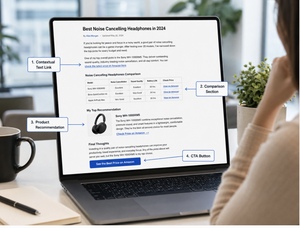
3. Improve Your Affiliate Link Placement
Where you put your affiliate links can affect how often readers notice and use them.
That does not mean adding links every few sentences.
More links do not automatically mean more sales.
Instead, your affiliate links should appear when the reader has been given a reason to consider the product.
Good Places for Affiliate Links
A contextual affiliate link can work well:
- After explaining an important product benefit
- Following a comparison
- After answering a common objection
- Inside a relevant call to action
- Near a pricing or features section
- At the end of a product recommendation
- In a clear summary of who the product is for
The link needs context.
For example, instead of:
Click here.
Try:
See the current features and plans available from [Product Name].
The reader immediately knows what will happen after clicking.
Do Not Overload the Page
Too many buttons, banners, and links can distract from your message.
Your reader should never feel surrounded by advertising.
Keep the page easy to follow and place your strongest calls to action where they naturally make sense.
When you optimize affiliate links, concentrate on relevance rather than quantity.
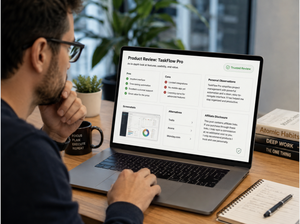
4. Build Trust Before Asking for the Click
Trust is one of the most important parts of improving affiliate marketing conversions.
Your reader is being asked to leave your website, visit another company, and possibly spend money.
That requires confidence.
One way to build that confidence is to provide original information rather than repeating the manufacturer’s description.
Google’s guidance on affiliate content also makes this distinction. Affiliate pages should provide genuine added value rather than simply reproducing information supplied by merchants.
Add Something the Seller Does Not Provide
Your content can add value through:
- Personal observations
- Original screenshots
- Practical examples
- Product comparisons
- Clear advantages and disadvantages
- Explanations of difficult features
- Information about who the product suits
- Answers to common questions
- Alternatives readers should consider
If you have personally used a product, explain what you learned from using it.
If you have not used it, do not pretend that you have.
Instead, explain how you researched and assessed it.
Being clear about what you know is much more credible than trying to sound like you know everything.
Affiliate Disclosures Matter
Readers should also know when you may earn money from a recommendation.
Keep your affiliate disclosure clear and easy to find.
A disclosure should not be hidden in the footer or buried somewhere readers are unlikely to notice.
Transparency does not weaken an affiliate recommendation.
It strengthens it.
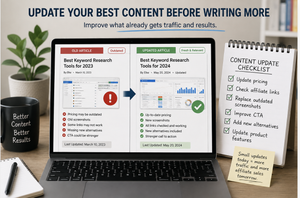
5. Update Your Best Existing Content Before Writing More
Affiliate marketers often concentrate heavily on publishing new articles.
New content matters, but your existing articles may contain some of your best opportunities to increase affiliate sales.
Suppose an older product review already receives regular Google traffic.
Instead of immediately writing another article, examine that page.
Ask:
- Is the information still accurate?
- Has the product changed?
- Is the pricing information outdated?
- Are all the affiliate links working?
- Is the call to action clear?
- Does the article answer today’s buyer questions?
- Are better alternatives now available?
- Are screenshots or examples outdated?
- Does the article contain information that no longer adds value?
An established article may already have search visibility and visitors.
Improving it could produce better results faster than starting from zero with another post.
Look for High-Potential Pages
Pay particular attention to articles that:
- Receive traffic but few affiliate clicks
- Receive affiliate clicks but produce few sales
- Rank for buying-related keywords
- Compare products
- Review individual products
- Answer questions asked just before a purchase
These pages deserve regular attention.
Content maintenance is part of an effective affiliate marketing strategy, not an optional extra.
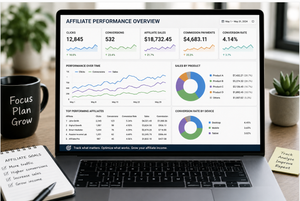
6. Track What Happens After Someone Visits Your Page
You cannot improve what you never measure.
Pageviews tell you how many people visited an article, but they do not tell you whether your affiliate content is doing its job.
You need to look deeper.
Useful Affiliate Marketing Metrics
You do not need dozens of reports.
Start with a few simple measurements.
Affiliate link clicks
How many visitors actually click your affiliate links?
If an article gets plenty of traffic but almost no clicks, the problem may be the product match, recommendation, placement, or call to action.
Sales or conversions
How many of those clicks become sales or qualifying actions?
Your affiliate dashboard should provide this information.
Affiliate conversion rate
This helps you understand how effectively clicks turn into results.
Do not become obsessed with finding one “perfect” conversion rate. Results vary widely between products, industries, traffic sources, prices, and audiences.
Compare your own results over time instead.
Top-performing pages
Which articles produce the most affiliate activity?
These pages can tell you a lot about what your audience responds to.
Top-performing products
One product may consistently outperform another even when both receive similar exposure.
That is useful information.
Follow the Evidence
Your affiliate marketing analytics may show that the product you expected to perform best receives plenty of clicks but few sales.
Another product may receive fewer clicks but convert more often.
Do not continue pushing the first product simply because you personally expected it to win.
Let actual reader behavior help guide your decisions.
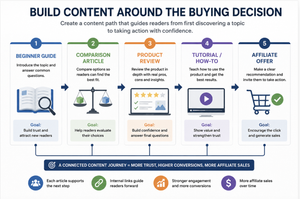
7. Build Content Around the Buying Decision
A strong affiliate website should not depend on isolated product reviews.
Instead, create useful content around the different questions a buyer asks before making a decision.
Think about someone considering an email marketing service.
They might search for:
- What does email marketing software do?
- What features do beginners need?
- Product A vs Product B
- Is Product A easy to use?
- How much does Product A cost?
- Product A review
- Alternatives to Product A
- How to set up Product A
These articles serve different purposes, but together they create a helpful path.
Connect Related Content
Internal links can help readers move naturally between those articles.
For example, an informational guide about email marketing could link to a comparison.
The comparison could link to your detailed reviews.
A review could link to a tutorial.
The tutorial could answer questions for someone who has already decided to use the product.
This creates a useful group of related articles rather than publishing unrelated posts and hoping people find their way around.
Do Not Create Several Articles Answering the Same Question
This is equally important.
You do not need:
- Three beginner guides saying the same thing
- Four reviews targeting virtually identical keywords
- Several articles repeating the same seven steps
Each article should have a clear job.
Before publishing something new, ask:
What question does this article answer that my existing content does not?
That simple question can make your entire website more focused.
A Simple Affiliate Content Optimization Routine
You do not have to rebuild your entire website at once.
Start with one article.
Choose a page that already receives traffic or targets readers with clear buyer intent.
Then check:
- Does the article match what the visitor searched for?
- Is the recommended product genuinely relevant?
- Have I explained who the product is and is not for?
- Are my affiliate links placed naturally?
- Is my disclosure clear?
- Is all product information current?
- Can readers easily find related content?
- Are my calls to action specific?
- Are the affiliate links working?
- What do my clicks and conversions tell me?
Make the necessary changes and monitor what happens.
Then move to the next page.
This is far more manageable than trying to improve every article on your website at once.
Pros and Cons of Trying to Increase Affiliate Sales
Improving affiliate sales can make your website more profitable, but the goal should be better results without damaging reader trust.
Pros
- You can earn more from traffic you already have.
- Better content can improve affiliate conversion rates.
- Tracking results helps you understand what your audience responds to.
- Updating older articles can improve their value and performance.
- Better product recommendations can help readers make more informed buying decisions.
Cons
- Too many affiliate links can make content feel overly promotional.
- Chasing sales too aggressively can reduce reader trust.
- Testing and tracking affiliate performance takes time.
- Some products may receive clicks but still convert poorly.
- Older affiliate content needs regular checking for outdated information and broken links.
What Google Wants From Affiliate Content
Affiliate websites are not automatically a problem for Google.
The problem is thin affiliate content that adds little beyond what readers can already find on the merchant’s website.
Your goal should therefore be simple:
Give the reader a reason to visit your article even if they never click your affiliate link.
That might mean providing a clearer explanation, an original comparison, first-hand observations, useful screenshots, practical examples, or an answer the manufacturer’s page does not provide.
Your content should help the reader make a better decision.
The commission comes second.
Frequently Asked Questions About Increasing Affiliate Sales
How Can I Increase Affiliate Sales Without More Traffic?
Start by improving pages that already receive visitors.
Check whether the affiliate offer matches the reader’s intent, improve your recommendations, make your calls to action clearer, and examine where people are clicking.
Better use of existing traffic can sometimes be more valuable than simply chasing additional pageviews.
Why Do I Get Affiliate Clicks but No Sales?
There are several possible reasons.
The product may not suit the audience, the merchant’s sales page may not convert well, the price may be too high for that audience, or readers may simply be researching rather than buying.
Use your affiliate reports to compare different products and pages rather than guessing.
Should I Add More Affiliate Links to Increase Sales?
Not necessarily.
More links can make an article feel promotional without improving results.
Add affiliate links where they help readers take a logical next step.
Relevance and context matter more than simply increasing the number of links.
Should I Promote More Affiliate Products?
Only when the additional products give readers useful choices.
Promoting ten similar products is not automatically better than recommending two or three that you have carefully researched.
Too many options can make the buying decision harder.
How Often Should I Update Affiliate Content?
There is no single schedule that suits every website.
Prioritize articles containing prices, product features, screenshots, comparisons, special offers, or software information because these can change regularly.
High-traffic and high-converting pages should also receive more frequent attention.
Can Old Blog Posts Still Generate Affiliate Sales?
Yes.
An older article can continue producing traffic and affiliate income if the topic remains relevant and the content is maintained.
Regularly check older posts for outdated information, broken affiliate links, changed products, weak calls to action, and opportunities to provide more value.
Final Thoughts: Improve Before You Add More
Learning how to increase affiliate sales is not about finding a secret button, filling every article with affiliate links, or pushing readers harder.
Often, the biggest improvements come from doing the basics better.
Understand why the reader arrived.
Recommend products that genuinely match their needs.
Explain your recommendations clearly.
Build trust before asking for a sale.
Track what readers actually do.
And keep improving the pages that already show potential.
You do not need to fix your entire website today.
Choose one article that already gets traffic and examine it from your reader’s point of view.
Ask one simple question:
If I were considering spending my own money, would this page give me enough useful information to make a confident decision?
If the answer is no, you have found the best place to start.
Affiliate marketing works best when you focus on helping the reader first. Better recommendations, useful content, clear affiliate links, and regular tracking can all help you increase affiliate sales over time.
You do not need to change everything at once. Pick one article, improve it, check the results, and then move on to the next.
Thanks for reading, and I hope these strategies help you get more from the work you are already putting into your affiliate business.
Elke
Want Help Building a Stronger Affiliate Marketing Business?
If you are still learning how to build your website, find keywords, create useful content, and grow an affiliate marketing business, Wealthy Affiliate is the platform I use and recommend.
It brings website tools, affiliate marketing training, keyword research, and a supportive community together in one place, which can make the learning process much easier for beginners.
Ready to see whether Wealthy Affiliate is right for you?
How did you go from $1.34 to $1,264 with Michelle’s training? I think you forgot to add your link, please add it because that sounds like some incredible training, and I’d love to check it out!
I really enjoyed reading about the mindset that you provided. It is very important to keep that forward-thinking attitude, and have an understanding that giving up is not worth it. The potential to make affiliate revenue is enormous, never ever give up!
Thank You David for your comment
I just followed the training. Here is the link to check out for you https://tinyurl.com/ytfb894f
You always have to keep the positive attitude to go forward even when it gets hard at times.
You will succeed if you keep with it.
Elke
I wish I came across this article when I was still new to the game. This article would have really helped me pick up my business faster than expected. I will be sure to share this article with my friends who have just started being an affiliator. I am sure that they will appreciate it a lot
Thank You Daniel for your comment.
I did a lot of research into the article to help newbies to get a head start.
I know how hard it can be when you just starting out with Affiliate Marketing.
I myself did struggle at the beginning.
I am glad that I can help new starters along to get them off to a to a good start building their business.
If you have more Questions I am glad to answer them.
Elke