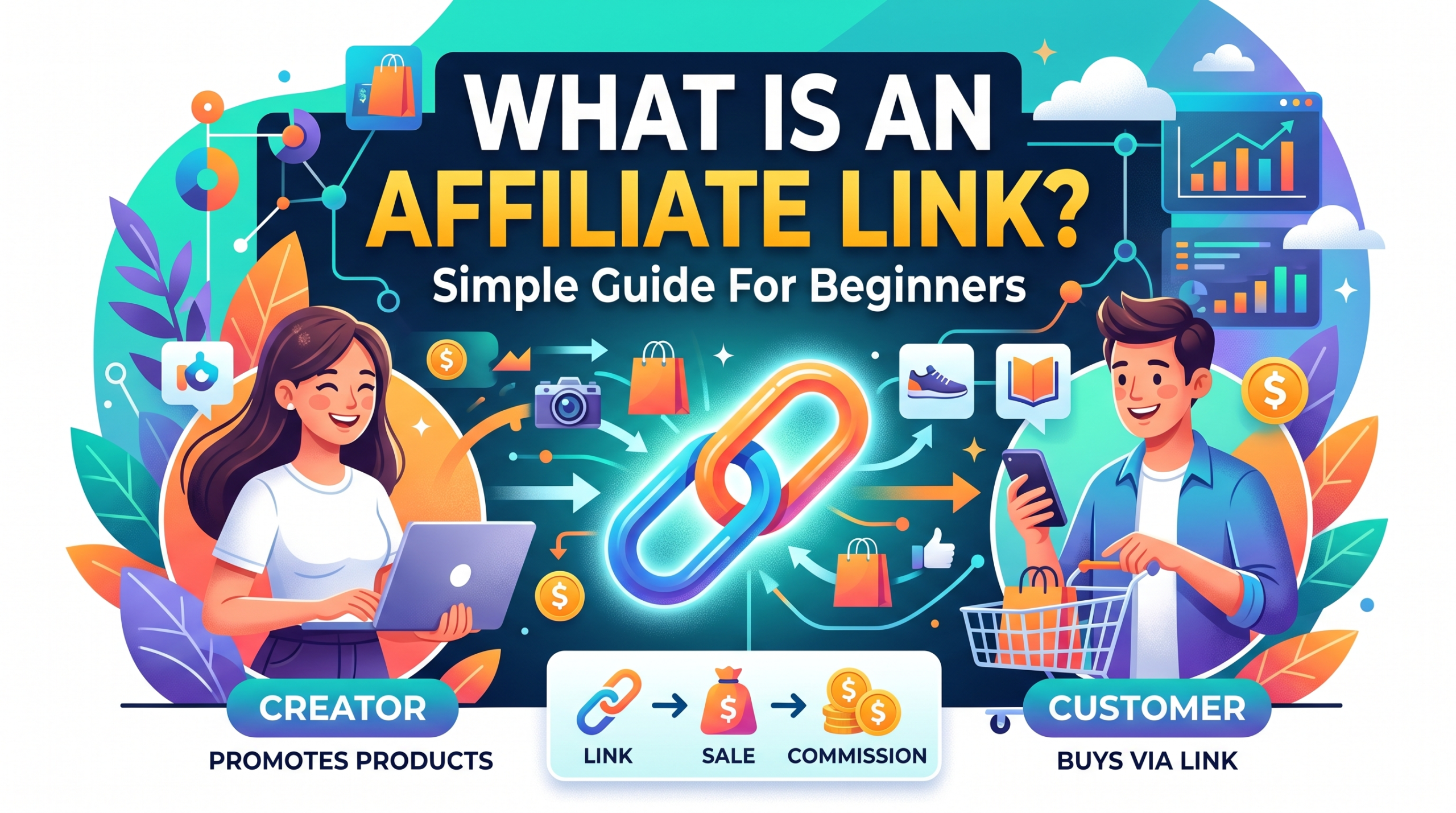
What Is An Affiliate Link? Simple Guide For Beginners
We may earn money or products from the companies mentioned in this post.
If you are new to affiliate marketing, one of the first things you will hear about is an affiliate link.
At first, it can sound a bit confusing. You may wonder, “Is it just a normal website link?” or “How does someone actually make money from a link?”
The simple answer is this: an affiliate link is a special tracking link. When someone clicks that link and buys something, the person who shared the link may earn a commission.
That is the basic idea.
But if you are a beginner, it helps to understand how affiliate links work, why companies use them, and how to use them the right way.
Because here is the honest truth. Affiliate links can help you earn money online, but they only work well when they are used with trust, helpful content, and clear recommendations.
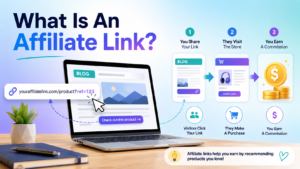
What Is An Affiliate Link?
An affiliate link is a unique link given to you by a company or affiliate program.
It looks like a normal website link, but it has tracking information built into it. This tracking tells the company where the visitor came from.
So, if someone clicks your affiliate link and later makes a purchase, the company knows that you referred that person.
If the sale qualifies, you earn an affiliate commission.
You can think of an affiliate link like a digital referral code. Instead of telling a company, “I sent this person to you,” the link does the tracking for you.
That is why affiliate links are so important in affiliate marketing.
How Does An Affiliate Link Work?
Here is the simple step-by-step version.
First, you join an affiliate program. This could be for a product, service, online course, software tool, or business platform.
Once you are approved, the company gives you a special affiliate link.
You then place that link inside your blog post, review, email, video description, or resource page.
When someone clicks the link, they are taken to the company’s website.
If they buy something, sign up, or complete a required action, the company tracks that result back to you.
Then you may earn a commission.
That is how affiliate links work.
It sounds simple, and in many ways it is. But the real skill is not just adding links to a page. The real skill is helping your reader understand whether the product or service is right for them.
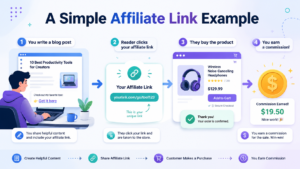
A Simple Affiliate Link Example
Let’s say you write a blog post about tools that help beginners build a website.
In that article, you recommend a beginner-friendly platform you personally like or understand well.
You explain what the platform does, who it may help, what the drawbacks are, and why a beginner may want to consider it.
Then you add your affiliate link.
If your reader clicks that link and signs up, you may earn a commission.
The reader usually does not pay extra because they used your link. In most cases, the company pays your commission from its own marketing budget.
That is one reason affiliate marketing is popular.
The reader gets helpful information. The company gets a new customer. You may earn money for making the connection.
When done honestly, it can be a fair system for everyone.
Why Do Companies Use Affiliate Links?
Companies use affiliate links because they help them reach more people.
Instead of paying only for ads, companies can work with bloggers, website owners, YouTubers, and content creators.
The company only pays a commission when a result happens. That result might be a sale, free trial, lead, or sign-up.
This makes affiliate marketing attractive to companies.
It is also helpful for beginners who want to start an online business without creating their own product.
You do not need to create software. You do not need to pack boxes. You do not need to handle shipping. You do not need to run customer service.
Your role is to connect the right person with the right solution.
That may sound easy, but it still takes work. You need to create helpful content, build trust, and recommend products that make sense for your audience.
Are Affiliate Links Free To Use?
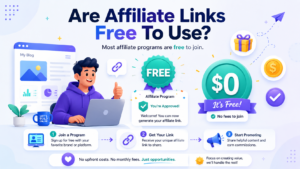
In most cases, yes.
Many affiliate programs are free to join. You apply, wait for approval, and then get access to your affiliate links.
However, not every program accepts every applicant.
Some companies may check your website first. They may want to see that you have real content, a clear topic, and a helpful purpose.
If your website looks unfinished, copied, or created only to push products, you may not get approved.
That is why it is better to build your website properly from the start.
Helpful content comes first. Affiliate links come after that.
Can You Make Money With Affiliate Links?
Yes, you can make money with affiliate links.
But placing a link on your website does not guarantee you will earn anything.
People need to find your content. They need to trust your advice. They need to be interested in the product. And the product needs to solve a real problem for them.
This is why beginners should avoid the mistake of adding random affiliate links everywhere.
That is not a real strategy.
A better approach is to write useful content that answers real questions.
For example:
- What problem does the product solve?
- Who is it best for?
- Who should avoid it?
- What are the pros and cons?
- How does it compare with other options?
- Is it beginner-friendly?
- Is it worth the money?
This kind of content helps your reader. It also gives Google a better reason to understand and trust your page.
Why Trust Matters With Affiliate Links
- Affiliate marketing is built on trust.
- Your reader is not just clicking a link.
- They are listening to your recommendation.
- That means your words carry weight.
If you recommend poor-quality products just because they pay a good commission, your readers may lose trust in you.
And once trust is gone, it is hard to get it back.
A good affiliate marketer does not push people into buying. A good affiliate marketer helps people make a clear decision.
There is a big difference.
A pushy marketer says, “Buy this now. It is amazing.”
A helpful marketer says, “Here is what this product does, here is who it may help, here are the drawbacks, and here is what I would consider before signing up.”
That second approach is much better.
It sounds honest. It respects the reader. It also feels more natural.
What Is An Affiliate Disclosure?
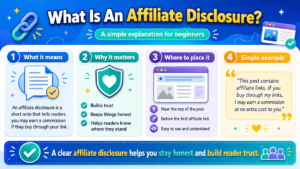
An affiliate disclosure is a short statement that tells your readers you may earn a commission if they buy through your links.
This is important because readers deserve to know when you may be paid for a recommendation.
A simple affiliate disclosure could say:
Disclosure: This page may contain affiliate links. If you buy through one of my links, I may earn a commission at no extra cost to you. I only recommend products I believe may be helpful to my readers.
You do not need to make it complicated.
Keep it clear. Keep it easy to understand. Place it near the top of your article before your first affiliate link.
That way, your reader knows exactly where they stand.
Being upfront is not a weakness. It is part of building trust.
Are Affiliate Links Bad For SEO?
No, affiliate links are not bad for SEO by themselves.
What can hurt your website is low-quality content.
If your page only repeats what the company already says and then adds a few affiliate links, that is not very helpful.
Google wants useful content that gives readers real value.
Your article should help the reader understand the topic better than they did before.
For affiliate content, this may include:
- Your own explanation
- Helpful examples
- Honest pros and cons
- Beginner-friendly advice
- Product comparisons
- Clear buying guidance
- Personal experience where possible
- Common mistakes to avoid
- Useful alternatives
- Google does not need another copied product description.
- Your reader does not either.
- Your job is to make the decision easier.
Pros And Cons Of Affiliate Links
Affiliate links can be useful, but they are not perfect. Here is a simple look at both sides.
Affiliate links are tools
Used well, they can support your online business. Used badly, they can damage your reputation.
Where Can You Use Affiliate Links?
You can use affiliate links in different places, depending on the rules of the affiliate program.
Common places include:
- Blog posts
- Product reviews
- Comparison articles
- Resource pages
- Email newsletters
- YouTube descriptions
- Tutorials
- “Best tools” lists
- Social media posts, if allowed
- Always check the rules of each affiliate program.
- Some companies allow affiliate links in emails. Some do not.
- Some allow social media promotion. Others only allow links on your website.
I know reading rules is not the most exciting part of affiliate marketing. But it is much better than losing your affiliate account later.
What Makes A Good Affiliate Link Placement?
A good affiliate link should feel helpful, not forced.
For example, if you are writing an article about starting a blog, it makes sense to link to a website platform, keyword tool, or training platform.
But it would not make sense to suddenly add a link to something unrelated.
Affiliate links should match the topic of the page.
They should also appear at the right time.
A good place to add an affiliate link is after you have explained the problem and introduced a helpful solution.
For example, you might write:
“If you are a beginner, you may want a platform that teaches you how to build a website, create content, and understand affiliate marketing step by step.”
Then you can add your affiliate link naturally.
The link should help the reader take the next step.
It should not feel like you are chasing them around the page with a sales pitch.
Common Affiliate Link Mistakes Beginners Should Avoid
- Many beginners make the same mistakes with affiliate links.
- The first mistake is using too many links.
- If every few sentences include a link, the article starts to feel crowded and salesy.
- The second mistake is promoting products they do not understand.
- If you cannot explain the product clearly, you may not be ready to recommend it yet.
- The third mistake is hiding the fact that a link is an affiliate link.
- Be honest. A clear disclosure helps protect trust.
- The fourth mistake is copying product descriptions from the company’s website.
- Your article should sound like you wrote it. It should include your own explanation and your own helpful angle.
- The fifth mistake is expecting fast money.
- Affiliate marketing can work, but it is not instant. You need helpful content, traffic, trust, and patience.
How Beginners Should Start With Affiliate Links
If you are just getting started, keep things simple.
Choose a topic you want to write about. Build a helpful website. Create content that answers beginner questions.
- Then choose affiliate programs that fit your audience.
- Do not join every program you find.
- That can become messy very quickly.
Start with a few good programs that make sense for your niche. Learn how they work. Understand the products. Then write content that helps your readers decide if those products are right for them.
Beginner affiliate marketing is not about rushing.
It is about building a strong foundation one step at a time.

Final Thoughts: Affiliate Links Are Simple, But Trust Comes First
An affiliate link is a special tracking link that tells a company you referred a visitor.
If that visitor buys something or completes a required action, you may earn a commission.
That part is simple.
But successful affiliate marketing is not just about links. It is about trust, helpful content, and honest recommendations.
If you are a beginner, do not worry about getting everything perfect from day one.
Start by learning how affiliate links work. Then focus on helping your readers solve real problems.
When your reader comes first, affiliate links become more than a way to earn money.
They become part of a helpful online business.
And that is the kind of business worth building.
Your Next Step Starts With One Helpful Link
Now you know what an affiliate link is, how it works, and why trust matters more than the link itself. But here is the part many beginners miss: the link is not the whole business.
The helpful content behind the link is what makes people click, read, trust, and take action. So before you worry about making your first commission, ask yourself this: What problem can I help someone solve today? Start there, and your affiliate links will have a real purpose.
Ready to keep going? Continue through my Start Here guides and learn how affiliate marketing works, one simple step at a time.
The sooner you understand the basics, the sooner you can start building something online that is useful, trustworthy, and made to last.
Kindest regards, Elke 😀
This was a clear and helpful explanation of affiliate links and how they are used in online marketing. I think it does a good job of breaking down what affiliate links are and why they are important for tracking commissions and referrals in digital marketing.
One question I had while reading is how beginners can realistically identify which affiliate programs are most trustworthy and worth joining, especially with so many options available online. I also found it interesting how affiliate links can be integrated into different types of content, and I’d be curious to know how much transparency is typically expected when disclosing them to audiences.
It’s a useful topic for anyone interested in online income and digital marketing strategies.
Hi Iyere
Thank you so much — I really appreciate your kind words, and I’m glad the article made sense!
You asked a great question about finding trustworthy affiliate programs. Honestly, my best advice is to start with programs you already know and trust. Amazon Associates, ShareASale, and CJ Affiliate are all solid starting points for beginners. They’ve been around a long time and have a good reputation. I’d also say — only promote products you’d actually use yourself. That keeps things real and your readers will trust you more for it.
As for disclosure — yes, transparency is so important. The FTC actually requires it, but beyond the legal side, I believe your audience deserves to know. A simple line at the top of your post like “This post contains affiliate links, which means I may earn a small commission at no extra cost to you” is all it takes. It doesn’t hurt your credibility — it actually builds it.
Thanks again for taking the time to read and comment. Questions like yours are exactly why I love writing about this topic!
Until next time,
Elke ????