
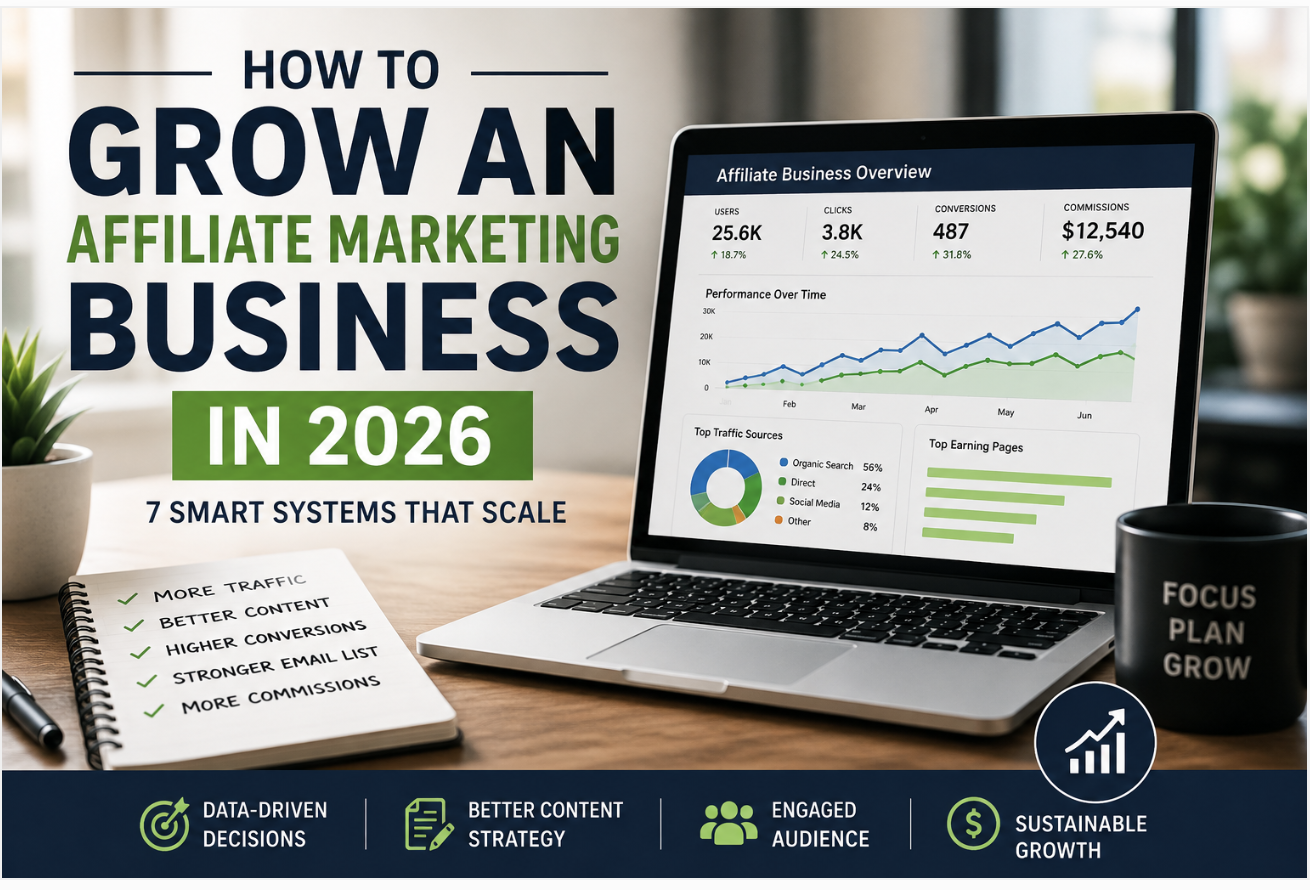
How to Grow an Affiliate Marketing Business in 2026
We may earn money or products from the companies mentioned in this post.
Updated August 2026
Getting an affiliate website online is one thing.
Growing it into a stronger business is something completely different.
Once you have published articles, joined affiliate programs, and started attracting visitors, your focus needs to change. Publishing more content without knowing what is already working can waste a lot of time.
If you want to grow an affiliate marketing business, you need to look at your existing traffic, content, clicks, conversions, and offers and make better decisions from that information.
That matters even more in 2026.
Search is changing. AI-generated answers are becoming more visible. Competition is stronger. Readers can compare products faster than ever.
At the same time, affiliate marketing is far from disappearing. Impact.com’s State of Affiliate Marketing research, based on more than 1,500 marketers, publishers, and creators across eight countries, found that many brands now rely heavily on affiliate partnerships.
The report also found widespread use of AI within partnership marketing.
The opportunity is still there.
But growing now requires more than adding another 50 articles to your website.
Here are seven practical systems that can help you build from what you already have.
1. Find the Pages That Are Already Closest to Making Money
Before creating more content, find out what your existing website is telling you.
A page with 500 interested visitors can be more valuable than a page attracting 5,000 people who have no intention of buying anything.
Start by looking at your existing articles.
Which pages receive impressions from Google?
Which pages receive clicks?
Which affiliate links get clicked?
Which pages lead to commissions?
Which articles rank on page two of Google and may only need an update to move higher?
You are looking for pages that already show signs of life.
For example, imagine you have a comparison article ranking in position 12. It already receives impressions and a few clicks every week.
Creating an entirely new article may not be your best move.
Updating that existing article could be much faster.
You might improve the introduction, update prices, add a comparison table, answer another buyer question, improve internal links, and make the call to action clearer.
That is a much more focused way to grow.
Traffic Alone Does Not Tell the Whole Story
One mistake affiliate marketers make is judging every article by traffic.
Traffic matters, but it is only part of the picture.
A buyer searching:
“Product A vs Product B”
is probably much closer to making a decision than someone searching:
“What is affiliate marketing?”
Both searches have value.
But their commercial value is different.
When you review your content, pay attention to both traffic and buyer intent.
That gives you a much better picture of where your next commission could come from.
2. Strengthen Your Best Topics Instead of Constantly Chasing New Ones
Growth does not always mean covering more subjects.
Often, it means becoming much better at the subjects that already work.
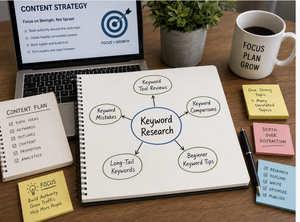
Suppose one of your strongest articles is about keyword research software.
Instead of suddenly publishing unrelated articles about web hosting, social media, email software, and online courses, look at what readers around that successful topic still need to know.
They may want to know:
How accurate is the tool?
How does it compare with another tool?
Is the free version enough?
Which keyword tool is easiest for beginners?
How do you use the results?
What mistakes should you avoid?
Those questions can become supporting articles.
You are building depth around a subject rather than scattering your attention everywhere.
This also gives you more natural opportunities for internal linking.
A reader who arrives on one useful article can move to the next relevant page instead of leaving your website.
Build Around Proven Interest
You do not need to guess endlessly about what your audience wants.
Look at the topics already receiving impressions, clicks, comments, affiliate clicks, or email signups.
Those are signals.
Use them.
When a topic starts performing, ask:
What is the next question this reader will probably have?
That question can often lead you toward your next article.
3. Update Content Before It Becomes Outdated
- Affiliate articles can age quickly.
- Prices change.
- Software features change.
- Affiliate programs change their commissions.
- Companies disappear.
- New competitors arrive.
- Screenshots become outdated.
- Search results change.
An article that was excellent two years ago may now contain enough outdated information to lose a reader’s trust.
Set up a simple content review schedule.
You do not have to rewrite every article every few months.
Prioritize pages that matter most to your business.
Commercial reviews, comparison posts, buyer guides, high-traffic tutorials, and articles already earning commissions should usually receive attention first.
What Should You Check?
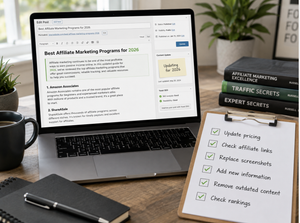
- Check whether the product still exists.
- Confirm pricing and plan names.
- Check affiliate links.
- Replace outdated screenshots.
- Remove claims that are no longer accurate.
- Add new alternatives when they genuinely help the reader.
- Look for sections that answer questions people no longer ask and replace them with questions they do ask.
You can also look at your Google Search Console data to see whether new search terms are appearing for an older article.
Those terms can show you what readers now expect from the page.
4. Prepare Your Content for AI Search Without Forgetting Regular SEO
One of the biggest changes in 2026 is how people find information.
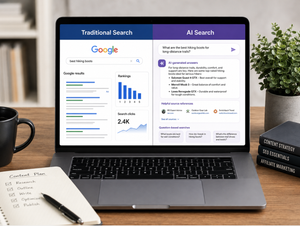
Google continues to add generative AI features to Search.
In June 2026, Google announced dedicated Search Console reporting for visibility inside generative AI features such as AI Overviews and AI Mode. The rollout initially applies to a subset of websites.
This gives website owners another reason to pay attention to more than traditional rankings.
However, you do not need to abandon normal SEO or start stuffing articles with special “AI keywords.”
Google’s own 2026 guidance says the foundations of SEO still matter and emphasizes valuable, unique content rather than generic material that can be found everywhere.
That is especially important for affiliate websites.
Give Search Engines Something Worth Referencing
Do not simply repeat a manufacturer’s product description.
- Add something useful.
- Explain who should use the product.
- Explain who should avoid it.
- Show what you liked and what you did not.
- Compare plans.
- Add screenshots when they help.
- Explain confusing features in plain English.
Answer questions from the point of view of someone making a buying decision.
Original experience, clear explanations, useful comparisons, and well-organized information give your page more value than another rewritten sales page.
AI can help with research, organization, brainstorming, and editing.
But your article still needs a reason to exist.
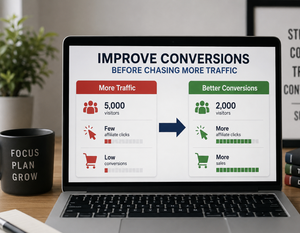
5. Improve Conversions Before Chasing More Traffic
More visitors do not automatically mean more income.
Sometimes the faster route to growth is improving what happens after someone reaches your page.
Suppose 1,000 people visit one of your reviews each month.
If almost nobody clicks the affiliate link, attracting another 1,000 visitors may not solve the real problem.
- First ask why people are not clicking.
- Maybe the recommendation is unclear.
- Maybe the product does not match the search.
- Maybe there are too many buttons.
Maybe the call to action appears before you have given the reader enough information.
Maybe you have explained the product but never clearly told the reader who it is best for.
Make the Buying Decision Easier
A strong affiliate article should help the reader decide.
You can do that with a short comparison table, clear pros and cons, pricing information, alternatives, screenshots, and a simple final recommendation.
Your buttons should also tell people what happens next.
Instead of vague wording such as:
Click Here
use clearer wording such as:
- Compare the Plans
- See Current Pricing
- Try the Free Version
- Read My Full Comparison
The button should match the reader’s next logical step.
Do not turn every section into a sales pitch.
Help first.
Then give the reader a clear way forward.
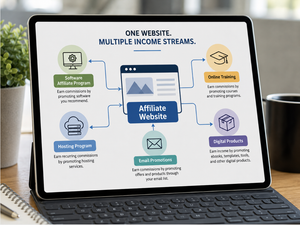
6. Stop Depending on One Affiliate Program
An affiliate business becomes vulnerable when one company provides nearly all its income.
Commission rates can change.
Programs can close.
Terms can change.
A merchant may stop working with affiliates.
The product itself may become less competitive.
You cannot control those decisions.
You can control how dependent your business becomes on them.
That does not mean filling every article with ten different affiliate links.
It means building sensible alternatives.
If you promote one keyword tool, consider whether readers would benefit from comparing it with another.
If you promote monthly software, you might also have a related one-time-purchase product.
If one merchant changes its program, you should know which alternative could replace it.
Diversification is also becoming more important across the wider affiliate industry. Impact.com’s research found that leading brands commonly work across several different partner types rather than relying on a single channel.
The same basic principle applies to publishers.
Do not build your entire business around something another company can remove tomorrow.
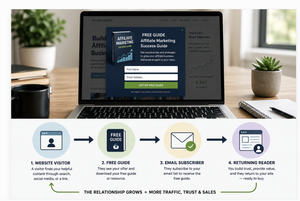
7. Turn One-Time Visitors Into an Audience You Can Reach Again
Search traffic is valuable.
But every reader who leaves your website may never return.
That is why an email list becomes increasingly useful as your site grows.
- You do not own Google.
- You do not own Facebook.
- You do not own Pinterest.
You do own the relationship you build with people who choose to hear from you.
This does not mean asking readers to “join my newsletter” with no clear reason.
Give them something relevant.
If the article is about affiliate platforms, offer a simple platform comparison guide.
If the article is about keywords, offer a keyword checklist.
If the article is about creating product reviews, offer a product review template.
The free resource should solve the next small problem.
Then your emails can continue helping the reader instead of immediately pushing product after product.
That gives you another way to bring people back to new articles, updated comparisons, useful tutorials, and offers that genuinely fit their needs.
Trust Still Determines Whether People Buy
Affiliate marketing may use more AI, better tracking, and new search technology in 2026, but one part has not changed.
People still need a reason to trust your recommendation.
Do not pretend every product is excellent.
Do not hide important disadvantages.
Do not make income claims you cannot support.
Do not recommend something simply because it pays the largest commission.
Affiliate relationships should also be clearly disclosed.
The U.S. Federal Trade Commission says affiliate relationships should be disclosed clearly and conspicuously.
The disclosure should be close enough to the recommendation or affiliate link for readers to understand the connection. Simply writing “affiliate link” may not clearly explain that you can earn money from a purchase.
Clear disclosure is not something to hide.
It can strengthen trust because readers know where they stand.
Pros and Cons of Growing an Affiliate Marketing Business
Pros
- You can build on content and traffic you already have.
- Older articles can often be updated instead of replaced.
- Better tracking can show you which pages and offers make money.
- You can increase income without relying only on more traffic.
- Email marketing can bring readers back to your website.
- You can add more affiliate programs to reduce dependence on one company.
Cons
- Growth can take time, especially if your website is still building authority.
- Affiliate programs can change commissions or close without much warning.
- Older content needs regular updates to stay accurate.
- Search and AI changes can affect website traffic.
- Tracking clicks, conversions, and rankings takes ongoing attention.
- More traffic does not always mean more affiliate sales.
A Simple 90-Day Affiliate Business Growth Plan
You do not need to change your whole website in one weekend.
For the first 30 days, identify your strongest commercial pages. Check traffic, rankings, affiliate clicks, outdated information, and broken links.
Update the pages that already have the best chance of improving.
During days 31 to 60, strengthen your successful topics. Add supporting content where there is a genuine gap.
Improve internal links. Review your calls to action. Compare the performance of your affiliate offers.
During days 61 to 90, focus on retaining readers. Improve your email signup offers, refresh another group of important articles, and check whether your strongest pages are growing in impressions, clicks, affiliate clicks, and commissions.
Then repeat the process.
That is far more useful than publishing endlessly without measuring what happens afterward.
Ready to Grow Your Affiliate Marketing Business?
Growing an affiliate business is easier when you have the right training, tools, and support in one place.
Wealthy Affiliate gives you access to website tools, keyword research, training, and a community where you can ask questions when you get stuck.
If you want a more structured way to improve your website, create better content, and keep moving your affiliate business forward, Wealthy Affiliate is worth looking at.
Frequently Asked Questions
Can you still grow an affiliate marketing business in 2026?
Yes. Affiliate marketing still has strong potential in 2026, but growth now requires more than publishing large amounts of content. Focus on useful content, clear tracking, updated information, strong offers, and building trust with your audience.
What should I track on my affiliate website?
Start with search impressions, organic clicks, affiliate link clicks, commissions, and email signups. These numbers can help you see which pages are working and which ones need improvement.
Do I need to check my website statistics every day?
No. You do not need to watch your statistics constantly. The goal is to review your data regularly so you can see what is improving, what is losing visibility, and where to focus your next efforts.
Should I start a new website if my affiliate site is not growing?
Not necessarily. Your existing website may already have useful articles, rankings, traffic, and affiliate clicks. Updating strong pages and improving weak ones can often be more effective than starting over.
What is most important for affiliate marketing growth in 2026?
Focus on helpful content, updated information, conversion tracking, several income sources, and reader trust. Your strategy should also adapt as search engines and AI tools change how people find and compare information online.
Final Thoughts: Build on What Is Already Working
Growing your affiliate business does not always mean creating more content.
Sometimes your best opportunity is already sitting on your website.
An older article may only need an update. A comparison page may be close to ranking higher.
A review may be getting traffic but not enough clicks. You may also have readers visiting once and never coming back.
If you want to grow an affiliate marketing business, start by looking at what is already working.
Improve your strongest pages. Update outdated information. Track your clicks and commissions. Strengthen your calls to action. Remove what no longer adds value.
Small improvements can add up over time.
The goal is not to keep publishing for the sake of publishing. It is to make your website more useful, more focused, and more profitable.
Build on the pages that already show potential, and keep improving from there.
Thank you for reading.
Elke