

How to Power your Google Ranking Drastically with Excellent SEO
We may earn money or products from the companies mentioned in this post.
Updated on the 10 July 2025
Want to climb to the top of Google without wasting time on outdated tricks?
In this guide, we’ll break down exactly how to power up your Google ranking using proven, ethical SEO strategies.
Whether you’re a blogger, business owner, or affiliate marketer, you’ll learn how to create content that ranks higher, drives traffic, and stays penalty-free.
No fluff—just real steps to help you get noticed and stay there.
Boost Your Google Ranking: Step-by-Step Success Plan
This guide includes these steps:
- First, learn Google’s algorithm.
- Second, assess your search ranking.
- Third step: Track the right metrics
- Fourth step: mobile-friendly website
- Step 5: Fix your penalties
- Step 6: Research keywords
- Perfect on-page SEO
- Step 8: Create great content using keywords
- Build links properly
- Neil Patel consulting
- See how my agency can boost website traffic.
How To Power Your Google Ranking
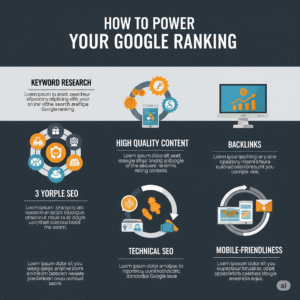
Want to show up higher on Google and get more of the right people visiting your site? It’s totally possible—and you don’t need to be an SEO expert to make it happen.
This guide walks you through simple, smart steps to help boost your ranking. You’ll learn how Google actually works, how to check where you stand, and what to fix if something’s holding you back.
From making your site mobile-friendly to using the right keywords and creating helpful content, every tip is designed to help you grow your traffic the honest way. If you’re ready to get noticed, this is where to start.
Skyrocket Your 2025 Google Ranking with Killer SEO
Ready to climb the Google ranks in 2025? SEO is your launchpad.
If you’re serious about getting noticed online this year, smart SEO is non-negotiable. Forget shortcuts—what works now is building a website Google trusts.
By using proven strategies and keeping up with what’s working in 2025, you can boost your visibility and draw in the kind of organic traffic that actually converts.
This is the year to lay down the SEO groundwork that gets long-term results. Let’s do it right—and let Google do the rewarding.
Key Google Algorithm Updates
It looks like you’re asking about significant Google algorithm updates around June 2024/25.
While there wasn’t one single, massive update specifically dated in June of either year that completely redefined everything, there were definitely important shifts and ongoing trends during that period.

Key Shifts Around That Time
Continuing Emphasis on Content Quality and “Helpfulness”:
Google’s long-term trend of rewarding high-quality, original content that truly helps users continued to be a major focus.
The “Helpful Content” system, which was integrated into the core algorithm in 2024, kept influencing rankings, penalizing content primarily created for search engines rather than people.
This meant that in June 2024 and leading into 2025, websites needed to demonstrate expertise, authoritativeness, and trustworthiness (E-E-A-T), along with providing genuinely useful information.
Focus on User Experience (UX) and Core Web Vitals
The importance of user experience signals, including Core Web Vitals (Largest Contentful Paint, First Input Delay, and Cumulative Layout Shift), remained critical.
Websites that offered a fast, responsive, and visually stable experience generally performed better.
June 2024/25 was a period where optimizing these technical aspects was not just recommended but increasingly necessary for competitive rankings.
Combatting Spam and Low-Quality Content
Google continued its efforts to clean up search results by targeting spam and low-quality content.
There were specific spam updates rolled out in June 2024 and throughout the surrounding months.
These updates aimed to tackle various forms of manipulative content, including thin content, keyword stuffing, cloaking, and other practices that degrade the user experience.
The Rise and Refinement of AI in Search
While not a single algorithm update, the increasing integration of AI into Google’s search results, including the rollout and refinement of AI Overviews, was a significant development in 2024/25.
This changed how search results were presented and how users interacted with information, indirectly impacting how websites needed to optimize to be visible.

Mobile-First Indexing Fully in Effect
By June 2024/25, mobile-first indexing was fully established. Websites that didn’t offer a strong mobile experience were at a significant disadvantage.
This meant ensuring your site was responsive, fast on mobile, and offered equivalent content to the desktop version was crucial.
The shift around June 2024/25 was a culmination of various trends: focus on useful content, user experience, fighting spam, and AI impact on search results.
Adapting to these trends helped websites succeed in Google rankings.

Core Web Vitals: The New Performance Standard
The introduction of Core Web Vitals as a ranking factor was a clear message from Google: user experience is paramount.
These three metrics – Largest Contentful Paint (LCP), First Input Delay (FID), and Cumulative Layout Shift (CLS) – provide quantifiable data on how users perceive the speed, interactivity, and visual stability of your web pages.
- Largest Contentful Paint (LCP): This measures how long it takes for the largest content element (like an image or block of text) to become visible on the screen.
Ideally, this should happen within 2.5 seconds. A slow LCP signals a sluggish loading experience. - First Input Delay (FID): This measures the time it takes for your website to respond to a user’s first interaction, such as clicking a button or selecting a menu item.
A good FID is less than 100 milliseconds, indicating a responsive website. A high FID suggests that users might feel frustrated by delays. - Cumulative Layout Shift (CLS): This measures the amount of unexpected movement of visual elements on a page while it’s still loading.
Imagine trying to click a button, and suddenly it shifts, causing you to click something else. A low CLS (ideally below 0.1) ensures a stable and predictable user experience.
Failing to meet the recommended thresholds for these Core Web Vitals can negatively impact your search engine rankings.
Now is the time to analyze your website’s performance using tools like Google PageSpeed Insights and make necessary optimizations.

Elevated Importance of Content Quality and Relevance
The June 2024 update emphasized Google’s focus on quality, relevant content, aiming to provide users with helpful, informative, and trustworthy information in a saturated information landscape.
This means:
- In-depth and Comprehensive Content: Pages that thoroughly cover a topic are favored over thin or superficial content.
- Accuracy and Trustworthiness: Content should be factually correct and come from reputable sources. Google’s algorithms are designed to identify and reward authoritative content.
- User Intent Matching: Your content should directly address the search queries users are typing into Google. Understanding search intent is crucial for creating relevant content.
- Freshness and Regular Updates: While not always necessary, keeping your content up-to-date can be a ranking factor, especially for topics that evolve over time.
Now, more than ever, creating high-quality content that truly serves your audience is essential for ranking well.

Content Quality and Relevance
The full rollout of mobile-first indexing in June 2024 meant that Google predominantly uses the mobile version of your website for indexing and ranking.
If your mobile site has less content, a different structure, or a poorer user experience than your desktop site, you are at a significant disadvantage.
Key implications of mobile-first indexing:
- Consistency is Key: Ensure that the content and functionality on your mobile site are equivalent to your desktop site. Don’t hide crucial information or features on mobile.
- Mobile-Friendly Design: Your website needs to be responsive and adapt seamlessly to different screen sizes. Elements should be easy to see and interact with on smaller devices.
- Mobile Page Speed: As discussed earlier, speed is even more critical on mobile. Optimize your mobile site for fast loading times.
Ignoring mobile-friendliness is no longer an option.
Now is the time to ensure your website provides an excellent experience for mobile users.
Google’s June 2021 update emphasizes prioritizing user experience, high-quality content, and mobile optimization for websites.
These factors are now integral to achieving and maintaining strong Google rankings.
Mobile-Friendly Focus: Penalties Ahead
Let’s be real—if your website doesn’t work well on a phone in 2025, Google’s not going to be happy about it.
More people are browsing on mobile than ever before, and Google now checks your mobile site first when deciding where to rank you.
So, if your site loads slowly, buttons are too small, or things look squished—your rankings could drop fast.
The truth is, this isn’t just about search engines. If visitors can’t use your site on their phones, they’ll leave—and probably won’t come back.
The fix? Make sure your site looks great and works smoothly on all screen sizes. A few simple changes can make a big difference, both for your visitors and your spot on Google.

Beyond Just Aesthetics: A Core Ranking Signal
Google’s preference for mobile-friendly sites isn’t just about making the web look good on smaller screens.
It’s a fundamental shift in how they index and rank content.
With the vast majority of internet users now accessing the web via mobile devices, Google prioritizes the mobile experience above all else.
Think of it this way: your mobile site is now your primary website in Google’s eyes.
The True Cost of a Non-Mobile-Friendly Site in 2025
Significant Drop in Mobile Rankings:
This is the most direct and impactful consequence.
If your site isn’t optimized for mobile, expect to rank much lower in mobile search results.
Given that mobile searches dominate, this can lead to a drastic decrease in organic traffic.
Potential Decline in Desktop Rankings:
While the initial focus was mobile, the overall user experience, heavily influenced by mobile-friendliness, impacts desktop rankings too.
A poor mobile experience can lead to higher bounce rates and lower time on page, signaling to Google that your site isn’t valuable, regardless of the device.

Mobile-First Indexing Excludes Your Best Content:
Since Google primarily indexes the mobile version of your site, any content, features, or structural elements missing on your mobile site compared to your desktop version may not be indexed or considered for ranking at all.
You’re essentially telling Google that this missing content isn’t important.
Poor Core Web Vitals Performance:
Meeting good Core Web Vitals scores is more challenging on non-mobile-friendly sites, where unoptimized elements can hinder your rankings.
Missed Opportunities in Mobile-Specific Features:
Many of Google’s search features, like AMP (Accelerated Mobile Pages) carousels and mobile-focused snippets, prioritize mobile-friendly sites.
By not optimizing, you’re excluding yourself from these potentially high-visibility placements.
Higher Bounce Rates and Lower Engagement:
A frustrating mobile experience leads to users quickly leaving your site (high bounce rate).
This negative user signal further reinforces to Google that your site isn’t meeting user needs, leading to lower rankings.
Damage to Brand Perception: In 2025, users expect a seamless experience across all devices.
A clunky, unusable mobile site can make your brand look outdated and unprofessional, eroding trust and potentially driving customers to competitors with better mobile experiences.

The “Cater to Them First” Imperative in Action
When Google says “cater to them first,” they’re talking about mobile users—and they’re not joking.
In simple terms, your website should be built with phone and tablet users in mind before anything else. That means fast loading, easy navigation, big enough buttons, and content that looks clean and readable on a small screen.
Why? Because that’s where the majority of your traffic is coming from these days. People scroll, search, and shop on their phones—whether they’re on the couch or in line for coffee.
If your site isn’t a smooth experience on mobile, they’ll bounce—and Google will notice.
This shift isn’t a suggestion anymore—it’s the rule. Google’s mobile-first indexing means your rankings are being judged by your mobile site first, not your desktop version.
So if your mobile setup is clunky or outdated, it’s time to make it a priority.
The takeaway? Don’t treat your mobile site like a sidekick. It’s the main character now.
Adopt Responsive Design:
This ensures your website adjusts smoothly to any screen size—whether someone’s on a tiny smartphone, a tablet, or a widescreen desktop.
With just one codebase, your site automatically reshapes and reorganizes itself to fit the screen it’s being viewed on.
No need to create a separate mobile site or worry about juggling different versions.
Responsive design keeps everything consistent: the layout, the content, and the user experience. It looks great and works beautifully—no matter the device.
And when users have a seamless experience, they’re more likely to stay, explore, and take action.
Plus, Google loves it. A mobile-responsive site checks all the right boxes for SEO, making it easier to rank well and serve your audience at the same time.
Prioritize Mobile Page Speed:
Speed matters—especially on mobile. Nobody wants to wait for a slow-loading site, and Google definitely doesn’t want to rank one.
To keep things moving fast, start by optimizing your images. That means compressing large files without losing quality so your pages load quickly, even on slower networks. Tools like TinyPNG or ShortPixel can help with that.
Next, minify your code. This just means cleaning up unnecessary bits of HTML, CSS, and JavaScript so your site runs lean and smooth behind the scenes.
Then, leverage caching. Caching lets browsers “remember” parts of your site, so repeat visitors don’t have to reload everything from scratch. It’s a small tweak with a big impact on load time.
And don’t forget the power of a Content Delivery Network (CDN). A CDN stores copies of your website on servers around the world, so users get the fastest connection no matter where they are. It’s like putting your website on express delivery.
Put all these together, and your mobile visitors will get the fast, frustration-free experience they expect—and that Google rewards.
Simplify Mobile Navigation:
Make your menus clear, your buttons easy to tap, and your layout friendly to fingers—not just mouse clicks. People using phones don’t have time to zoom in, hunt for links, or guess where to go next.
Keep it simple.
Stick to clean navigation, large text, and buttons with enough space around them so folks don’t accidentally tap the wrong thing.
Think of how someone might browse your site with one hand while holding their coffee in the other.
Avoid clutter at all costs. Too much going on can overwhelm the screen and the visitor. Instead, highlight what really matters—like your call-to-action, key products, or helpful links.
Remember: when it’s easy to use, people stick around longer. And when visitors are happy, Google takes notice.
Ensure Feature Parity:
Unless there’s a clear, user-centric reason, aim for the same core content and functionality on your mobile site as your desktop version. Don’t hide crucial information.
Ignoring mobile-friendliness in 2025 is no longer a viable option.
It’s not just about pleasing Google’s algorithm; it’s about meeting the expectations of the vast majority of your potential audience.
Now is the time to make mobile optimization a cornerstone of your SEO and overall online strategy.

The Mobile Majority is Undeniable
Google’s stance isn’t arbitrary. The sheer volume of internet traffic originating from mobile devices has long surpassed desktop.
People are browsing, searching, shopping, and consuming content primarily on their smartphones and tablets.
Ignoring this massive user base is not only bad for user experience but also bad for business. Google, being user-centric, naturally prioritizes websites that cater to the majority.
More Than Just a “Suggestion”: Tangible Ranking Penalties
Google’s unwavering focus on mobile-friendliness in 2025 has significant real-world consequences for website visibility and traffic.
Websites not optimized for mobile may rank lower in mobile search, lower visibility across devices due to user signals, and risk exclusion from Google’s mobile-first indexing.
Neglecting mobile optimization leads to poor Core Web Vitals, limited search features, high bounce rates, low engagement, and revenue loss.

Lower Positions in Mobile Search Results:
This is the most direct penalty—and it can really hurt. If Google decides your site isn’t mobile-friendly, it may push you down in the search results when people are browsing on their phones or tablets.
And here’s the kicker: most people are searching on mobile now. In 2025, mobile search isn’t just popular—it’s the standard.
So if your site doesn’t meet Google’s mobile expectations, you could be missing out on a huge chunk of your audience without even realizing it.
Think of it this way—if two websites offer the same helpful content, but one loads quickly and looks great on a phone while the other is clunky and slow, Google’s going to show the mobile-friendly one first. Every time.
That means fewer clicks for you, less traffic, and fewer chances to turn visitors into customers or subscribers.
It’s not about being perfect—it’s about being usable. Mobile users expect fast, simple, and smooth. And if they don’t get it, they’ll bounce… and your rankings will follow.
Decreased Visibility in Overall Search:
While Google’s original push was to improve mobile rankings, the impact doesn’t stop there. In 2025, mobile experience can affect your overall SEO health, including how you rank on desktops.
Why? Because it all comes down to how users interact with your site.
If someone visits your website on their phone and finds it hard to use—maybe it loads slowly, the text is too small, or the layout is a mess—they’ll likely click away fast.
That’s called a bounce, and when bounce rates go up and time on page drops, Google takes notice.
These are called user experience signals, and they tell Google whether your content is truly helpful. If lots of people leave your site quickly, it signals that your page didn’t meet their needs—no matter how good the content is.
And here’s the twist: those signals affect your rankings everywhere, not just on mobile. So even if your desktop site is flawless, your search position could drop if mobile users are having a bad time.
In short: a poor mobile experience doesn’t stay on mobile. It can quietly drag down your entire site’s performance—across all devices.
Exclusion from Mobile-First Indexing:
Since Google now indexes your site based on the mobile version, what shows up on mobile is what Google sees—and uses—to decide how to rank your content.
That means if your mobile site is stripped down, broken, or missing key content that appears on your desktop version… Google might never see it.
And if Google can’t see it, it won’t index it. And if it’s not indexed? It’s not showing up in search results—at all.
Think about that for a second: you might have amazing blog posts, product pages, or service info that works beautifully on desktop, but if it’s not optimized for mobile, it could be completely invisible to Google.
In 2025, this isn’t just a missed opportunity—it’s a silent SEO killer.
You could be doing everything right with keywords, backlinks, and great content, but if your mobile experience is poor or incomplete, your efforts may never see the light of day in search.
Bottom line? If it’s not on your mobile site, don’t expect Google to find it.

Poor Performance in Core Web Vitals
Mobile sites often run into issues with slow loading times, clunky interactions, and unstable visuals—like buttons jumping around as the page loads.
And these aren’t just minor annoyances. They’re part of Google’s Core Web Vitals, a set of important performance metrics that directly affect your rankings.
Let’s break it down:
- Loading speed (Largest Contentful Paint): How fast does your main content show up? If mobile users have to wait, they’ll leave
- Interactivity (First Input Delay): When someone taps a button, does it respond right away? A laggy site frustrates users and sends bad signals to Google.
- Visual stability (Cumulative Layout Shift): Do things stay where they’re supposed to? If stuff jumps around while loading, users might tap the wrong link—and bounce.
These metrics are now official ranking factors, and if your mobile site scores low, it’s going to be hard to compete in the search results—no matter how great your content is.
In short: performance is part of SEO now, especially on mobile. A poorly optimized mobile site not only creates a frustrating user experience, but it also sends a big red flag to Google that your site isn’t up to standard.
The good news? These issues can be fixed with the right tools and tweaks—and the payoff is worth it.
Missed Opportunities in Mobile Features:
Google’s mobile search results aren’t just about blue links anymore.
They now include special features like rich snippets, featured answers, AMP carousels, top stories, and more. These spots grab attention and clicks before regular search results even appear.
But here’s the catch:
If your website isn’t mobile-optimized, you’re automatically out of the running for these premium placements.
Google gives these top spots to pages that are lightning-fast, mobile-friendly, and properly structured. If your site doesn’t meet those standards, your content won’t even be considered—even if it’s high-quality.
And that’s a big missed opportunity.
Being left out of these mobile features means you’re harder to find, especially on small screens where users rarely scroll far. Fewer impressions, fewer clicks, and ultimately, less traffic.
So if you want to show up where it matters—in those eye-catching boxes at the top—mobile optimization is your ticket in.
Higher Bounce Rates and Reduced Engagement:
When people visit your site on their phone and it’s slow, hard to read, or just plain frustrating to use, they usually don’t stick around. They leave—sometimes within seconds.
This quick exit is called a “bounce,” and Google pays attention to it.
If too many people bounce off your site, Google takes it as a sign that your content isn’t helpful or your site isn’t doing a good job. And that can hurt your rankings in search results.
Think about it—if someone’s on their phone and your site takes forever to load, or they can’t find what they need, they’re not going to wait. They’ll hit the back button and try someone else’s site instead.
And when that happens over and over again, it sends a message to Google: this page isn’t delivering a good experience.
The fix? Make your site fast, easy to read, and simple to use on mobile. When visitors stick around longer, your chances of ranking higher go way up.
Potential De-indexing (in extreme cases):
While less common, in situations where a website offers a severely poor or misleading mobile experience, Google could potentially de-index the site from mobile search results altogether.
In essence, Google’s emphasis on mobile-friendliness is a fundamental requirement for ranking well in 2025.
Ignoring it isn’t just a technical oversight; it’s a strategic disadvantage that can lead to significant losses in organic traffic and overall online visibility.

Mobile Neglect = Visibility Drop
- Lower Mobile Rankings: This is the most direct impact. If your site isn’t mobile-friendly, it will likely rank lower in mobile search results.
- Since a significant portion of searches happen on mobile, this can lead to a substantial drop in organic traffic.
- Lower Desktop Rankings (Indirectly): While the initial push was focused on mobile rankings, Google’s algorithm considers the overall user experience.
A poor mobile experience can contribute to negative signals (like high bounce rates and low time on page) that can indirectly impact your desktop rankings as well. - Missed Opportunities in Mobile-First Indexing: As we’ve discussed, Google now primarily indexes the mobile version of your site.
- If your mobile site is lacking content, has broken elements, or is significantly different from your desktop version, Google might not fully understand or value your website, leading to lower rankings across all devices.
- Poor Core Web Vitals Scores: Mobile sites often face more challenges with loading speed and layout stability.
Factors like unoptimized images, bulky code, and lack of responsive design can lead to poor scores in Core Web Vitals like LCP (loading speed) and CLS (layout shift).
While Core Web Vitals aren’t the only ranking factor, they contribute to the overall page experience, which Google does consider.
Poor mobile optimization makes it much harder to achieve good Core Web Vitals scores. - Reduced Visibility in Features like Mobile Carousels: Many of Google’s rich results and features, like image carousels and featured snippets, are heavily used on mobile.
A non-mobile-friendly site might not even be eligible to appear in these prominent positions.

The “Cater to Them First” Mentality
Google’s statement, “Mobile users are the majority now, so your site needs to cater to them first,” says it all. This marks a major shift in how we need to think about websites and SEO.
In the past, websites were built for desktops first—and mobile was an afterthought. But that’s no longer the case.
Today, most people are browsing, shopping, and searching the web on their phones. Whether they’re on the couch, in a café, or waiting in line, mobile is how they connect.
So what does that mean for you?
It means your mobile site isn’t just important—it’s the main version of your website in Google’s eyes. It’s the one that gets indexed, ranked, and judged first.
If your mobile site doesn’t look good, load fast, or work properly, it won’t matter how great your desktop site is—Google will still push you down the rankings.
This isn’t just about keeping up—it’s about staying visible.
Mobile-first design isn’t a trend anymore. It’s the standard. Your site needs to feel natural and easy on a smartphone screen.
Navigation should be simple, text should be easy to read, and everything should load quickly.
At the end of the day, if your mobile visitors are happy, your site has a much better chance of ranking higher—and keeping people coming back
It means:
- Mobile-First Design: Instead of designing for desktop and then scaling down, consider designing primarily for mobile and then adapting for larger screens.
This ensures a great mobile experience from the outset. - Prioritize Mobile Performance: Optimize your mobile site for speed above all else. Compress images, minify code, and leverage browser caching to ensure fast loading times on mobile networks.
- Seamless Mobile Navigation: Make sure your website is easy to navigate on touchscreens.
Use clear menus, appropriately sized buttons, and avoid elements that might be difficult to interact with on a mobile device. - Consistent Content Across Devices: Ensure that all essential content and functionality available on your desktop site are also present and easily accessible on your mobile site.
In conclusion, Google’s emphasis on mobile-friendliness is not a trend; it’s the current reality.
Websites that fail to prioritize the mobile experience are increasingly likely to be left behind in search results.
Now is the time to take mobile optimization seriously to protect and improve your Google rankings.

Pigeon: Local Search Gets Smarter
The July 2014 “Pigeon” update was a game-changer for local search. It connected Google Maps’ ranking system directly to the main search algorithm.
This meant that things that helped websites rank generally (like good content and links) now also boosted local search rankings.
Pigeon also made Google much better at understanding what “near me” really meant, delivering more precise and relevant local results.
Searching for “pizza near me” suddenly became a lot more helpful, showing you the best options right around the corner.
Pigeon: Smarter Local Search Continues
While the core of the “Pigeon” update launched in July 2014, its impact on local search is still felt today.
Pigeon fundamentally changed how Google understands and ranks local results by more closely tying them to traditional web ranking signals.
This means strong website content, valuable backlinks, and overall SEO health remain important for local visibility in 2024.
Google continues to refine its local search algorithms, going beyond just proximity. Now, factors like:
- Relevance: How well your business matches what someone is searching for.
- Prominence: How well-known and respected your business is online and offline.
- This includes reviews, citations (mentions of your business name, address, and phone number across the web), and your overall online presence.
- Proximity: How close your business is to the searcher (or the location they specified).
So, while Pigeon was a specific update, the principles it introduced – integrating web and local search signals and emphasizing relevance and location – are still key to ranking well locally in Google in 2024.
Think of it as local search becoming a more sophisticated and nuanced version of general web search.
Now, ensuring your Google Business Profile is fully optimized, your website is strong, and you have positive reviews and consistent online mentions are crucial for local success.

Know Your Rank: Start Winning Now
Think of trying to win a race without knowing where you currently stand. You wouldn’t know how much faster you need to run or what strategies to adjust.
The same principle applies to your Google rankings.
Knowing your current position for relevant keywords is the crucial first step in any effective SEO strategy.
Without this baseline information, you’re essentially shooting in the dark.
Why Tracking Your Rank Matters:
- Identify Strengths and Weaknesses: Tracking reveals which keywords you already rank well for and which ones need improvement.
This helps you focus your efforts where they’ll have the most impact. - Measure Progress Over Time: By consistently monitoring your rankings, you can see the direct results of your SEO efforts.
Are your changes moving the needle? Are you climbing the search results pages? - Understand Your Competition: Knowing where your competitors rank for the same keywords provides valuable insights.
What are they doing that you’re not?
Where are their strengths and weaknesses? - Diagnose Ranking Drops: If you suddenly see a dip in your rankings, tracking helps you identify which keywords are affected, allowing you to investigate potential causes (algorithm updates, competitor actions, technical issues).
- Prioritize Keyword Efforts: You might be targeting many keywords, but tracking their performance helps you prioritize the ones that are most valuable and have the highest potential for improvement.
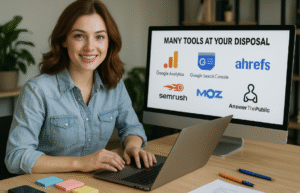
Many Tools at Your Disposal
Fortunately, you don’t have to manually check your Google rankings. Numerous tools, both free and paid, can automate this process and provide valuable insights:
- Google Search Console: Google’s free tool shows your website’s Google search performance, average position for queries. It’s a vital starting point, though lacking real-time keyword ranking.
- Ubersuggest: As we’ve seen, Ubersuggest offers a keyword rank checker that allows you to track your website’s position for specific keywords over time.
- SEMrush: A comprehensive SEO platform with robust rank tracking features, competitor analysis, and much more.
- Ahrefs: Another powerful SEO tool suite known for its accurate rank tracking and backlink analysis capabilities.
- Moz Pro: Offers rank tracking along with a suite of other SEO tools.
These tools typically allow you to:
- Track specific keywords: Monitor your rankings for the terms that are most important to your business.
- Track location-based rankings: See how you rank in specific geographic areas.
- Monitor competitor rankings: Keep an eye on where your competitors stand for the same keywords.
- Get historical data: Analyze your ranking trends over time.
- Receive reports and alerts: Stay informed about significant ranking changes.
Even New Sites Are Affected:
It’s a common misconception that only established websites need to worry about rank tracking.
Even if your site is brand new, understanding your initial rankings (even if they are low) is crucial.
It helps you:
- Identify initial keyword opportunities: You might be surprised to find you already rank for some long-tail keywords.
- Track the impact of early SEO efforts: As you implement on-page optimization and build initial links, you can monitor how these actions affect your rankings from the ground up.
- Establish a benchmark for future growth: Knowing your starting point allows you to accurately measure your progress as your SEO strategy evolves.
In conclusion, knowing your Google rank isn’t just about vanity; it’s a fundamental aspect of a data-driven SEO strategy.
By utilizing the available tools to track your performance, you gain valuable insights that empower you to make informed decisions and ultimately improve your website’s visibility in Google search results.
Now is the time to start tracking if you aren’t already!

Ubersuggest: Your Ranking Intelligence Hub
Ubersuggest is like having your own SEO expert in your pocket.
It shows you what keywords to target, how your site is performing, and even what your competitors are doing—so you can make smarter moves and grow faster.
Put this to work and climb the Google ladder
Keyword Rank Tracking (Specific Page Content): Ubersuggest allows you to pinpoint exactly where your individual pages rank for specific keywords.
This is invaluable for understanding which keywords are driving traffic to which pages and identifying opportunities for optimization.
You can track historical performance and see how your rankings change over time. This helps you refine your on-page SEO efforts for maximum impact.
Competitor Analysis (“Traffic Overview”): By navigating to the “Traffic Overview” section after logging in and entering a competitor’s domain, you gain a wealth of information.
You can see the keywords they rank for, their top-performing pages (which likely target valuable keywords), and their estimated overall traffic.
This allows you to identify keyword gaps you might be missing and understand what’s working for your competitors.
You can then analyze their content and strategies to inform your own.
Your Domain’s Performance Snapshot: When you enter your own domain into Ubersuggest, you get a comprehensive overview of your current SEO standing.
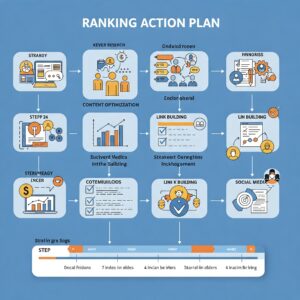
Ubersuggest: Your Ranking Action Plan
The insights you gain from Ubersuggest are actionable. By understanding your current rankings, identifying competitor strategies, and analyzing your top pages, you can:
- Optimize Underperforming Pages: Identify pages ranking just outside the top positions and refine their on-page SEO (content, headings, keywords).
- Target New Keyword Opportunities: Discover valuable keywords your competitors rank for but you don’t, and create content to capture that traffic.
- Improve Content Strategy: Analyze your top pages to understand what makes them successful and replicate those elements in new content.
Site Speed: The Unbreakable Ranking Rule in 2025
Now, let’s hammer home the point about site speed. In 2025, a slow website is a major liability for your Google rankings and your business:
- Google’s Algorithm Penalizes Slow Sites: It’s not just a suggestion; slow loading times are a direct negative ranking factor. Google prioritizes user experience, and slow sites frustrate users.
- Lost Customer Conversions: Even a slight delay in loading speeds can significantly lower conversions as users expect instant gratification, potentially prompting them to switch to a competitor.
- Wasted On-Page SEO Efforts: Think of it this way: you could have the most perfectly optimized title tags, meta descriptions, and compelling content, but if your page takes an eternity to load, users won’t even see it.
All that on-page work becomes virtually useless. - Even Giants Aren’t Immune: The fact that a massive retailer like Walmart experienced significant conversion drops due to slow loading times underscores the universality of this issue.
No website, no matter how authoritative, is immune to the penalties of poor site speed.
The 2025 Reality: Site speed is no longer a technical afterthought; it’s a fundamental prerequisite for ranking well and acquiring customers online.
Utilize tools like Google PageSpeed Insights to detect and resolve speed issues. Enhancing site speed yields better rankings, user experience, and conversions.
Now is the time to make sure your site is lightning-fast!

Lightning Speed: Your Secret Weapon for Higher Google Rankings
Think of it from Google’s perspective: they want to send their users to websites that provide a great experience.
A slow website frustrates visitors, making them likely to hit the back button and look elsewhere.
This “pogo-sticking” tells Google your site isn’t satisfying users, and they’ll likely push you down in the rankings as a result.
Now, consider a fast website. It loads quickly, allowing visitors to access information instantly.
This creates a positive user experience, encouraging them to explore more pages, spend more time on your site, and potentially convert.
These positive signals tell Google that your website is valuable and relevant, leading to higher rankings.

Why Site Speed Matters So Much
- User Experience is King: Google prioritizes websites that offer a seamless and enjoyable experience. Speed is a fundamental part of this.
- Mobile-First Indexing: As we discussed, Google primarily looks at the mobile version of your site. Mobile users expect lightning-fast loading times, and Google knows this.Slow mobile sites get penalized.
- Core Web Vitals: Google’s Core Web Vitals, especially Largest Contentful Paint (LCP) and First Input Delay (FID), directly measure your site’s speed and responsiveness. Poor scores in these areas can significantly hurt your rankings.
- Lower Bounce Rate: Faster loading times reduce the likelihood of users abandoning your site before it even loads. A lower bounce rate signals to Google that your content is engaging.
- Improved Crawlability: Google’s crawlers can index more of your site’s content efficiently if it loads quickly.
This ensures all your valuable pages are being considered for ranking.
In short, a fast website isn’t just a nice-to-have; it’s a crucial ranking factor. Regularly testing your site speed and making improvements is a fundamental step in any effective SEO strategy. Now is the time to make sure your site isn’t lagging behind!
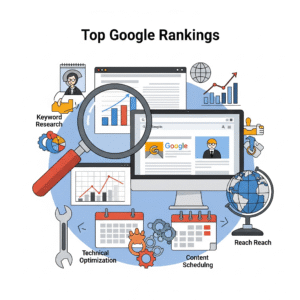
2025 Speed Toolkit: Tools for Top Google Rankings
You’re right, having a toolkit of website speed testing instruments is essential for optimizing your Google rankings in 2025. Let’s dive deeper into each of these favorites and how they contribute to a faster, better-ranking website:
Your Speed-Testing Dream Team
PageSpeed Insights (Google’s Official Word):
Think of this as getting direct feedback from the source.
Developed by Google, PageSpeed Insights analyzes the speed and user experience of your web pages on both mobile and desktop.
It provides a score out of 100 and, crucially, offers specific, actionable recommendations categorized as “Opportunities” (things you should fix) and “Diagnostics” (further insights).
Prioritizing the “Opportunities” is key, as these directly impact your site’s performance as perceived by Google.
Since Google itself uses these metrics in its ranking algorithms, paying close attention to PageSpeed Insights is paramount for SEO success in 2025.
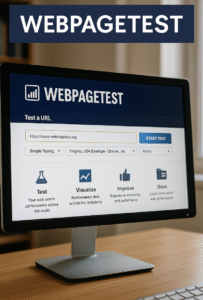
WebPageTest (The Deep Dive Analyst)
For a more granular understanding of your site’s loading process, WebPageTest is invaluable.
It generates detailed waterfall charts that visualize the loading sequence of every single element on your page (HTML, CSS, JavaScript, images, etc.).
This allows you to pinpoint exactly which resources are taking the longest to load and causing bottlenecks.
You can run tests from various global locations and even simulate different connection speeds, giving you a real-world perspective on user experience.
The detailed metrics and insights provided by WebPageTest are incredibly helpful for advanced optimization.
YSlow (The Performance Rulebook Extension)
YSlow, often available as a browser extension (though its active development might vary), evaluates your web page based on a set of established best practices for website performance.
It grades various aspects of your site’s loading (e.g., minimizing HTTP requests, using CDNs, optimizing images) and provides suggestions for improvement.
It’s a convenient tool for a quick initial audit and for identifying common performance issues directly within your browser
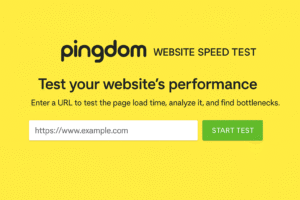
Pingdom Website Speed Test (The Global Perspective)
Pingdom offers a user-friendly interface for testing your website’s speed from multiple geographic locations.
This is crucial because the perceived speed of your site can vary depending on the user’s location relative to your server.
Pingdom provides a performance grade, total load time, page size, and the number of requests.
Its clear presentation of data makes it easy to identify problem areas and track your progress over time.
Harnessing Pingdom for Ranking Gains
As you mentioned, Pingdom is straightforward to use:
- Navigate to tools.pingdom.com.
- Enter the URL of the page you want to analyze.
- Crucially, select a test location that is geographically relevant to your target audience. This will give you a more accurate understanding of their experience.
- Click “Start Test.”
The resulting report provides a clear breakdown of your page’s loading performance.
By addressing the issues highlighted by Pingdom – such as large file sizes, excessive HTTP requests, or slow server response times – you directly improve the user experience on your site.
As we know, a positive user experience, characterized by fast loading times, is a significant positive ranking signal for Google in 2025.
Therefore, actively using Pingdom to identify and resolve speed bottlenecks directly contributes to improved Google rankings.
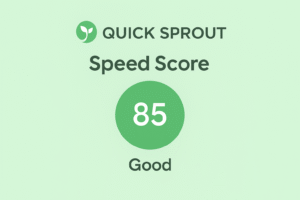
Quick Sprout’s Speed Score: Aim for 81+ (2025)
Neil Patel’s suggestion of 81 as a good starting score on speed testing tools remains a relevant benchmark in 2025.
While the web continues to evolve and user expectations for speed are ever-increasing, aiming for a score in the 80s generally indicates a well-optimized website.
His point that over 50 is a good initial target is still valid for identifying severely underperforming sites.
However, in the competitive landscape of 2025, simply being “not slow” isn’t enough. You need to strive for genuinely fast loading times to gain a competitive edge.
Conversely, if your page content consistently scores below 50 on these speed tests, it’s a critical red flag.
This indicates significant performance issues that are almost certainly harming your user experience and negatively impacting your Google rankings in 2025.
Addressing these fundamental speed problems should be your top priority.
The Double Benefit of Quick Sprout
Yes, using tools and advice from places like Quick Sprout can really help your Google rankings. When you follow their tips—especially the ones about speeding up your site—you’re making your website more appealing to both visitors and Google.
Why does that matter? Because Google loves fast, easy-to-use websites. If your pages load quickly and give people a smooth experience, you’re already ahead of the game.
The tools they recommend aren’t just for checking speed once—they’re great for keeping your site in shape over time. Think of them like a regular check-up for your website.
So if you haven’t added these speed checks to your SEO routine yet, now’s a great time to start. A faster site doesn’t just rank better—it keeps people around longer too.

The Mobile Load Speed Sweet Spot (2025)
Checking your page load speed is one of the first and most important steps in optimizing your website—for both your visitors and Google.
Why? Because people today won’t wait. If your site takes too long to load, they’ll leave before it even finishes.
And when users leave quickly, Google takes that as a signal that your site isn’t meeting their needs—and that can hurt your rankings.
That’s why hitting the right speed benchmark matters.
Quick Sprout’s result of 1.89 seconds is a fantastic start. It puts you well within Google’s recommended load time of 2 seconds or less for mobile users.
Sites that load in under 2 seconds tend to perform better across the board—higher engagement, lower bounce rates, and better chances of ranking higher.
But speed isn’t just about numbers. It’s about giving people a smooth, frustration-free experience that keeps them browsing longer and coming back for more.
So if your site is already loading this fast—well done! You’re ahead of many websites already. Now it’s just about keeping it that way with regular checks and small improvements where needed.
Why the Mobile Target Matters in 2025:
User Expectations:
In today’s fast-paced mobile environment, users expect websites to load almost instantly.
Studies consistently show that as load times increase, bounce rates skyrocket. People are impatient and will quickly leave a site that takes too long to appear.
Mobile-First Indexing:
As we’ve discussed, Google primarily indexes and ranks the mobile version of your website.
A slow mobile load time directly translates to a poor user experience on the version Google prioritizes.
Core Web Vitals:
Two of the three Core Web Vitals, Largest Contentful Paint (LCP) and First Input Delay (FID), are directly influenced by your page load speed and responsiveness.
Poor scores in these areas can negatively impact your rankings.
Lost Traffic and Conversions:
As you rightly pointed out, a long load time can be incredibly costly. Visitors who abandon your site due to slow loading are lost potential traffic and customers.
This directly impacts your bottom line. Think about e-commerce sites – every extra second of load time can lead to a significant drop in conversion rates.
Key Takeaway for 2025:
Continuously monitor and optimize your page load speed, especially for mobile.
Aiming for that sub-2-second mark is crucial for providing a positive user experience, satisfying Google’s ranking factors, and ultimately maximizing your website traffic and conversions.
Don’t let slow loading times be a silent killer of your online success!.

Before You Optimize: Take Your Website’s Pulse
Think of it like this: you wouldn’t start training for a marathon without first understanding your current fitness level.
Similarly, before diving into SEO optimization, it’s crucial to conduct a thorough site health check.
This involves assessing key performance indicators like your keyword rankings and site speed.
These metrics provide a vital baseline, revealing your current strengths and weaknesses and guiding your optimization efforts for maximum impact in 2025.
Why a Pre-Optimization Health Check is Essential
Establish a Baseline: Knowing your current keyword rankings tells you where you stand for the terms that matter most to your business.
This allows you to track progress as you implement SEO strategies. Similarly, assessing your site speed provides a benchmark for improvement. You can’t effectively optimize what you don’t measure.
Identify Strengths and Weaknesses: Your site might already rank well for some keywords, indicating successful past efforts.
Conversely, low rankings for crucial terms highlight areas needing immediate attention.
A slow site speed across the board signals a critical technical issue that needs to be addressed urgently.
Prioritize Optimization Efforts:
The health check helps you focus your resources effectively. If you have decent rankings but a slow site, improving speed might yield the most significant initial gains.
If your speed is good but your keyword rankings are low, content optimization and link building might be your priority.
Measure the Impact of Changes:
After implementing SEO optimizations, your initial health check data allows you to accurately measure the effectiveness of your efforts.
Are your keyword rankings improving? Is your site loading faster? This data-driven approach ensures you’re investing in strategies that actually work.
Detect Potential Issues Early:
A sudden drop in keyword rankings or a significant increase in load time can indicate underlying problems, such as algorithm updates, technical errors, or increased competition. Early detection allows for timely intervention.
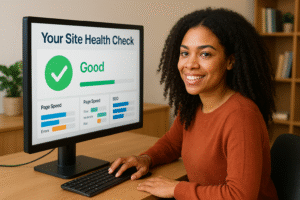
Key Areas to Assess in Your Site Health Check
Keyword Rankings:
- Identify your target keywords – the terms your ideal customers use to find your products or services.
- Use tools like Ubersuggest, SEMrush, or Ahrefs to track your current rankings for these keywords.
- Analyze your ranking distribution: Are you mostly on page 1, page 2, or further back?
- Monitor your competitors’ rankings for the same keywords.
Site Speed:
- Use tools like Google PageSpeed Insights, WebPageTest, or Pingdom to analyze your website’s loading speed on both desktop and mobile.
- Pay attention to key metrics like load time, First Contentful Paint (FCP), Largest Contentful Paint (LCP), and Cumulative Layout Shift (CLS).
- Identify specific elements that are slowing down your site.
- Compare your site speed to industry benchmarks and your competitors’ performance.
In conclusion, before you embark on any SEO optimization journey in 2025, taking the time to assess your site’s current health – specifically its keyword rankings and site speed – is a fundamental and crucial first step.
It provides the necessary insights to create a targeted, effective strategy and measure your progress towards achieving your Google ranking goals.

Sudden Traffic Drop? Unraveling Potential Google Penalties
Experiencing a sudden and unexplained plunge in your organic traffic after a period of consistent growth can be alarming.
The immediate thought that might cross your mind is: has Google deindexed (or effectively banned) my site from its search results?
While a complete deindexing is rare, significant traffic drops often signal underlying issues that need immediate investigation.
Fortunately, a range of powerful tools can help you piece together this puzzle and identify the root cause.
Why Organic Traffic Drops Suddenly Happen
Several factors can contribute to a sudden loss of organic traffic. Understanding these possibilities is the first step in diagnosing the problem:
Google Algorithm Updates:
Google frequently updates its search algorithms.
A significant core update or a specific algorithm targeting certain types of content or link practices could negatively impact your rankings if your site doesn’t align with the new guidelines.
Manual Penalties:
If your website violates Google’s Webmaster Guidelines, you might receive a manual penalty.
These penalties can range from demotions in rankings for specific keywords to complete removal from search results.
You’ll typically find notifications of manual actions in your Google Search Console.
Technical Issues:
Problems with your website’s technical SEO can prevent Googlebot from crawling and indexing your content effectively.
This could include issues with your robots.txt file, broken links, site errors (e.g., 5xx errors), or problems with your sitemap.
Security Issues:
If your website is compromised by malware or other security threats, Google might flag it as unsafe, leading to a significant drop in traffic and even warnings in search results.
Increased Competition:
While usually a gradual process, a new, strong competitor entering your niche or existing competitors significantly ramping up their SEO efforts could lead to a noticeable shift in traffic.
Seasonal Trends or Changes in Search Intent:
Sometimes, a drop in traffic can be attributed to seasonal fluctuations in search volume or a shift in how users are searching for information related to your niche.
Accidental Changes:
Mistakes made during website updates or SEO tweaks can sometimes inadvertently harm your site’s visibility.
MxToolBox Domain Health Report: Your Initial Diagnostic Tool
As you mentioned, MxToolBox Domain Health Report is a valuable tool in your diagnostic arsenal. It provides a comprehensive overview of your domain’s health by checking various critical aspects:
Site Problems:
This feature scans your website for common technical issues that could be hindering its performance and crawlability.
Blacklist Status:
It checks if your domain has been blacklisted by any major security organizations or spam databases, which could severely impact your site’s reputation and traffic.
Mail Server Health:
While primarily focused on email deliverability, issues with your mail server can sometimes indicate broader domain or hosting problems.
Web Server Analysis:
It examines the responsiveness and configuration of your web server, identifying potential issues that could affect site speed and availability.
DNS Records:
Proper DNS configuration is crucial for your website to be accessible. This check ensures your DNS records are correctly set up.
Using MxToolBox:
Simply enter your domain name into the tool, and it will generate a report highlighting any detected issues.
Addressing any critical errors identified by MxToolBox should be one of your first steps in troubleshooting a sudden traffic drop.
Beyond MxToolBox: Expanding Your Investigation:
While MxToolBox provides a great initial overview, other tools and areas to investigate include:
Google Search Console:
This is your direct line of communication with Google. Check for manual actions, crawl errors, index coverage issues, and performance reports.
Significant drops in impressions or clicks can pinpoint when the traffic decline began.
Google Analytics:
Analyze your traffic data closely. Segment your traffic by source (organic, direct, referral) to confirm the drop is specifically in organic search.
Look at which landing pages have been most affected.
Keyword Tracking Tools:
Consider using keyword tracking tools like Ubersuggest, SEMrush, Ahrefs, or Google Search Console to monitor your rankings for your target keywords.
A significant and sudden drop in rankings for multiple important keywords is a strong indicator of a potential Google penalty or a major algorithm shift that’s negatively impacting your site.
These tools allow you to:
- Track historical data: See if and when your rankings started to decline.
- Monitor specific keywords: Identify which keywords have been most affected.
- Compare against competitors: See if your competitors have also experienced similar drops (which might indicate a broader algorithm update).
Investigating a sudden plummet in keyword rankings is crucial for understanding if Google has taken action against your site.
Website Security Scanners:
Run thorough security scans to rule out malware or other malicious activity.
Recent Website Changes: Review any recent updates, redesigns, or SEO changes made to your site that might have inadvertently caused the issue.
In conclusion, a sudden loss of organic traffic is a serious issue that requires a systematic approach to diagnose and resolve.
Tools like MxToolBox Domain Health Report provide valuable initial insights into potential technical or security problems.
By combining the information from various diagnostic tools and carefully analyzing your website’s performance and Google’s guidelines, you can effectively unravel the puzzle and work towards recovering your lost traffic in 2025.
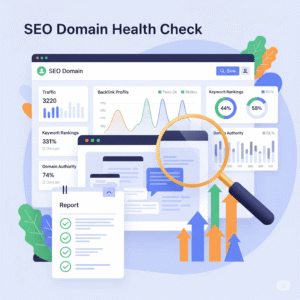
Unmasking Ranking Drops: Your SEO Domain Health Check
Think of your website’s domain health report as a comprehensive medical checkup for its online visibility.
Tools often categorize potential issues into areas like crawlability, security, performance, and content.
When you see these categories, clicking on each one is like a doctor examining a specific system in your body.
It reveals detailed errors and warnings that might be hindering your Google rankings. Addressing these issues one by one is like following a treatment plan to restore your site’s health and improve its performance in search results.
Now, let’s consider the crucial aspect of potential Google penalties.
It’s vital to understand if a sudden drop in traffic isn’t just a natural fluctuation but a sign that Google’s algorithms or a manual review have taken action against your site.
F.E. International’s Website Penalty Indicator: Decoding Algorithm Impacts
The F.E. International’s Website Penalty Indicator is a handy tool built to show if your site’s traffic took a hit right after a major Google update.
It helps you match up traffic drops with specific algorithm changes—so you can figure out what might have gone wrong and start fixing it fast.
Here’s how it works and why it’s valuable:
- Traffic Graph Overlay: During significant Google algorithm updates, the tool overlays update timelines on your website’s traffic graph from Google Analytics.
- Visual Correlation: By visually comparing the dates of significant algorithm updates with any sudden drops or plateaus in your traffic, you can gain insights into whether an update might have affected your site’s performance.
- Understanding the “Why”: If you observe a clear correlation between an algorithm update and a traffic dip, it suggests that your site might have been impacted by the changes Google made to its ranking system.
This then guides your investigation into which specific aspects of the update might be relevant to your website (e.g., content quality, link profile, E-E-A-T). - Improve Ranks with Google Penalty Indication: Identifying a potential algorithmic impact is the first step towards recovery.
Once you understand that an update might be the cause, you can research the specifics of that update and tailor your SEO strategy to align with Google’s new guidelines.
Example: cnn.com Traffic Analysis (Illustrative)
Imagine looking at cnn.com’s traffic graph within the F.E. International tool.
A sharp decline in organic traffic when a significant Google update was released could indicate its effect on cnn.com’s keyword rankings.
This would then prompt their SEO team to analyze the specifics of that update and assess if any aspects of their site’s content, structure, or link profile might need adjustments.

Google’s Direct Feedback: Security & Manual Actions
Algorithm updates are automated changes to Google’s ranking system, whereas manual actions involve direct interventions by human reviewers when a website violates Webmaster Guidelines.
The “Security & Manual Actions” report within Google Search Console is the official place where Google will notify you if a manual penalty has been applied to your site.
- Security Issues: This section alerts you to any security problems detected on your site, such as malware or hacking.
Addressing these is critical not only for your rankings but also for the safety of your visitors. - Manual Actions: This section will explicitly state if a manual penalty has been applied to your entire site or specific parts of it.
It will also usually provide information about the nature of the violation (e.g., unnatural links, thin content with little or no added value, cloaking). - Taking Action: If you find a manual penalty listed, it’s crucial to understand the reason, address the underlying issue, and then submit a reconsideration request to Google once you’ve made the necessary fixes.
In essence, diagnosing a sudden traffic drop requires a multi-faceted approach. Start with a domain health check to identify technical issues.
Then, use tools like the F.E. International Website Penalty Indicator to see if major algorithm updates correlate with the decline.
Finally, and most importantly, regularly monitor your Google Search Console for any direct notifications of security issues or manual penalties.
By combining these insights, you can effectively pinpoint the cause of your traffic loss and take the necessary steps towards recovery and improved rankings in 2025.
Take Control: Manually Boost Your Google Rankings
While Google’s algorithms automate much of the ranking process, there are crucial manual steps you can take to improve your site’s visibility, especially when dealing with penalties or aiming for sustainable growth in 2025.
Human Reviewers vs. Algorithms: Understanding the Difference
It’s important to understand that Google’s human reviewers who issue manual penalties don’t have insight into whether an algorithmic update has negatively impacted your site.
Their focus is solely on whether your website complies with Google’s Webmaster Guidelines.
Therefore, if you suspect an algorithmic hit, directly contacting Google about it won’t lead to a manual override.
Your strategy in such cases involves understanding the specific update and making corresponding improvements to your site.
Fixing Manual Penalties: Your Path to Reinstatement
If Google Search Console indicates a manual penalty, this requires your direct intervention. The provided guide can indeed assist you in this process, which generally involves:
- Thoroughly understanding the reason for the penalty: Google’s report will specify the issue (e.g., unnatural links, thin content).
- Meticulously fixing the identified problems: This might involve removing spammy links, improving or removing low-quality content, or addressing cloaking issues.
- Documenting your efforts: Keep a clear record of the actions you’ve taken to rectify the violations.
- Submitting a reconsideration request to Google: Clearly and concisely explain what you did to fix the issues and demonstrate your commitment to adhering to Google’s guidelines in the future.

Understanding How Users Find You: The Key to Sustainable Growth
Knowing how Google users are currently finding your site is fundamental for making informed decisions about your SEO strategy. This knowledge helps you:
- Identify your most effective channels: Focus more resources on what’s already working.
- Uncover untapped opportunities: See where you might be missing out on potential traffic.
- Understand user behavior from different sources: Tailor your content and user experience accordingly.
The Dominance of Organic Search:
As you mentioned, organic search (traffic from unpaid search engine results) typically dominates other non-organic channels like paid search and social media for most websites.
This highlights the critical importance of a strong SEO strategy for long-term, sustainable traffic.
The Supporting Role of Other Channels:
While organic search is crucial, social media, email, and ads also drive traffic based on your business, industry, and audience.
For example:
- Social media can increase brand awareness and drive initial traffic to your site, which can indirectly lead to more organic searches for your brand or related keywords.
High engagement on social media can also sometimes signal content quality to search engines. - Email marketing can nurture leads and bring repeat visitors to your site, potentially leading to organic searches later.
- Paid ads can provide immediate visibility for specific keywords and help you understand which terms convert best, informing your organic keyword strategy.
Leveraging Google Analytics Acquisition Channels Report:
Uncovering how people find your website is key. You need to look at the “Acquisition Channels” report in Google Analytics. By 2025, this means using GA4.
This report shows you the different ways users arrive at your site. It breaks down your traffic sources.
You’ll see channels like:
- Organic Search: Visitors who found your site through search engines like Google.
- Paid Search: Traffic from your paid ads on search engines.
- Direct: Users who typed your URL directly or used a bookmark.
- Referral: Visitors coming from other websites linking to yours.
- Social: Traffic from social media platforms.
- Email: Users who clicked links in your email campaigns.
Understanding these channels helps you see what’s working. You can then focus your efforts where they matter most. It’s about knowing your audience’s journey.
Now, how to find it in GA4:
- Log in to your Google Analytics 4 account.
- Look for “Reports” in the left-hand navigation.
- Click on “Acquisition.”
- Then, select “Traffic acquisition.”
This report will give you the full picture. You’ll see which channels bring in the most users. It also shows you how engaged those users are. report in Google Analytics (or GA4 in 2025).
Your Traffic Sources: A Quick Look
- Organic Search: Traffic from unpaid search results.
- Direct: Users who typed your URL directly into their browser or used a bookmark.
- Referral: Traffic from other websites linking to yours.
- Social: Traffic from social media platforms.
- Email: Traffic from email marketing campaigns.
- Paid Search: Traffic from your paid search advertisements.
- Other: Traffic sources that don’t fall into the default categories.
By analyzing this report, you can understand the relative contribution of each channel to your overall traffic and identify areas where you might want to invest more effort.
For example, if you see a large volume of organic search traffic with a high conversion rate, you’ll know that your SEO efforts are paying off and should likely be continued or even amplified.
Conversely, if you’re investing heavily in social media but seeing little referral traffic or organic search benefits, you might need to re-evaluate your social media strategy.
In 2025, improving Google rankings means dealing with penalties, adapting to algorithm changes, and grasping user discovery on channels. Utilize Google Analytics Acquisition Channels report for data-driven SEO decisions.

Google Analytics: Unlocking Organic Success
We talked about how to understand your website visitors using Google Analytics, especially with GA4 in mind for 2025.
First, we covered the Acquisition Channels report. This report shows you exactly how users are finding your site, breaking down traffic by sources like organic search, social media, and direct visits. Knowing this helps you see what’s working to bring people in.
Next, we emphasized moving beyond just traffic volume to focus on organic conversions.
These are valuable actions, like purchases or sign-ups, completed by visitors who found your site through unpaid search.
Tracking these conversions in GA4 (by defining them as “key events”) is crucial. It helps you measure the real business impact of your SEO efforts and optimize your strategy for better results.
Finally, we also generated some images for you, including ones for “Skyrocket,” “Tools for Top Google Rankings,” “Sudden Traffic Drop,” and “Your SEO Domain Health Check.”
We also discussed how some abstract phrases are difficult to create images for directly.
Tracking Organic Conversions (The Modern Challenge)
You’re right, directly seeing the exact keywords that led to conversions is more challenging now due to Google’s focus on user privacy (the “(not provided)” issue).
However, it’s still possible to gain valuable insights:
- Focus on Landing Pages: Analyze which landing pages from organic search have the highest conversion rates. While you might not know the exact keyword, understanding which content converts best from organic traffic is crucial.
- Utilize Google Analytics Goals and Events: Set up specific goals in Google Analytics to track desired actions.
By segmenting your traffic by “Organic Search,” you can see which pages or user journeys from organic visitors lead to the most conversions.
Use Events to track micro-conversions (e.g., video views, downloads) that contribute to the overall conversion funnel. - Integrate Google Search Console: While it doesn’t directly show conversion data, Google Search Console (formerly Google Webmaster Tools) is invaluable.
It reveals the keywords that are driving organic clicks to your site.
Analyze top-clicked queries and check their landing page conversion rates in Google Analytics to determine impactful keywords.

Google Search Console: Your Organic Click Counter
Google Search Console (GSC) is a free tool from Google that provides direct insights into your website’s performance in Google Search results.
It shows you exactly how many organic clicks your site receives for specific keywords or search queries.
Here’s a quick rundown:
How to view it: In GSC, navigate to the “Performance” report, then select “Search results.” You can then explore data by queries (keywords), pages, countries, or devices.
You can also filter and sort this data to find high-performing keywords or identify opportunities for improvement.
What it shows: GSC’s “Performance” reports detail impressions (how often your site appeared in search results), clicks (how often people clicked on your site from those results), average position, and click-through rate (CTR) for various keywords.
Why it’s useful: You can see the actual search terms people used to find your site.
This helps you identify which keywords are driving traffic and which ones might need more optimization to improve their ranking and get more clicks.
Key difference from Analytics: Google Analytics tracks user behavior after they land. Search Console shows what happens before they arrive, straight from Google Search. Linking both gives you a full view.
This is powerful information for understanding:
- What users are actually searching for to find you.
- The click-through rate (CTR) of your organic listings for different queries. A low CTR might indicate issues with your title tags or meta descriptions.
- The average position of your website in search results for various keywords.
By merging Google Search Console click data with Google Analytics conversion data, you enhance organic performance analysis, refine SEO strategy for high-converting keywords, and improve user journeys from organic search.
Focus on Intent: The Key to Profitable Keywords
It’s not just about getting more traffic—it’s about getting the right traffic.
One of the biggest mistakes people make with keyword research is chasing big numbers without thinking about what those visitors actually want.
Sure, it’s exciting to rank for a popular term, but if the people clicking through aren’t ready to take action—like buying, signing up, or clicking your affiliate link—it won’t help your bottom line.
That’s where transactional keywords come in. These are the search terms people use when they’re ready to do something—like “buy wireless headphones,” “sign up for SEO training,” or “best deals on laptops.”
When someone types in a phrase like that, they’re not just browsing. They’ve done their homework. They know what they want, and they’re looking for the next step.
That’s exactly the kind of traffic that leads to sales, commissions, or conversions.
So instead of only targeting general or informational keywords, make sure your strategy includes the ones that show real intent. These are the goldmines that bring in results—not just visitors.

Commercial Keywords: The Engine of Sales
Commercial keywords are designed to drive sales and leads.
To truly improve your Google rankings and make money, you must understand the crucial difference between commercial and informational keywords.
The Limitation of Informational Keywords:
While informational keywords can bring visitors to your site, it’s often challenging to directly turn these visitors into paying customers or enthusiastic social media sharers.
People searching for terms like:
- How to get rid of acne at home
- Installing WordPress
- Free online moneymaking
- Downloadable eBook
- Free article spinners
… and often signal that the searcher is in the initial stages of the buying journey, primarily seeking information before considering any purchase or action..
Speak the Language of Buyers: Transactional Keywords
Getting a lot of people to visit your website sounds great—but if those people aren’t interested in what you’re offering, it won’t do you much good.
A common mistake many people make is trying to rank for keywords just because they get a lot of searches. That might bring in traffic, but if those visitors are just looking for information—not ready to buy or sign up—you’ll have a hard time turning that traffic into income.
That’s why you want to focus on transactional keywords. These are the search phrases people use when they’re ready to take action—like make a purchase, book a service, or sign up for something.
For example, someone searching “best budget laptops under $500” is probably looking to buy soon, not just browsing.
These types of keywords are powerful because they attract people who already know what they want. They’re closer to making a decision.
That means a higher chance of making a sale, getting a commission, or gaining a new customer.
So instead of just chasing big search numbers, go after the keywords that show someone’s ready to take the next step. That’s the kind of traffic that really matters.
Examples include:
- Acne treatments (implies looking to buy)
- Top 10 web hosts (suggests comparing options before purchasing)
- N.Y. designers (likely looking to hire or buy from a designer in a specific location)
By focusing your SEO efforts on these commercial keywords, you’re connecting with users who are much further down the buying cycle and have a higher propensity to convert.
This strategic shift in keyword research is essential for maximizing your ROI from organic search in 2025.
Now is the time to leverage both tools to their full potential!
Not focusing on transactional keywords is the most significant keyword research mistake.
Commercial keywords drive sales.
You must understand commercial vs. informational keywords to improve Google rankings and make money.
It’s challenging to turn visitors into purchasers or social media sharers using informational keywords.
Visitors searching for keywords like:
- How to get rid of acne at home
- Installing WordPress
- Free online moneymaking
- Downloadable eBook
- Free article spinners
If they’re not buying, speak search engine-free language.
These terms can drive traffic; a good sales funnel will convert some but not many.
Conversely, some use transactional keywords that convey user intent, such as:
- Acne treatments
- Top 10 web hosts
- N.Y. designers

Seeking Solutions: The “Buy Now” Searchers
Transactional keywords are particularly strong indicators of purchase intent and therefore tend to convert well in e-commerce.
Keywords that include the following prefixes or suffixes often signal a transactional intent and perform well:
- Review
- Purchase
- Discount
- Deal
- Shipping
- Order
Earlier, I mentioned the importance of identifying your existing organic keywords (the terms you already rank for).
You should strategically use these keywords in your meta descriptions and on-page SEO elements (which we’ll discuss later) to improve your visibility for those terms.
Another Illustration: Understanding Searcher Intent
Thinking about what the searcher really wants is key:
- Informational Keyword: “Informational vs. transactional keywords?” – The user wants to understand the difference.
- Transactional Keyword: “Buy SEO dashboard software” – The user is looking to purchase a specific type of tool.

Track These Metrics with an SEO Dashboard
To effectively monitor your progress and understand the impact of your keyword strategy, you should set up an SEO dashboard to track all important metrics in one place, at any time.
- Google Analytics: Provides valuable data on organic traffic, user behavior, and conversions. There are guides available on how to set one up.
- Invest in SEO tools if your budget allows: Paid tools often offer more in-depth keyword analysis, competitor research, and ranking tracking features.
- Google Analytics should work well on a small budget.
- Connect Google Search Console to Google Analytics: This integration allows you to get richer keyword data within your Analytics reports, showing you the actual search queries that are driving clicks to your site.
Mobile-Friendly Site (and Ready for a Mobile-First Google)
Remember the overwhelming importance of mobile:
While some of Google’s algorithm changes might have unclear specifics, their mobile-first strategy is crystal clear. Ignoring mobile optimization in 2025 is no longer an option.
Over half of all website traffic now originates from mobile devices.
Therefore, your site absolutely must be mobile-friendly to rank well in Google.
In 2024/2025, the principles outlined in Google’s 2017 announcement remain incredibly relevant, but with significant amplification due to the full rollout of mobile-first indexing.

Google’s Stance on Mobile Accessibility (Still True in 2025):
The core message from the January 10, 2017, Google Webmaster Blog post – that pages with difficult-to-access content may rank lower in mobile search results – is not just a historical note. It’s a foundational principle of Google’s ranking system in 2025.
Mobile-First Indexing is Fully Here (Since 2020, Finalized in 2024):
Your point about Google switching to “mobile-first indexing” is crucial.
While the shift began in 2020, by July 5, 2024, Google completed the move to crawling and indexing all websites primarily with the smartphone Googlebot.
This means Google essentially views your website as a mobile user would. If content or navigation is difficult or impossible on mobile, it’s as if that content doesn’t exist for Google’s primary indexing process.

Unnavigable = Lower Rankings (Even More Critical in 2025):
The statement that unnavigable sites will hurt your ranking is a direct consequence of mobile-first indexing.
If users on mobile devices can’t easily find information, navigate between pages, or interact with your site, it signals a poor user experience.
This leads to negative ranking factors like high bounce rates and low time on page, directly impacting your visibility in search results for everyone, including desktop users.
Your Position is Indeed Clear (Especially in 2025):
There’s no ambiguity about Google’s stance on mobile. Websites that don’t prioritize the mobile experience are at a significant disadvantage in the search rankings.
In 2025, mobile-friendliness is not optional; it’s a fundamental requirement for SEO success.
Leveraging Google’s Mobile-Friendly Test (While it Lasted):
You mentioned Google’s Mobile-Friendly Test. It was a valuable tool that allowed you to check if your site met Google’s basic mobile-friendliness criteria.
However, it’s important to note that Google officially retired this specific tool and the Mobile Usability report in Google Search Console on December 1, 2023.

The Successor: Google Search Console and Lighthouse
While the dedicated “Mobile-Friendly Test” is gone, Google still provides tools to assess mobile usability:
- Google Search Console: While the dedicated “Mobile Usability” report is retired, Search Console still highlights mobile-related issues within the “Page experience” and “Core Web Vitals” reports.
These sections are crucial for understanding how Google perceives your site’s mobile performance. - Lighthouse: This is now the primary tool recommended by Google for evaluating page quality, including mobile-friendliness, performance, accessibility, and SEO.
You can access Lighthouse within Chrome DevTools or as a browser extension.
It provides detailed reports and actionable recommendations for improvement.

Using the Successor (Lighthouse in 2025)
To check your site’s mobile-friendliness in 2025 using Lighthouse:
- Open Google Chrome.
- Navigate to your website’s URL.
- Open Chrome DevTools: You can do this by right-clicking on the page and selecting “Inspect” or by pressing F12 (or Cmd+Opt+J on a Mac).
- Go to the “Lighthouse” tab.
- Select the “Mobile” device setting.
- Ensure the “Performance,” “Accessibility,” “Best practices,” and “SEO” checkboxes are selected (these all contribute to overall mobile experience).
- Click “Analyze page load.”
Lighthouse will then generate a report with scores and recommendations for improving your site’s mobile-friendliness and performance.
In conclusion, the principles from Google’s 2017 update are even more critical in 2025 due to the full implementation of mobile-first indexing.
Utilize Google Search Console’s reports and Lighthouse tool to ensure your website offers a positive mobile experience for better Google rankings.

Evolving with Google: Mobile Optimization in 2025
While Google retired its dedicated Mobile-Friendly Test tool in late 2023, that doesn’t mean mobile usability is any less important.
In fact, in 2025, Google’s focus on giving users a smooth mobile experience is stronger than ever.
Instead of using a separate tool, mobile-friendliness is now built right into Google’s PageSpeed Insights and Search Console.
These tools look at how your site performs on real mobile devices—things like load speed, layout, button size, text readability, and whether users have to pinch or zoom to navigate.
Why the change? Because mobile is now the main way people access the web. Google’s indexing is mobile-first, which means your rankings are based on how your site performs on phones—not desktops.
So even though the old test tool is gone, the rules haven’t changed. Your site still needs to be fast, easy to use, and visually stable on all screen sizes.
If it’s clunky or slow on a phone, that’s going to affect your rankings, your user experience, and ultimately, your conversions.
In short: mobile-friendliness isn’t optional—it’s the baseline. And even without the old tool, Google’s watching how your site performs for mobile users every step of the way.
Harnessing Google Search Console for Mobile Insights:
Although the specific “Mobile Usability” report is gone, Google Search Console still provides vital information about your site’s mobile performance through other reports:
- Page Experience Report: This section highlights the percentage of your URLs with a good page experience on mobile devices. It considers factors like Core Web Vitals, HTTPS usage, and the absence of intrusive interstitials.
- Core Web Vitals Report: This report shows how your pages are performing for key user experience metrics on both mobile and desktop. Optimizing for “Good” scores here is crucial for mobile ranking.
- Security Issues Report: Any security problems flagged here can severely impact mobile (and desktop) rankings and user trust.
- Manual Actions Report: As discussed earlier, any manual penalties related to mobile violations will appear here.

Mastering the Lighthouse Tool
Lighthouse, integrated into Chrome DevTools, is your primary tool for a comprehensive mobile audit in 2025:
- Access it Directly: Open Chrome DevTools (F12 or Cmd+Opt+J), navigate to the “Lighthouse” tab, select “Mobile,” and run an audit.
- Focus on Key Metrics: Pay close attention to the “Performance,” “Accessibility,” “Best practices,” and “SEO” categories, as these directly influence mobile user experience and Google’s perception.
- Address Opportunities: Lighthouse provides specific, actionable recommendations on how to improve your mobile site’s loading speed, interactivity, visual stability, and overall usability. Prioritize fixing “Opportunities” with the highest impact.
- Iterate and Improve: Mobile optimization is an ongoing process. Regularly run Lighthouse audits and monitor your Google Search Console reports to identify and address any new issues that arise.
Key Mobile Considerations for 2025
- Fast Loading Times: Aim for sub-2-second load times on mobile.
- Responsive Design: Ensure your site adapts seamlessly to different screen sizes.
- Easy Navigation: Make menus clear and buttons easily tappable on touchscreens.
- Readable Text: Use legible font sizes and ensure sufficient contrast.
- Avoid Intrusive Interstitials: Pop-ups that block content on mobile can harm your rankings.
- Optimize Images: Use appropriately sized and compressed images for mobile.
Shortened Version: Use Google Search Console and Lighthouse for better mobile user experience and strong Google rankings in 2025.kings.
Mobile-friendly tips
If your site isn’t mobile-friendly, fix it.
- Mobify and Duda Mobile can help.
- Most WordPress and Wix themes are mobile-friendly. These features may require a site update.
- Make CTAs and form fields tap-friendly.
- Use pop-ups that can be closed. Pop-ups increase conversions but annoy users.
- Be mobile-friendly to improve Google rankings
- Google’s mobile SEO tips offer more SEO advice.
- Mobile and local SEO are pals.
MMobile + Local = Powerful in 2025
The connection between mobile and local searches is stronger than ever in 2025.
Think of Google as a hyper-local matchmaker, directly linking consumers actively searching for nearby businesses with the brands that can serve them.

Your Google Business Profile (GBP) is Your Local HQ:
- Update and Complete: Your GBP (formerly Google My Business) is the cornerstone of your local presence.
Ensure every section is filled out accurately and kept up-to-date with the latest information (address, phone, hours, website, services, etc.). - Claim and Update Now: If you haven’t claimed or updated your GBP listing, do it immediately.
This is prime real estate in local search results and Google Maps. - Beyond Google: This principle extends to other crucial local platforms like Yelp, Facebook, and the Better Business Bureau (BBB).
Consistent and accurate information across these sites builds trust with both users and search engines. - Find More Directories: HubSpot and other resources provide lists of local business listings and directories relevant to your industry.
Expanding your presence in these credible local directories enhances your visibility.

Fixing Google Penalties: Essential for Ranking
After understanding your current search ranking and setting up tracking for key indicators, the next critical step is to check your site for any Google penalties.
- Don’t Build on a Weak Foundation: Promoting or linking to a penalized site is a waste of effort and can even negatively impact your own site’s reputation.
- Google Penalties Matter: As mentioned earlier, understanding and addressing penalties is crucial for ranking well.
The New Era of Link Building: Quality Over Quantity
Link building has evolved significantly. In 2025:
- BAD LINKS HURT: Low-quality, spammy, or manipulative links can lead to Google penalties. It’s no longer about just getting any link; it’s about earning good links.
- Generating Quality Links is Key: Building a portfolio of high-quality, relevant links pointing to your site remains a vital ranking factor.
- Matt Cutts’ Warning Still Rings True: The sentiment behind warnings against manipulative link building from years ago is still very much in effect in Google’s algorithms today.
How to Recover: Removing Unhealthy Links
The first step in dealing with bad links is to remove them.
- Link Analysis is Crucial: You need to thoroughly examine your site’s backlink profile to identify potentially harmful links.
- Link Analysis Tools: Several tools can help you with this process:
- Majestic
- Ahrefs
- Moz (MZLE likely refers to Moz Link Explorer)
- SEOprofiler
- WebMeUp
- Ubersuggest
- SEOprofiler Link Analysis Example: SEOprofiler offers a “Link Profiler Backlinks” feature to analyze your backlink profile.
- Problogger.net Example: The Problogger example likely illustrates a type of backlink to avoid because it could be seen as manipulative or low-quality.
- Key Backlink Elements to Analyze: When reviewing your backlinks, pay attention to:
- Direct and Indirect Impact on Ranking: Understand which backlinks are likely helping or hurting your Google ranking.
- Unique IPs: Links from different IP addresses often signal a more natural and diverse link profile.
A high number of links from the same IP range could indicate a link farm or PBN (Private Blog Network). - Natural Connection: Assess if the linking site is relevant to your niche and if the link placement seems natural within the content.
- Recent Indexing: Links Google has indexed recently (e.g., in the last 90 days) are the ones they are actively considering.
- Nofollow Attributes: Introduced in 2005, the Problogger example emphasizes “nofollow” backlinks, a tag instructing Google not to pass PageRank through specific links.
While nofollow links don’t directly boost your ranking, a natural backlink profile often includes a mix of follow and nofollow links. - A high ratio of nofollow links might occur naturally (e.g., from blog comments), but an unusually high number across your entire profile could warrant investigation.
- Direct and Indirect Impact on Ranking: Understand which backlinks are likely helping or hurting your Google ranking.
By carefully analyzing your backlink profile with tools, you can identify and remove harmful links, crucial for penalty recovery and a reputable website in Google’s view in 2025.

GLevel Up Your Links: What You Need to Know Now
Remember the Google “Penguin” update back in 2013?
That changed the game! Now, having different kinds of links pointing to your site really matters.
Matt Cutts from Google even said you need both “dofollow” links (which help your ranking) and “nofollow” links.
Think of it like getting endorsements from different kinds of people – it looks more natural!
Guess what? Research shows that Problogger isn’t just a “blogging” or “internet marketing” site.
It’s actually in the “media” industry! Knowing your industry can help you find awesome websites to link back to yours, which boosts your SEO (how high you rank on Google).
Unlock Your Link Power
There’s this cool thing called a “Link Influence Score.” It basically tells you how much a website’s links can help your search ranking.
The higher the score, the better! Problogger, being super popular, got a whopping 99%. You can check your own site’s score too!
Anchor Text Secrets
See that menu on the left? Click it to see the words people use when they link to your site – that’s “anchor text.”
After the Penguin update, Google got smarter about people trying to trick the system with the exact same anchor text over and over.
So, now you need to mix things up! Use different words when people link to you to stay in Google’s good graces.
Time to Tidy Up Your Links
It’s not just about getting good links; you also need to get rid of the bad ones! Watch out for links that:
- Come from websites with low or no authority (PR-n/or PR0).
- Are on every single page of another website (sitewide links).
- Are from websites that don’t get much traffic.
- Share the same internet address as many other websites.
- Are on websites that link to tons of other sites.
Luckily, there are free tools out there to help you find these not-so-great links. Tools like Monitor Backlinks and Linkquidator can be lifesavers.
Moz also has a great guide that explains which links can hurt your site.
Once you’ve found these bad links, make a list of them. You’ll need this list later!
Cleaning up your link profile is super important to avoid getting penalized by Google.
You can do this in a couple of ways:
Ask your helpers: If you paid someone to build links for you, now is the time to ask them to remove any dodgy ones.
Reach out: Find the website with the unhealthy link and ask the owner nicely if they can remove it.

Level Up Your Links: What You Need to Know Now
Remember the Google “Penguin” update back in 2013? That changed the game! Now, having different kinds of links pointing to your site really matters.
Matt Cutts from Google even said you need both “dofollow” links (which help your ranking) and “nofollow” links. Think of it like getting endorsements from different kinds of people – it looks more natural!
Guess what? Research shows that Problogger isn’t just a “blogging” or “internet marketing” site. It’s actually in the “media” industry!
Knowing your industry can help you find awesome websites to link back to yours, which boosts your SEO (how high you rank on Google).
Unlock Your Link Power
There’s this cool thing called a “Link Influence Score.” It basically tells you how much a website’s links can help your search ranking.
The higher the score, the better! Problogger, being super popular, got a whopping 99%. You can check your own site’s score too!
Anchor Text Secrets
See that menu on the left? Click it to see the words people use when they link to your site – that’s “anchor text.”
After the Penguin update, Google got smarter about people trying to trick the system with the exact same anchor text over and over.
So, now you need to mix things up! Use different words when people link to you to stay in Google’s good graces.

Time to Tidy Up Your Links
Think of your website’s link profile like a garden.
You plant beautiful flowers (good links) to help it grow and attract visitors.
But weeds (bad links) can choke out the good stuff, hindering your growth and even making your garden look neglected to Google.
So, it’s not enough to just keep planting; you also need to regularly pull out those harmful weeds to keep your site healthy and thriving in search results.
Ignoring bad links can lead to penalties, so a little cleanup goes a long way!
Watch out for links that:
- Come from websites with low or no authority (PR-n/or PR0).
- Are on every single page of another website (sitewide links).
- Are from websites that don’t get much traffic.
- Share the same internet address as many other websites.
- Are on websites that link to tons of other sites.
Luckily, there are free tools out there to help you find these not-so-great links. Tools like Monitor Backlinks and Linkquidator can be lifesavers.
Moz also has a great guide that explains which links can hurt your site.
Once you’ve found these bad links, make a list of them. You’ll need this list later!
Cleaning up your link profile is super important to avoid getting penalized by Google. You can do this in a couple of ways:
Ask your helpers: If you paid someone to build links for you, now is the time to ask them to remove any dodgy ones.
Reach out: Find the website with the unhealthy link and ask the owner nicely if they can remove it.

Supercharge Your Site: The Lowdown on Link Power
Remember when Google rolled out its “Penguin” update back in 2013? It totally shook things up! Now, having a diverse mix of links pointing to your website is super important.
Even Google’s own Matt Cutts said you need both “dofollow” links (the ones that boost your ranking) and “nofollow” links.
Think of it like getting different kinds of shout-outs – it just looks more natural to Google!
And get this! Research actually shows that a big site like Problogger isn’t just about “blogging” or “internet marketing” – it’s really in the “media” world!
Knowing your industry can help you discover awesome websites to link back to yours, which seriously helps your SEO (that’s how high you show up on Google).
Unleash the Power of Your Links
There’s this neat thing called a “Link Influence Score.” It basically tells you how much a website’s links can help your site climb the search rankings.
The higher the score, the better the boost! Problogger, being the rockstar it is, snagged a score of 99%. You can see your own site’s score too!
Decoding Anchor Text
See the menu on the left? Give it a click to see the words people use when they link to your site – that’s “anchor text.”
After the Penguin update, Google got way smarter about folks trying to game the system by using the exact same anchor text over and over.
So, now you’ve got to mix it up! Use different words when others link to you to stay on Google’s good side.
Time to Spring Clean Your Links
It’s not just about snagging great links; you also need to ditch the not-so-great ones!
Keep an eye out for links that:
- Come from websites with little to no authority.
- Show up on every single page of another website.
- Are from websites that barely get any visitors.
- Share the same internet address as a bunch of other websites.
- Are on websites that link out to a crazy number of other sites.
The good news is, there are free tools out there to help you spot these less-than-ideal links. Tools like Monitor Backlinks and Linkquidator can be real lifesavers.
Plus, Moz has a fantastic guide that dives deep into which links can actually hurt your site.
Once you’ve found these bad links, make a list of them. Trust me, you’ll need it!
Cleaning up your link profile is super important if you want to avoid getting a penalty from Google.
You’ve got a couple of ways to tackle this:
- Reach Out: Find the website with the unhealthy link and send the owner a friendly email asking if they could remove it.
- Ask Your Team: If you hired someone to build links for you, now’s the time to ask them to remove any of the questionable ones.

Know Your Buyers (and Browsers)
So, when you’re doing your keyword research (that’s finding out what people are searching for), it’s super helpful to know why they’re searching.
Are they just looking for information, or are they ready to buy something?
Think of it like this:
Informational Keyword (just curious): Someone searching for “improve Google rankings” probably wants to learn some tips and tricks.
Another example? “Free web design.” They’re likely looking for resources or maybe just understanding what it involves.
Transactional Keyword (ready to take action): Now, someone searching for “free web design courses” is showing a bit more intent.
They’re not just curious; they’re looking to learn how to do web design, possibly leading to them needing tools or services later.
To really boost your website on Google, you need a good mix of both informational and transactional keywords.
Think about it – before you try to sell someone something, it’s a great idea to teach them something first!
Informational content helps you build trust, connect with people, and even get them to sign up for your email list so you can keep in touch.
Unlock the Power of Long-Tail Keywords
You know those longer, more specific search phrases people type in? Those are called “long-tail keywords,” and they’re a big deal!
Especially with things like voice search becoming popular and Google’s smarts (like BERT) getting better at understanding natural language.
Questions are also super important long-tail keywords. Think about what questions your potential customers might ask.
If you’re just starting out with this, there are guides out there to help you figure out how to use long-tail keywords effectively.

Sneak Peek at Your Competitors’ Keywords
Ever wonder what keywords your competitors are using to rank higher than you on Google? Well, you can actually find out! It’s like a little friendly spying.
If their strategies seem to be working, you can definitely take some inspiration.
Google Keyword Planner can give you an idea of what keywords your competitors might be targeting.
Let’s say you’re in the “survival knife” world. A really helpful and trustworthy blog like Survivallife.com is a great one to keep an eye on.
You can use a tool like Ubersuggest. Just pop your competitor’s website address into the “landing page” box and hit search.
Then, scroll down to the “SEO Keywords” section, and bam! You’ll see a list of keywords they’re ranking for. Pretty cool, right?
So, when you’re doing your keyword research (that’s finding out what people are searching for), it’s super helpful to know why they’re searching.
Are they just looking for information, or are they ready to buy something?
Think of it like this:
Informational Keyword (just curious): Someone searching for “improve Google rankings” probably wants to learn some tips and tricks.
Another example? “Free web design.” They’re likely looking for resources or maybe just understanding what it involves.
Transactional Keyword (ready to take action): Now, someone searching for “free web design courses” is showing a bit more intent.
They’re not just curious; they’re looking to learn how to do web design, possibly leading to them needing tools or services later.
To really boost your website on Google, you need a good mix of both informational and transactional keywords.
Think about it – before you try to sell someone something, it’s a great idea to teach them something first!
Informational content helps you build trust, connect with people, and even get them to sign up for your email list so you can keep in touch.

Unlock the Power of Long-Tail Keywords
You know those longer, more specific search phrases people type in? Those are called “long-tail keywords,” and they’re a big deal!
Especially with things like voice search becoming popular and Google’s smarts (like BERT) getting better at understanding natural language.
Questions are also super important long-tail keywords. Think about what questions your potential customers might ask.
If you’re just starting out with this, there are guides out there to help you figure out how to use long-tail keywords effectively.
Sneak Peek at Your Competitors’ Keywords
Ever wonder what keywords your competitors are using to rank higher than you on Google? Well, you can actually find out! It’s like a little friendly spying.
If their strategies seem to be working, you can definitely take some inspiration.
Google Keyword Planner can give you an idea of what keywords your competitors might be targeting.
Let’s say you’re in the “survival knife” world. A really helpful and trustworthy blog like Survivallife.com is a great one to keep an eye on.
You can use a tool like Ubersuggest. Just pop your competitor’s website address into the “landing page” box and hit search.
Then, scroll down to the “SEO Keywords” section, and bam! You’ll see a list of keywords they’re ranking for. Pretty cool, right?

Competitor research improves Google rankings
Besides the keywords, there are also:
You also need to know:
Search Volume: This is how many times people search for a specific keyword in a month.
High volume can mean lots of potential traffic, but also more competition.tered into a search engine in a given month.
See What the Top Dogs Are Getting (Traffic-Wise) Now
Besides just the keywords themselves, you can also see some cool stuff like:
- URL’s Google Ranking: Where a specific webpage shows up in Google search results.
- Estimated Visits: How much traffic a website likely gets from a particular keyword.
For example, if your competitor is #1 for “survival life” and gets around 395 visitors a month from that, you’ll have a good idea of the traffic you could get if you outrank them.
This trick works for any topic and can even help you find hidden gem keywords that can really boost your rankings!
Level Up: From Page Two to Page One
Stuck on the second page of Google? Want to hit that sweet first page?
There’s a cool strategy called the “Skyscraper Method,” made popular by Brian Dean from Backlinko.
Here’s the simple idea:
- Find a top-ranking piece of content on your topic.
- Make it even better! Add more detail, make it easier to understand, and include the latest info.
- Spread the word everywhere! Let people know about your awesome, improved content.
Brian Dean used this and saw his website traffic jump by a massive 457%!
You can try this too. Let’s say your topic is “small business outsourcing guide.”
Here’s how:
- Do your homework: Really dig into the topic and find studies and solid information.
- Target those keywords: Use the keyword strategies we talked about earlier.
- Write the ultimate guide: Make it super detailed and give people actionable steps they can follow.
- Link to the experts: Include links to blogs of people who really know their stuff about outsourcing.
- Craft a catchy headline: Make people want to click! Instead of just “Small Business Outsourcing,” try something like:
- “The Small-Business Outsourcing Guide”
- “A Complete Guide to Outsourcing for Small Businesses”
- “How Outsourcing Can Totally Transform Your Small Business”
- Reach out: Let the blog owners you linked to know about your amazing post. They might even link back to you!

Fine-Tune Your Content with Keywords
So, you’re probably thinking, “Okay, I know what keywords to use, but how often should I actually use them in my writing?” Good question!
The secret sauce isn’t about stuffing your article with keywords a million times. Instead, focus on writing naturally and clearly for your readers.
Think of keywords as helpful signposts for Google, but your main goal is to create awesome content that people will love to read and find useful.
If you do that well, the keywords will usually fall into place!
Why Keywords Matter: The Big Picture
So, what’s the deal with all this keyword stuff?
Think of keyword analysis as the foundation of doing well in search marketing.
By understanding what people are actually searching for, marketers can make their websites better at converting those searchers into customers.
You can’t really improve your ranking or get more customers from Google if you don’t know what words those potential visitors are using.
Now you’ve got a good handle on keyword research!
It sounds easy, right? The trickier part is finding those keywords that will actually bring in traffic from Google.
Ever since Google’s “Not Provided” update, some of this information has become harder to find. But don’t worry, there are ways to still dig up some of that valuable data!

Cracking the Code to Organic Traffic
Okay, so getting the full picture of exactly which search terms bring people to your website organically (without paid ads) is a bit tricky these days.
But don’t worry!
There are still some super important clues to focus on:
- Popular Keywords: The main terms people are searching for in your niche.
- Competitive Phrases: Keywords that are important but might have more websites competing for them.
- Google’s “People also ask” questions: Those helpful questions Google shows in search results – they tell you exactly what people are curious about!
Using this info is gold! It helps you create website content that truly answers what people are looking for, which makes Google super happy and boosts your ranking.
How to Sprinkle Keywords Naturally in Your Content
So, imagine you’re about to write a review about the “best senior irons” – those golf clubs designed specifically for senior players.
You want to help folks find the perfect clubs to improve their game. This is where knowing your keywords comes in handy!
You’ll want to naturally include terms like “best senior irons,” “golf clubs for seniors,” and maybe even specific brands or features that senior golfers look for.
The goal is to connect with people who are actively searching for this kind of information.
Here are a few ways you could title your page:
- Best senior irons
- Senior irons buyers’ guide
- The Ultimate Guide to Senior Irons
When you start writing, you could kick things off like this:
You know, there are a lot of golf irons out there for seniors.
Choosing the right one can be tough. But if you stick with this guide, you’ll find some really great and affordable options.
Or, you could start with a question that people might be thinking:
Looking for the best senior irons to improve your golf game without breaking the bank? You’ve come to the right place!
See how the main keyword (“senior irons”) fits right into the first paragraph without sounding weird or forced?
That’s the key! You want to target your main keyword naturally, not stuff it in just for Google.
Level Up Your Google Ranking with On-Page SEO
Once you know which keywords to aim for, you can start making real changes to your website to boost your SEO (how you rank on Google).
Brian Dean from Backlinko has a fantastic guide that breaks down all the important on-page SEO stuff that both Google and your visitors will love.

Title Tags: Still Your Website’s First Impression
Those title tags (the text you see in the browser tab and in Google search results) still really matter! Make sure each one is clear, unique, and focused on the main topic of that page.
Try not to repeat keywords or use the same title tag on multiple pages. This helps you show up for different searches and avoid confusing Google about which page is most relevant.
Level Up Your Product Pages (and Get More Clicks!)
If you’re selling stuff online, your product pages are like your storefront windows!
You want them to grab attention and tell people exactly what they’re looking at.
Here’s a simple formula for your page titles:
[Product Name] – [Product Category] | [Your Brand Name]
For example, instead of just “Leave-in Conditioner,” you could have: “Diana’s DIY Curly Hair Leave-in Conditioner – Hair Care | Diana’s Naturals.” See how much clearer that is?
More Title Tag Tips to Make You Shine:
- Use those dividers! Pipes (|) and dashes (-) help you fit more info without looking cluttered.
- Lay off the ALL CAPS. It looks like you’re shouting and can be annoying to read.
- Ditch the boring defaults! Never use generic titles like “Product Page” or “Home.” Google thinks you have duplicate content, and it doesn’t tell users anything useful.
- Put the good stuff first! Start with unique keywords that describe your product.
- Talk like a human! Don’t just stuff keywords together. Google likes natural-sounding phrases.
- Your titles are super important! They can really make or break whether people click and buy.
- Keep it (mostly) short and sweet. Google usually shows about 60 characters on computers, but don’t cut off important info if a slightly longer title fits.
- Google’s smart! Sometimes, Google might tweak your title in search results to better match what someone is searching for. So, being descriptive helps Google help you!
- Mobile is different! You often have more space for titles on mobile screens.
Think of your title tags as a mini-ad for your product in Google search results!
Meta Descriptions: Your Chance to Sell the Click
Those little snippets of text under the blue link in Google search results? That’s your meta description.
While they don’t directly boost your ranking, they can seriously influence whether people click on your link!
Think of them as a brief, compelling sales pitch.
Check out that Kissmetrics article – it’s full of great tips on writing meta descriptions that get clicks!

Speak Google’s Language with Schema Markup
Ever wonder how Google shows those star ratings, prices, or availability right in the search results?
That’s often thanks to something called schema markup (or structured data markup).
It’s like adding little labels to the information on your website so Google knows exactly what it means.
For example, if your name pops up in an article, you can use schema markup to tell Google, “Hey, I’m the author of this!”
Why is this cool?
- It helps Google understand your website better, which can lead to more traffic.
- It helps users see more relevant info right in the search results, making your listing more appealing.
Things you can highlight with schema markup:
- Articles
- Book reviews
- Events
- Local businesses
- Movies
- Products (think price, availability, reviews!)
- Restaurants
- Recipes
- Apps
- TV Shows
- Ratings
Google even has a handy Structured Data Markup Helper tool to help you add this to your site!

Bonus Tip: Shine Bright with Featured Snippets
Did you know that mobile search results in the US often show more of those highlighted “featured snippets” (that box of info at the very top)?
If you’re not already ranking in the top spot, getting into a featured snippet can push you right to “position zero”!
It’s a fantastic way to get more visibility. How do you do it? Think about questions people in your industry are searching for on Google.
For example, if you’re in digital marketing, someone might search “What’s digital marketing?”
Crafting clear, concise content that directly answers these kinds of questions can help you snag that top spot!
Aiming for the Top: Getting Your Site Seen on Google
Want to get your website ranking higher on Google?
Think of it like this: you want to be on that first page of search results – what we call the “top SERP” (Search Engine Results Page).
One cool way to help Google understand your site better is by using schema markup. It’s like giving Google little hints about what your content is all about.
There are even step-by-step guides out there to help you get started!
Another helpful trick is creating a sitemap.
Think of a sitemap as a map of your website for search engines.
It tells Google how your site is organized so its little “Googlebot” crawlers can find and understand all your awesome content more easily.
This can definitely help you rank better! Plus, sitemaps also tell Google when your pages were last updated and how often you make changes.
You can even use tools like XML-sitemaps.com to create a sitemap for you, or if you have a WordPress site, there are handy plugins that can do it too.
Once you have your sitemap, you can usually submit it to Google through their Webmaster tools (now called Google Search Console).
Now that we’ve talked about making your website itself more Google-friendly (that’s the “on-page SEO” stuff), let’s chat about making your actual content even better.
And guess what?
It all comes back to those keywords we talked about! Knowing the right keywords and using them effectively is key to making your content shine and attracting the right people.
It’s surprising how many people misunderstand the real power of keyword research!
GooglSure!
Here’s your content rewritten into a friendly, clear, and catchy version, perfect for your blog or guide:
Boost Traffic with This Simple Strategy
Before Google even launched its first Panda update, the sharpest marketers had already caught on to a powerful idea:
Write for real people, not just search engines.
Back then, a lot of websites were stuffing keywords into awkward sentences, pumping out thin, low-quality articles just to rank.
And for a while, it worked. But the smart ones realized something important—if your content doesn’t actually help or engage a human reader, what’s the point?
They focused on creating helpful, valuable, and readable content that people actually wanted to spend time with. They answered questions clearly, shared real insights, and built trust with their audience.
So when Google released Panda in 2011—a major update that cracked down on low-quality, spammy content—those who were already putting people first didn’t just survive. They thrived.
That same principle still holds true in 2025. SEO is important, but human connection wins every time. When you write with your audience in mind first, Google tends to reward you anyway.
So, what’s the secret sauce?
✅ Target the right crowd
Figure out who you’re writing for. Speak their language, solve their problems, and make every post feel like it was made just for them.
✅ Nail your SEO basics
Use clear, detailed title tags and meta descriptions. These are what show up in search results, so make them count!
✅ Create stuff worth sharing
Helpful, resource-packed content gets shared on social media, earns trust, and even brings in those high-authority links naturally. That’s the dream, right?
Go Data-Driven for Better Reach
Numbers don’t lie—and neither does traffic. Using real data in your posts can give you a solid boost in organic reach.
For example:
- “5 Digital Analytics Mistakes to Avoid”
- “7 Proven Ways to Boost Blog Traffic by 206%”
- “Productivity Science: What Actually Works?”
Want solid stats?
Check out:
- HubSpot’s Marketing Stats
- 38 Must-Know Content Marketing Stats
- 126 Social Media Stats
- [Infographic] 100+ Social Media Facts
👉 Pro tip: Stick to stats that are less than 3 years old.
Micro-Target Your Audience
Don’t try to write for everyone. Pick a niche, even a weird one, and own it. Got an old domain name sitting around? Use it to test a hyper-focused topic and build trust from there.
Tell Stories That Stick
You’ve probably heard the phrase, “Facts tell, but stories sell”—and it’s true. While facts and data are important, they don’t always move people to take action. Stories do.
Why? Because stories connect on an emotional level. They make your message memorable. People may forget stats, but they’ll remember how you made them feel.
Whether you’re sharing a customer success story, your personal journey, or a relatable situation your audience faces—stories help your content come alive.
They build trust, create empathy, and make your message easier to understand.
Instead of just saying, “This tool can grow your traffic,” show how it helped someone go from struggling with low views to finally seeing steady growth.
Paint a picture they can see themselves in. That’s what sticks.
So next time you write a post, email, or product review, think about the story behind the message. Wrap your facts in something human, and watch how much more impact it has.
Eyes on your page? This is how you make it happen:
- Start with a message that hits home
- Answer a question they’re already thinking about
- Share your own wins—and your mess-ups too
People connect with real stories. So don’t be afraid to open up.
Bottom Line?
Great content isn’t just about filling space—it’s about creating something people actually want to read.
The best content has a clear focus. It answers real questions, solves real problems, and speaks directly to the reader. It’s helpful, backed by solid facts, and delivered in a voice that feels human—not robotic or salesy.
When you combine SEO know-how with your real-life experiences, personal insights, and just enough data to build trust, something powerful happens.
You’re not just ticking boxes for Google—you’re connecting with real people.
That’s the kind of content that gets shared, bookmarked, and remembered.
And over time, it builds something even better than rankings: a loyal audience that trusts you, comes back for more, and even spreads the word for you.
So write like you’re talking to a friend who needs your help. Be clear, be real, and bring your own voice to the table. That’s the kind of content Google loves—and people do too.
How to Write Content That Actually Converts
Start with Real Value, Not Hype
Forget fluff—people want results. Just look at Jon Morrow. With smart on-page SEO, he pulled in 1,740 subscribers in 7 days.
One of his big wins? A post called How to Leave Your Job, Travel the World, and Make a Difference.
The headline grabbed attention, but the post itself solved a real problem. That’s what makes people stick around.
When you hook your readers, follow through. Your content should answer questions, solve problems, and make things easier—not more confusing.

Make the Next Step Easy
Once you’ve got your reader’s attention, show them where to go next. Whether it’s a signup link, a “learn more” button, or a product page—make it easy to find and hard to miss.
Want proof it works? MatchOffice changed just a few words in their call-to-action and saw a 14.79% jump in conversions.
If you need ideas, Unbounce has a bunch of CTA button examples designed to boost SEO and drive action.
Headlines: Your Secret Weapon
No matter how much Google changes, one thing stays true—a strong headline gets the click. Even a small change, like swapping “today” for “now,” can make a big difference.
One marketer even tripled their sales with a simple headline tweak.
Here’s the thing:
Being #1 on Google won’t help if your headline doesn’t get clicks. Sometimes, the #2 result gets more traffic because the title is just more appealing.
That’s why on-page SEO and a killer headline work hand-in-hand.
Want Better Titles? Use the Right Tools
Want to know what makes a headline share-worthy? Try tools like BuzzSumo to see which titles are going viral.
Upworthy, for example, knows how to write clickable headlines. One of their posts, just by using a number in the title, got 1.6 million shares on Facebook!
But here’s a miss: “Americans Are Completely Wrong About This Mind-Blowing Fact.”
It’s vague, doesn’t promise anything, and probably won’t get much traction. A quick edit could easily fix that.

5 Home-Based Freelance Writing Tips for Earning Moms
Working from home as a freelance writer? You’re definitely not alone. More and more people are turning their writing skills into a flexible, work-from-anywhere career—and yes, it can be profitable.
But here’s the truth: it takes more than just typing fast or having a way with words.
Success as a freelance writer starts with curiosity—being genuinely interested in learning about different topics, industries, or people.
That curiosity fuels great research and leads to writing that feels insightful, not surface-level.
Next comes creativity. Whether you’re writing a blog post, email, or product description, you need to find angles that catch attention, speak to the reader, and stand out in a sea of content.
Great writers don’t just inform—they engage.
And most importantly, you need to know how to present value. Clients and readers alike want to know, “What’s in it for me?”
Whether it’s solving a problem, inspiring action, or simply making something easier to understand—your writing needs to deliver real value in every sentence.
So yes, freelance writing from home can be a rewarding path—but it works best when you blend skill with strategy, heart with hustle, and creativity with consistency..
Make People Curious, Then Deliver
Curiosity grabs attention, but real content keeps it. Take a headline like “Top 7 Bodybuilding Secrets You Didn’t Know”—if someone clicks, they expect to see those seven secrets.
Don’t disappoint. Make sure your content is fresh, useful, and actually delivers on the promise in your title.
Go Beyond Blogging with Multimedia
Blogging is great, but it’s just one piece of the puzzle. To really connect with your audience and answer their questions, mix up your content. Different people learn in different ways, so offer variety.
Try things like:
- Videos
- How-to guides
- eBooks
- Infographics
- Webinars
- Product demos
- Checklists
- Email newsletters
- GIFs
- Comics
- Podcasts
Want proof?
HubSpot highlights 20+ lead generation content types and another 14 experimental ones you can try.
The more value-packed and multimedia-rich your content is, the better your chances of ranking on Google and keeping people interested.
Use Tools to Keep Your Content Unique
Duplicate content might not always hurt your Google rankings, but it won’t help either. What really boosts your authority is original, useful content.
To be safe, use tools like Copyscape, SiteLiner, or Screaming Frog to scan your content. Clean up anything that looks copied, and always aim to write with your unique voice and knowledge.

Master On-Page SEO and Link Building
SEO isn’t just about stuffing keywords—it’s about creating helpful content and placing the right links in the right spots. That includes both internal and external links.
Start with anchor text links—those are the clickable words in your content. A phrase like “anchor text links boost Google rankings” is a perfect example.
These links help search engines understand what your page is about.
Where you place them matters too. Putting links above the fold (the part of the page people see first) can improve click-through and conversion rates.
To avoid search penalties, mix in generic anchor text along with your keyword.
So if your main keyword is digital camera reviews, also link naturally to related terms like best camera brands or top-rated reviews.
And remember, linking to your own internal pages is just as powerful as linking to outside sources. It helps search engines—and your readers—explore more of your site.

Final Tip: Share Your Content
Don’t just post and hope. Get your content out there! Sharing your blog posts, guides, and infographics on social media platforms can drive traffic and create inbound links—which search engines love.
In short, write to help, use multiple content types, build links smartly, and always keep it real. That’s the freelance writer’s formula for growing traffic and getting noticed.
Why Editorial Links Matter
Brian Dean’s famous post on 200 Google ranking factors is often cited—and for good reason. It highlights that Google values editorial links more than self-promotional ones.
In other words, what others say about you carries more weight than what you say about yourself.
When your content is useful and data-driven, like the kind I’ve written across thousands of blog posts, you naturally attract attention.
For example, my content on Quick Sprout and neilpatel.com often shows up in content marketing searches, which leads to editorial links.
Sites like Copyblogger link to helpful resources that keep their readers engaged. These types of links aren’t paid or begged for—they’re earned through valuable content.

How to Earn Links That Count
The best backlinks come from people who genuinely find your content useful. You don’t need to chase them. Just focus on creating high-quality content, and the links will follow.
Google also appreciates link diversity. That means getting backlinks from a mix of sources—not just blogs, but also news sites, educational pages, and niche industry sites.
Want to do it right? Check out the SEMrush tutorial on building links ethically and improving your Google rankings.
But watch out: some tactics, like directory submissions, forum promotions, and wiki links, are outdated and can get you penalized.
The safer and smarter move? Write link-worthy content that attracts mentions from local, regional, and global sites naturally.
Build a Natural Link Profile
If you want to stay on Google’s good side, build your links organically. Combine strong on-page SEO with content that’s worth talking about.
That’s how you develop a natural link profile—one that grows over time without setting off any red flags.

How Social Media Ties In
You might wonder, what do social media and SEO have in common? A lot, actually. Just like SEO, social media works best when it’s optimized.
Together, they can boost your visibility and traffic.
Google takes your social media presence into account when ranking your site. It looks at how active you are, how often people share your content, and how much engagement you’re getting.
With over 4.8 billion people on social media worldwide, the traffic potential is huge. So if you’re not using social media to drive visitors to your site, you’re missing out on a major SEO advantage.
Smart Sharing = More Reach
When you share content online, aim to increase interaction—not just visibility. Tag friends or followers who’ll actually care about the post. And no, this doesn’t mean spamming people.
A few relevant tags can get your content in front of thousands of new eyes.
Every post you share and every interaction you spark is another chance to boost your SEO. And yes—Google notices.
So if you want better rankings, better traffic, and more reach? Start with solid content, earn quality links, and let social media amplify your efforts.

Start acting!
How to Boost Google Rankings Without Penalties
Getting on Google’s good side doesn’t mean using shady tricks or shortcuts. In fact, doing things the right way helps you stay safe from penalties while still climbing up the rankings. Let’s walk through the smart and safe steps you can take.
Focus on Quality Over Quantity
It’s tempting to pump out a lot of content just to fill your site. But Google cares more about how useful your content is—not how much of it you post.
Every blog, article, or landing page should be focused on solving a problem or answering a question. If your content helps readers, Google takes notice.
Do Solid Keyword Research (But Don’t Overdo It)
Start by using tools like Google Keyword Planner, Jaaxy, or Ubersuggest to find out what your audience is searching for.
Look for long-tail keywords—specific phrases that real people use. Then add those keywords naturally into your headings and content.
Don’t overdo it or stuff them in randomly, because that can actually hurt your rankings.

Create Original, Helpful Content
Avoid copying or rewriting what’s already out there. Share your own insights, experiences, or step-by-step advice.
Offer real value. Great content might include how-to guides, tip lists, case studies, or visual content like infographics and videos.
The more useful your post is, the more likely it is to be shared and linked to—which helps boost your rankings.
Build Links the Smart Way
Backlinks are still important, but they need to come from trustworthy sources.
Focus on writing guest posts, creating content worth linking to, and reaching out to others in your niche.
Also, use internal linking to guide readers to other useful pages on your own site. Don’t buy links or use shady tricks—Google’s smarter than that.

Keep Your Site Clean and User-Friendly
Your website should load quickly, look good on all devices, and be easy to navigate. Avoid clutter, pop-ups, and confusing layouts.
Use short paragraphs, subheadings, and bullet points to make your content easy to scan. And don’t forget to check for duplicate content using tools like Copyscape or SiteLiner.
Stay Consistent and Patient
SEO doesn’t work overnight, and that’s okay. Keep publishing helpful content, promoting it, and updating older posts when needed.
As long as you’re focused on your audience and staying within Google’s rules, you’ll keep moving up—without worrying about penalties.
The Bottom Line
Boosting your Google ranking safely comes down to one thing: being helpful.
When you create valuable content, use smart keywords, earn real links, and give users a good experience, Google rewards you. No tricks needed—just consistency and care.
How to improve your Google ranking?
Do Keyword Research and Write Relevant Content to Improve Your Ranking
Keyword research is the first step in getting your content found by the right people. You want to find out exactly what your audience is typing into Google—and then create content that answers those questions.
But it’s not just about plugging keywords into your post. Relevance is key. Your content should fully match the searcher’s intent.
If someone’s looking for “best laptops for students,” don’t just list specs—talk about budget, portability, battery life, and real-life use cases.
The better you match your content to the keyword’s intent, the more likely Google is to reward your page with a higher ranking.

Start Taking Action
If you want better rankings on Google, sitting back won’t cut it. It’s time to get moving with the right strategies that work—and won’t get you penalized.
Google rewards websites that consistently provide value, stay updated, and follow best practices.
That means focusing on content that truly helps your audience, optimizing your pages smartly, and avoiding outdated tactics like keyword stuffing or spammy backlinks.
The good news? You don’t need to be an expert to see real results. With a bit of effort and the right approach, you can start climbing the rankings without worrying about breaking the rules.
How to Boost Your Google Rankings
Wondering how to improve your spot on Google? Start with solid keyword research.
Focus on writing content that’s relevant to what people are actually searching for. That’s the foundation of good SEO.
Google can rank new content pretty quickly, but don’t expect overnight results.
In many cases, it can take up to six months for your pages to show up in search results. Be patient and stay consistent.
Can You Get Top Rankings for Free?
Yes, you can. Search engine optimization and free content marketing strategies are powerful tools. You don’t have to pay for ads to earn a top spot—just deliver real value through your content.
What Triggers Google Penalties?
Not everything is fair game. Some tactics can hurt you more than help.
Things like duplicate content, keyword stuffing, and poor-quality links are all red flags. Google watches for these and will penalize your site if you overdo it.

How to Climb the Ranks Without Risk
The safest and most effective way to rise in the rankings? Be genuinely helpful. Focus on creating content that solves problems, answers questions, and keeps people engaged.
Here’s a simple plan:
- Understand what your audience really wants
- Use keyword research to find long-tail search terms they’re using
- Create content that answers those needs and gives them a reason to come back
- Keep publishing and promoting valuable content regularly
Stick with this approach and you’ll build trust with both your readers and Google—no penalties, just results.Google ranks content quickly.
Your content may not appear in search results for up to six months.
Free Google top rankings?
Search engine optimization (SEO) and free content marketing are powerful tools that can help your website rank well on Google—without spending a cent on ads.
The key is to focus on creating useful, high-quality content that speaks directly to what your audience is searching for.
But while SEO can drive traffic and boost visibility, using the wrong tactics can backfire.
Google penalizes certain strategies like duplicate content, keyword stuffing (over-optimization), and using low-quality or irrelevant backlinks.
These can hurt your rankings instead of helping.
To improve your Google rankings without risking penalties, the smartest approach is to consistently provide helpful, original content.
Start by understanding your audience—what are they struggling with?
What do they want to learn? Use keyword research tools to find long-tail keywords, which are specific phrases your audience is actually typing into Google.
These keywords often have less competition and are easier to rank for.
Once you know what your audience is looking for, create content that answers their questions, solves their problems, and gives them a reason to stay on your site.
Don’t stop after one post. Keep producing fresh, relevant content and promote it through channels like social media, email, and even guest blogging.
Over time, this builds trust with both your readers and Google, helping your site climb the rankings naturally—without relying on risky shortcuts or black-hat SEO tricks.
Sure! Here are 5 pros and cons of using ethical SEO and free content marketing strategies to boost your Google rankings, based on everything we’ve covered above:

Pros
- Cost-effective: You can rank on Google without spending money on ads—just by creating helpful, optimized content.
- Builds long-term trust: High-quality content and ethical link-building build credibility with both users and search engines.
- Avoids penalties: Staying away from shady tactics like keyword stuffing or duplicate content keeps your site safe from Google penalties.
- Attracts targeted traffic: Using long-tail keywords helps you reach people who are specifically searching for what you offer.
- Creates multiple growth channels: Promoting content through social media and email increases visibility and boosts your chances of earning backlinks.
Extra Pro Tip
Boosts topical authority: Consistently publishing well-researched content around a specific subject signals to Google that you’re a trusted expert in your niche. This can help your entire site rank better—not just individual posts. It’s how you build momentum and dominate your topic over time.
Cons
- High competition: Popular keywords and topics are often dominated by well-established sites, making it harder for new websites to rank quickly.
- Takes time: SEO and content marketing are long-term strategies—it can take months to see real results.
- Requires consistency: You need to regularly publish and promote content to stay competitive and maintain rankings.
- Learning curve: Understanding keyword research, on-page SEO, and link-building strategies takes time and effort.
- No guaranteed rankings: Even if you follow best practices, search engine algorithms can change and affect your position.

FAQ
Q. What are the top 5 techniques to boost your Google search engine ranking?
Answer
- Establishing new links should be a top focus.
- Google considers links to be one of the most important ranking factors.
- Create material that is both towering and favorable to search engines….
- Create a website that is mobile-friendly…
- Optimize click-through rate in search engine results…
- Make use of videos and graphics that are optimized for SEO.
Q. What aspects of a website determine its position on Google?
A. Google’s top search variables are:
- Content of a very high grade.
- Mobile-first.
- Page Experience.
- Page speed.
- Optimization of the current page
- Linking among themselves
- External connections.
Q. To what extent do social signals influence Google’s ranking algorithm?
A. The Meaning, as well as the Intent.
Google’s search algorithm begins by understanding the user’s search query and motivation.
Context, Quality, UX, and Relevance make up UX.
Repeat to dominate search engines and avoid Google algorithm penalties.
Ready to Start Earning Online?
Join Wealthy Affiliate and get everything you need to build your online business from scratch.
Claim your Free Domain, launch your WordPress website, and enjoy step-by-step support and training—no credit card required.
Become an Affiliate and start earning commissions while you learn.
It’s free to start. No risk. Just real results with Wealthy Affiliate.
Thank you for reading, and we hope you find the insights valuable and thought-provoking.
I would much appreciate it if you could kindly leave your comments and questions below.
Thank You For Stopping By Once More
Till The Next Time
Elke
Author
There are several factors that can affect ones ranking in Google and other search engines. Google changes their algorithms on such a regular basis, that it can be hard to keep up with the latest changes and requirements. Using black hat SEO is certainly not the way to go as it is regarded as against the rules.
Anybody wanting to improve their ranking with SEO, will find this post very helpful.
Thank you for your comment, Line,
Yes, Google does change a lot and we have to try keeping up if we do not want to be left behind. We have to be aware of the changes when they come up. I am happy you liked my article and I am always out for new useful material to writhe about. It has to be useful for customers otherwise they will not bother reading it and will not come back.
Thanks again
Elke
I am a huge fan of your website and all of the valuable information you provide. Thank you for writing this article! I have been interested in this topic for years, but have always felt overwhelmed by the amount of information out there. It makes me feel better to know that I am not the only one confused about this topic. Keep up the great work!
Thank you Peter, for your comment,
Yes, Google ranking can get confusing because they seam to change things a lot. We have to stay informed so we don’t miss out and get left behind.
I am glad that my article has helped you I am always looking for quality content to write about which is not always easy.
Also thank you for the encouragement
Elke
It is very hard sometimes to keep up with Google, and it gets me frustrated most of the time. You have gone through a lot here for anyone to understand what it takes for you to get ranked on Google. The resources I find very helpful, especially the one, ‘How-To Power Google Rankings Fast Now Guide.’
You mention Black Hat SEO, When I was starting out I did not know what that was, but I ended up learning the hard way which cause me a drop in rankings on my website. We have to be careful with those online schemes that claim that they can help you get ranked fast on Google.
You have covered a lot here and it will take me quite some time to cover all. I booked marked this post and will be coming back a few times to swallow all the topics you have mentioned, and dive into your resource pages.
David
Tank you David, for your comment,
Yes, it can sometimes get frustrating when it comes to Google and Ranking we have to be up to date so we know exactly what Google is doing. I am glad my article was helpful and that you book market it there is a lot if information there. I always look for helpful material to write about.
Thanks again
Elke
Hi Elke
Thanks for sharing a perfect article on how to raise the Google ranking. The resources inside this resource article for extremely useful. I have gone through some of them and found them quite interesting. Thanks for putting your labor to accumulate full information on SEO under one umbrella.
Warm Regards,
Gaurav Gaur
Thank you for your comment, Gaurav,
I am glad that the article has been useful to you. Google ranking is very important if we do want customers to come to our site; without google ranking customers do not know we exist. The minute we get ranked in Google customers can find us and eventually we will make money.
Thanks again
Elke