
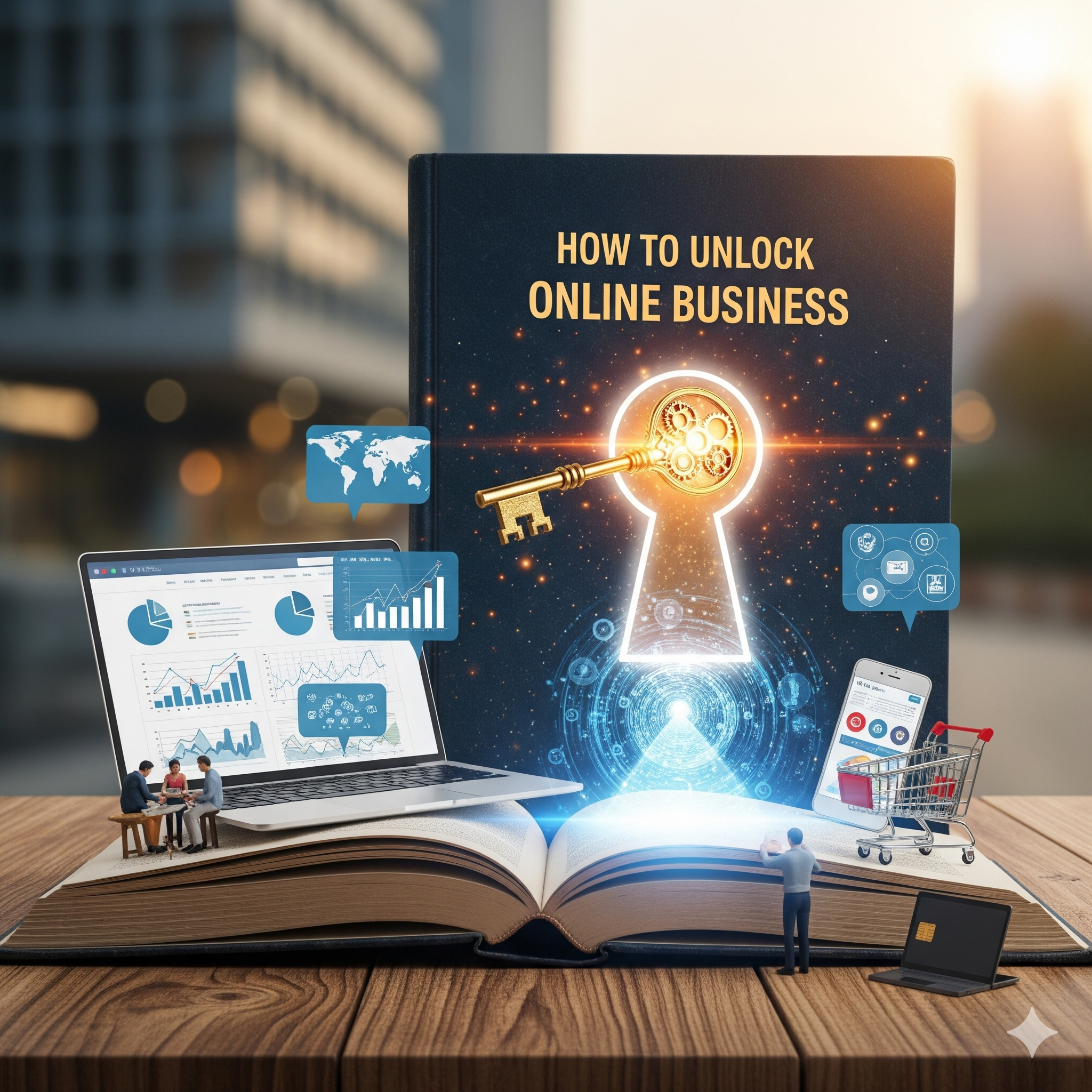
How to Unlock Online Business Affiliate Marketing – 8 Points
We may earn money or products from the companies mentioned in this post.
Updated on 18 September 2025
Welcome to my website. It’s nice to have you.

The quest for success is a constant journey in the ever-evolving digital landscape.
The world of online business affiliate marketing is no exception.
Learn how to unlock your potential.
It’s a dynamic, competitive arena where only the most strategic and savvy players thrive.
But fear not, because this comprehensive guide is here to help you navigate this complex world and set you on the path to success.
Mastering online business affiliate marketing is no small feat. It requires a blend of creativity, analytical thinking, and a deep understanding of the digital marketplace.
How To Unlock Online Business
But with the proper guidance and tools at your disposal, you can start earning today and unlock a sustainable income stream for the future.
In the constantly evolving digital realm, the pursuit of triumph is an ongoing expedition. The sphere of online business affiliate marketing is no different.
It is a dynamic and competitive arena where only the most strategic and astute players can flourish.
However, do not fret, as this all-encompassing guide is here to assist you in navigating this intricate world and set you on the course to triumph.
This blog post will discuss eight crucial points that will help you succeed in online business affiliate marketing.
From understanding what affiliate marketing is to learning how to find affiliates and leveraging small-business perks, we’ve got you covered.
We’ll explore multiple marketing tactics that can maximize your time, money, and revenue.
These include email marketing, social media strategies, search engine optimization (SEO), and pay-per-click (PPC) advertising.
Each of these tactics has unique benefits and can be used to create a robust marketing strategy.
Affiliate marketing is an excellent way to reduce expenses and risks while increasing revenue.
It’s a win-win situation where you promote other businesses’ products or services and earn a commission for every sale made through your referral link.

New Trick, Big Impact?
We’ll also delve into this, ensuring you’re not leaving any money on the table.
The first step towards mastering online business affiliate marketing is understanding what it is.
This post will define affiliate marketing in simple terms, making it easy for beginners to grasp the concept and for seasoned marketers to refresh their knowledge.
Finding affiliates can be a daunting task, especially if you’re new to the game.
We’ll provide tips on finding reliable affiliates who can help boost your sales and grow your business.
Lastly, we’ll discuss the perks of small-business affiliate marketing.
Small businesses have unique advantages in the affiliate marketing world that can be leveraged for maximum benefit.
So buckle up as we embark on this enlightening journey into the online business affiliate marketing world.
Whether you’re just starting or looking to refine your strategies, this guide promises valuable insights to help you succeed.

Affiliate Wins: Today
Online affiliate marketing is profitable.
It lets you build a good business using the internet and your abilities.
You may earn income from affiliate marketing sales on your website or blog.
Affiliate marketing requires knowledge of its fundamentals and how to optimize revenue.
This is a question that has been asked repeatedly.
Today, I will give you an answer to How To Unlock Online Business Affiliate Marketing 8 Tips
Marketing options abound for small firms.

How do you choose the best tactics?
Multiple marketing tactics maximize time, money, and revenue.
These include email, social media, SEO, and PPC.
You can unlock all the above—email, social media, and SEO optimization—to their full potential.
Affiliate marketing reduces expenses and risks while increasing revenue.
A never-before-used marketing tool?
If not, you lose money.
Post defines affiliate marketing.
Affiliate-finding tips.
Small-business affiliate marketing perks
Affiliate marketing: do you know how?
Affiliate marketing promotes another person’s products.
It generates revenue for third-party products and services.
Purchasing through an affiliate link earns you a commission.
Affiliate marketing shares revenue.
Paying others to promote and sell your tiny business.
Affiliate marketing helps with reviews and subscriptions.
It increases traffic, brand visibility, and money without risk.

Statists predict $8.2 billion in affiliate marketing spending by 2023.
Shouldn’t we tap this billion-dollar market?
Small businesses benefit from affiliate marketing.
Small businesses have limited spending.
A marketing team is rare.
Affiliate marketing generates sales and traffic cheaply.
1. Network Marketing
Small businesses should build a marketing network, but be judicious.
You shouldn’t accept applications without screening them.
Affiliates and eCommerce search marketing both affect brand image.
Affiliate marketing promotes product exposure and sales, like eCommerce SEO.

Advantages:
2. Brand Recognition
Every internet business needs many customers.
Affiliates drive website traffic to boost brand recognition.
Affiliates earn commissions by boosting client confidence.
Increase social proof.
Consumers today are more informed and expect more.
They rely on social proof.
Studies show consumers read internet reviews before buying.
Future customers can trust affiliate reviews.
3. Expand the Reach
Old advertising strategies may have been hard to target.
Affiliate traffic benefits your products or services.
4. Increase Conversions
Tracking business performance improves future operations.
Affiliate marketing data can reveal client preferences.
Using appealing visuals and recognizing top affiliates increases conversions.

5. Budget
Affiliate marketing is cheaper than traditional advertising.
Only sales pay.
Companies plan ahead to avoid ineffective marketing.
Increase ROI (Return on investment)
Marketing and advertising ROI is hard to calculate.
Performance-based affiliate marketing is money-making.
Businesses pay for concluded deals, not prospects.
Affiliate programs, like traditional marketing, target a specific audience.

Setting up…
Setting up your company’s affiliate network.
Before you start, check the FTC’s affiliate disclosure rules.
Small business affiliate programs don’t attract affiliates instantly.
First, promote your affiliate program.
Assisting affiliates with advertising is also essential.
Amazon’s affiliate program is more beneficial than others.
Amazon’s selection is unmatched.
Anyone can use their tools, not just web designers.
6. Establish Goals
- As with any marketing campaign, your program’s target audience.
- How much do affiliates earn monthly, quarterly, or annually?
- Sales portion from affiliate link clicks.
That's important Knowing your program's strengths and limitations will help.
7. Study competitors.
Before building your own affiliate program, study your rivals’.
- Competitor affiliate marketing to determine if they use them.
- Affiliates
- Using hashtags, find essential people on social media.
- Check their profiles for any rival endorsements.
- You’re competing for customers and affiliates.
- Determine rivals’ affiliate programs.
- Affiliate commissions.
Affiliates’ pay:
Product credits or cash?
Is the commission fair given the price?

They self-recruit?
Is the application strict?
Assess the situation.
How should affiliate links be promoted?
Are there restrictions on affiliate marketing?
Affiliates are trained.
Do Affiliates have Branding and Promotional Tools?
How does your competitor communicate with Affiliates?
Tracking cookies are used if buyers don’t buy on the first click.
How do your competitors’ Affiliate programs fare?
Do competitors’ Affiliate programs have gaps?
8. Select a Commission Structure
Consider your competition when paying affiliates.
What’s your payment method?

What percentage will you pay affiliates?
You must balance your needs with those of the competition.
What does a new customer cost?
Recognize outstanding affiliates who fulfill goals to boost program appeal.
Choose a Network
Own program or Affiliate Network?
Invest time and money to create your own affiliate program.
Most small businesses struggle with program design.
Affiliate marketing lets you promote your products and earn money.
Affiliate networks administer your affiliate program.
They recruit, vet, track sales, and pay commissions.
Popular affiliate networks are listed below.
LeadDyno helps small businesses run affiliate marketing campaigns.
Tracking Affiliates
CJ is an extensive, scalable affiliate marketing network.
ShareASale
Affiliate marketing network.
Real-time affiliate statistics can help you grow your business.

Business partnerships
Using an affiliate network is irrelevant.
Relationships matter.
Affiliates only promote trusted brands.
They jeopardize their reputation.
When screening affiliates, consider the following:
Do they have a blog/website?
- Do they interact honestly online?
- A good storyteller can sell products.
- How many visitors do they get? Traffic boosts sales.
- Does their website reflect your brand?
- Is their social media presence strong?
Does the affiliate rank for relevant keywords?
Before accepting an affiliate, check their marketing network and visuals.
Ensure they use traffic-generating hosting.
Examine their social media posts and activity.
Create graphics and banners for their blogs and websites.

Controlled brand messaging
They show Amazon text, images, and banner links.
Your affiliates should agree to follow program regulations.
Answer their queries and provide affiliate links.
Your small business needs affiliate marketing.
Affiliate programs have pros and cons, like any business decision.
Influencer marketing helps organizations reach:
- Large audiences,
- Build affiliate relationships,
- Boost revenue.
Affiliate networks are famous for reaching clients.
Let’s summarize these affiliate marketing tips for small enterprises.
Affiliate marketing increases brand visibility, social proof, reach, and ROI.
Goals, rivals, network and platform selection, and data tracking.
Consider affiliates’ content quality, authenticity, and internet presence.
Affiliate Marketing’s Biggest Pros & Cons
Pros
- You can make money while sleeping (after setup).
- Add content and schedule posts once your site is live.
- Passive income potential from articles that keep working.
- Commissions from clicks and purchases can fund your account.
- Low startup cost (domain + hosting).
- Work from anywhere with a laptop.
- No inventory, shipping, or customer support.
- Scales with content, SEO, and email list growth.
- Evergreen posts compound over time.
- Many niches and brands to promote.
- Data-driven: analytics show what to improve.
Cons
- It’s slow to start; results take time.
- Early stages can feel frustrating.
- Competing with bigger sites takes patience.
- No guaranteed income; it’s performance-based.
- Needs consistent content and optimization.
- Learning curve: SEO, CRO, email, and tracking.
- Programs can change rules or close suddenly.
- Ad blockers and cookie limits can affect tracking.
- Disclosure and compliance requirements.
- Payout delays (often net-30/45/60).
- Focus and self-discipline are a must.
Tip: Publish helpful content weekly, build an email list, and review analytics. Consistency beats speed.
Affiliate Marketing: Frequently Asked Questions
What exactly is affiliate marketing, and how does it work?
You recommend products or services you trust. When someone buys through your unique link, you earn a commission. Think of it like a helpful referral that pays you when people act.
Can I succeed without my own website?
Yes. You can use social media, email newsletters, or video channels. A website adds trust and helps you rank in Google. It also gives you full control of your content.
How do I choose an affiliate program that fits me?
Pick offers that match your niche and your audience’s needs. Look for:
- Transparent commission rates
- Solid tracking and reliable payouts
- Good tools, creatives, and support
Promote what you genuinely like, not what you have to push.
Can I earn ongoing income?
Yes, with time and consistency. Publish useful, original content that answers real questions. As trust grows, sales can come in—even when you are offline.
How can I share affiliate links in a natural way?
Be honest and specific. Explain what helped you and why. Teach first, recommend second. Always keep the reader’s benefit front and center.
Do I need to disclose affiliate links?
Yes. Be clear that you may earn a commission. A short notice near the link and a full disclosure page keep you transparent and compliant.
How much does it cost to start?
Low cost. A domain, hosting, and your time. Many programs are free to join. Paid tools can help, but they’re not required at the start.
How do I get traffic?
Pick one or two channels and commit:
- SEO: answer search questions with quality posts
- Email: capture leads and follow up weekly
- Video or social: teach, demo, and review
Track results. Improve what works. Cut what doesn’t.
How long until I see results?
Timelines vary. Three months is early. Six to twelve months is common if you publish and improve often. This is not a quick-cash model.

Your Next Move
You started this article wondering if you could build honest income online—and whether WA is worth your time.
Here’s the truth in one line: steady work + a platform that keeps improving = real momentum.
What will you build in the next 90 days?
Your micro-challenge (start today):
- Pick one niche you care about.
- Outline one helpful post that answers a real question.
- Create your free WA Starter account and publish that post this week.
Bold truth: Consistency beats talent. Every time.
You came for clarity, not hype. Now you have a plan—take the first step today, and let the results catch up.
Ready to Use the 8 Points?
You wanted clear steps. Now put them to work. Join WA free, follow the 8 points, and publish one helpful post this week. Need a hand? I’m a member of WA as Elke63—say hello.
Thank you for reading, and we hope you find the insights valuable and thought-provoking.
I would much appreciate it if you could kindly leave your comments and questions below.
Thank You For Stopping By Once More
Till The Next Time
Elke